
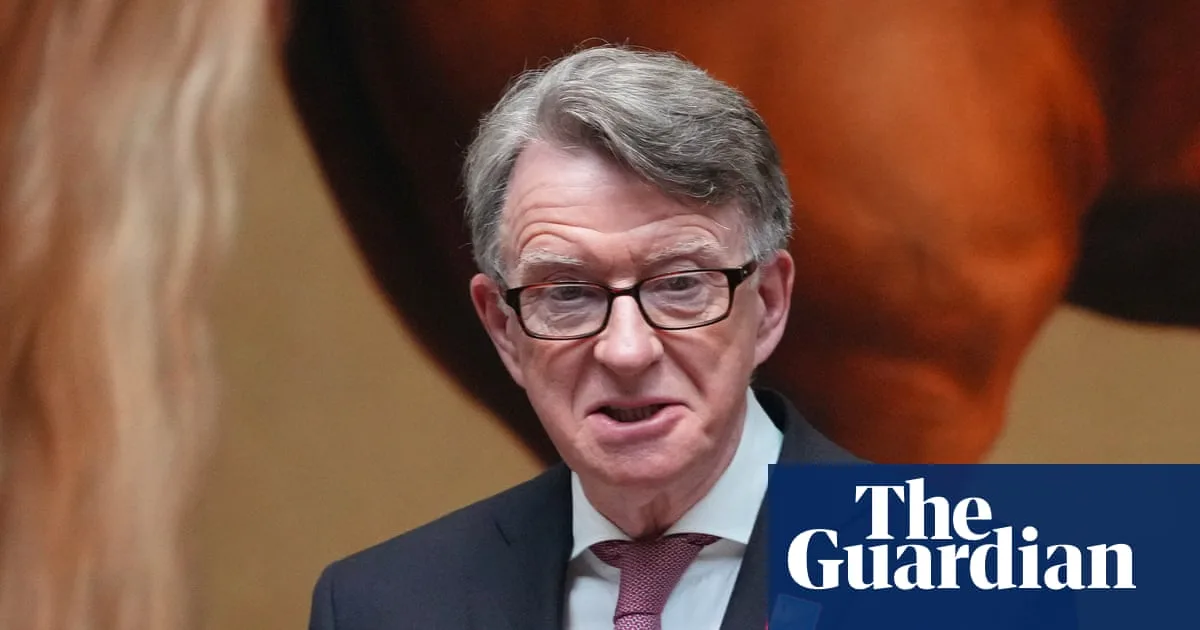
Global Counsel, the advisory firm co-founded by Peter Mandelson, is set to collapse into administration, citing the ‘maelstrom’ caused by revelations about the former peer’s ties to convicted sex offender Jeffrey Epstein. The company has lost a string of high-profile clients, including Barclays, Tesco, and the Premier League, despite efforts to sever ties with its founders.
The crisis erupted after it emerged that Mandelson had sought Epstein’s advice on setting up the business in 2010. The Financial Times reported that staff were told the ‘Peter Mandelson legacy’ had effectively capsized the firm. In a LinkedIn statement, Global Counsel confirmed it had asked a court to appoint Interpath as administrator to take control and realise the company’s assets.
The statement said: ‘The continuing maelstrom of political and media attention surrounding Peter Mandelson has made it challenging to continue with the business in its current form. While today’s Global Counsel has no connection with Peter Mandelson, his role as a co-founder and his conduct, particularly in its early years, has indelibly coloured the way Global Counsel is seen in the outside world.’ It added that the move will result in significant redundancies.
The company employs about 100 people across London, Berlin, Brussels, Doha, and Singapore. Its board thanked staff for their resilience and noted that shareholders have suffered a material loss. The collapse follows efforts to distance the firm from its founders, including co-founder Benjamin Wegg-Prosser stepping down as CEO and Mandelson selling his shares, but client departures continued.
Other lost clients include Klarna, Phoenix Group, and KKR. Vodafone placed its contract under review, while GSK said it had no plans to engage with the firm. The Epstein files also revealed that Wegg-Prosser had met Epstein and shared the company’s business plan while Epstein was under house arrest. Wegg-Prosser has previously described the meeting as a ‘short meeting of no consequence’.




