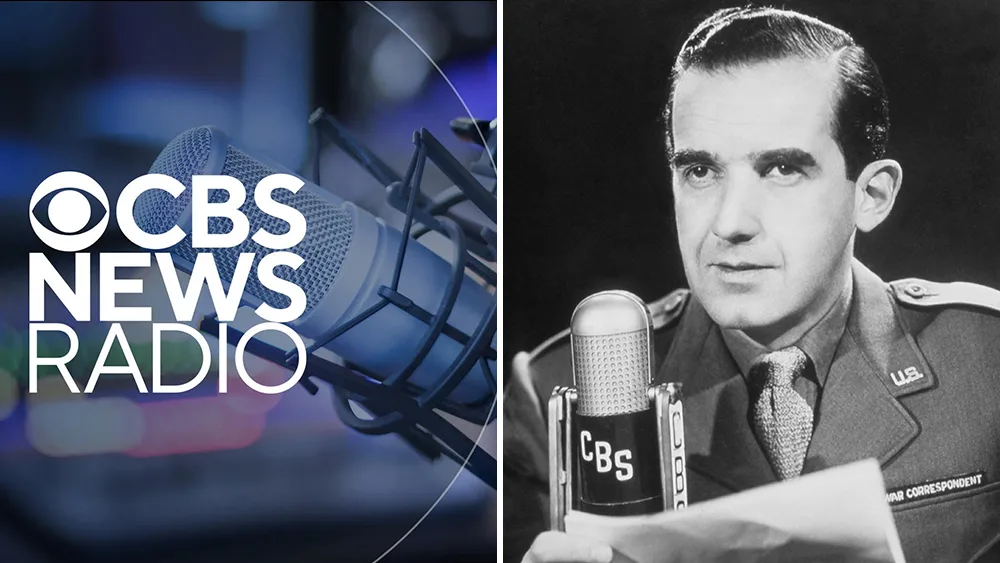
CBS News Radio is ending its syndicated radio news service as of today, marking the conclusion of nearly a century of broadcast journalism. The decision, made by top editor Bari Weiss, represents another crack in the network that William S Paley helped build, according to his granddaughter Brooke A Byers.
A Legacy of News Innovation
Byers recently spoke with a US senator about matters related to CBS News and was dismayed that he did not know who William S Paley was, or about the leading role he played in creating CBS. Paley was her grandfather, a man she adored and revered. She also knew and worked for Fred W Friendly, who had been president of CBS News and created the documentary program See It Now in collaboration with the legendary broadcaster Edward R Murrow. Murrow had grown to national prominence for his gripping radio broadcasts during the second world war. Together, their tireless work changed the course of US history.
Today, unfortunately, CBS is increasingly unrecognizable for this child of network news. But Byers is particularly saddened by the loss of the CBS News Radio service. As of Friday, CBS News will no longer provide a syndicated radio news service after almost a century on the air. Her grandfather built the CBS News Radio network and then the CBS Television networks. The enterprise blossomed into the empire that CBS would become. News had always been a primary focus of the Tiffany Network, as embodied by the work of Murrow, Walter Cronkite and programs like 60 Minutes.
A Personal Connection to the Network
Byers' grandfather had a rule: no one in the family could work for CBS. But she sought his approval for a job offer from Friendly, at the time with Columbia University Seminars on Media and Society. Friendly had resigned from CBS News when the network made a decision to air an episode of I Love Lucy instead of the US hearings on American involvement in the Vietnam war. Her grandfather thoroughly respected Friendly and gave his seal of approval for her to work for him. His respect for Friendly was rooted in his passion for CBS News. While he was so proud of the many sitcoms on CBS, such as All in the Family, the news division was his crown jewel.
The decision by CBS News editor-in-chief Bari Weiss in March to cut radio programming and eliminate news jobs represents another crack in the crown jewel that we once relied upon to be educated citizens. CBS News president Tom Cibrowski was also reportedly involved in the decision.
The Value of Radio News Today
Today, like many, Byers gets her news from multiple sources. But her favorite and most trusted source is the CBS News Radio updates delivered on the top of the hour on SiriusXM's Potus channel, one of many broadcasts that provide it with support from well-resourced national advertisers. The broadcasts encapsulate the most essential stories in five minutes, with reporting from the field. She believes it happens to be the most convenient and unassailable source of the objective version of the news that was the norm during the days of Cronkite.
While she does not pretend to know how much it costs for these stories to be reported on the hour, she has a hard time believing the network's bottom line will be much improved with this cut. At the time, Weiss said: 'Radio is woven into the fabric of CBS News and that's always going to be part of our history.' Weiss and Co claim that she tried to find a viable solution to sustain a radio operation that faces heavy competition from other news sources. The cuts announced in March followed an earlier round of layoffs in October. Meanwhile, recent viewership of the Evening News has sunk into third place.
A Historical Perspective
When television was introduced, the medium was able to live compatibly with radio. In a 1948 annual report to the CBS shareholders during this transition period, Byers' grandfather wrote: 'The long history of mass media in this country has amply demonstrated that the rise of a strong new medium does not tend to displace any of the others. No mass medium has ever disappeared … each of them has given enormously as the nation itself has grown.'
Byers believes radio can continue to play an important role in our news ecosystem if given the chance and the resources. As Murrow would say during his nightly sign off: 'Good night and good luck.'






