The Netflix drama The Polygamist has sparked fresh UK chatter about polygamy, with charities and media reports suggesting around 20,000 polygamous marriages may exist in the country, despite bigamy laws. These unions largely sit outside the official register, as religious ceremonies that never become civil marriages.
Legal grey zone and unregistered weddings
The most common route is through unregistered religious weddings, such as a Muslim nikah carried out without a corresponding civil ceremony. In practice, a man might have one wife recognised by British law, while taking additional wives through faith ceremonies.
Those extra unions are not registered by the state, creating a stark reality for partners, according to the House of Commons Library. In the eyes of UK law, additional spouses can be treated as single cohabiters, without automatic legal rights around inheritance or property if the relationship ends.

Overseas marriages and welfare rules
UK law treats polygamous marriages differently depending on where they took place. A second legal marriage inside Britain is the crime of bigamy, the BBC reported. But if multiple marriages were legally performed in a country where polygamy is permitted, the UK can recognise them as valid if the family later moves to Britain, provided strict rules are met.
That recognition has also forced an awkward conversation about welfare. Under older legacy benefit systems, a small number of valid polygamous households were able to receive extra allowances for additional wives. Under Universal Credit, polygamous households are not recognised in the same way, meaning additional spouses generally have to claim separately as single individuals.
Regional patterns and polyamory distinction
There is no official government data mapping which region has the most polygamous relationships, because legal polygamous marriages cannot be created inside the UK and many religious unions are unregistered. Still, community reports and demographic patterns often point to large, diverse urban centres, including parts of Greater London such as Tower Hamlets and Newham, and the West Midlands, with cities like Birmingham and Bradford often mentioned.
It’s also crucial to separate polygamy from polyamory. Polygamy involves multiple spouses, usually one husband with multiple wives. Polyamory is multiple consensual romantic relationships between adults. It’s legal in the UK, but it isn’t recognised as marriage.
Real-life cases
Jem Jones, from Dorset, said she nearly choked on her cup of PG Tips when her partner Daz suggested polyamory, the Daily Star previously reported. The couple had been together for five years in 2010 when he pitched the idea as “adventure”. Jem turned him down at first, then years later surprised him with a Christmas ticket to a private swingers’ party at a Somerset mansion featuring a pool, underground rooms and a “secret dungeon”. They agreed nothing would go further than a kiss, battled jealousy afterwards, and later returned to the lifestyle during a tough period to reconnect.
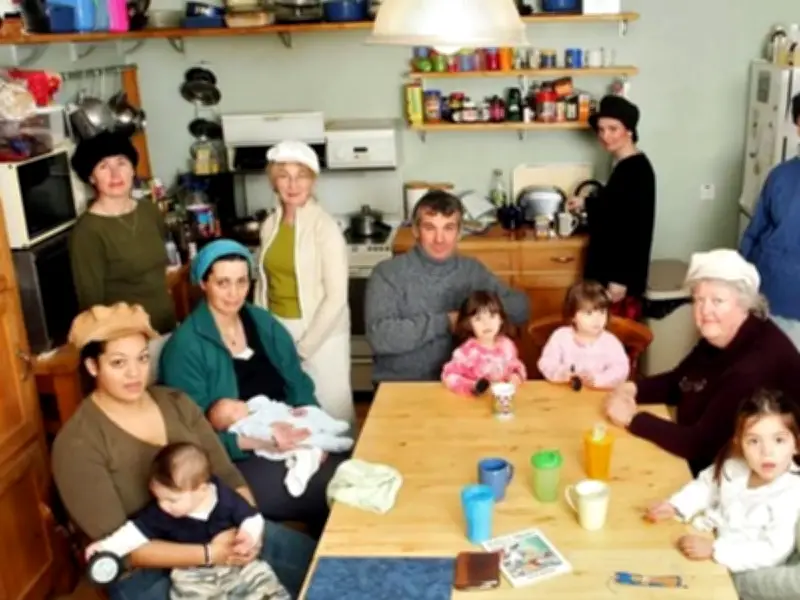
At the far stranger end of the spectrum, religious leader Philip Sharp, born in north London, claimed he had seven wives and 19 children as part of God’s “divine plan”, the Daily Star previously reported. It was a lifestyle that led to documentaries and controversy, and even the revocation of his rabbinic ordination.
Another shocking example of polygamy was reported back in 2014, when Channel 4 came out with The Men With Many Wives, a documentary that explores the complex realities of polygamy among British Muslims through the lens of figures like Hasan, a 32-year-old seeking a third wife. While proponents argue in favour of the practice based on high libido and religious tradition, the documentary reveals that these often unregistered, illegal unions leave women with zero legal rights, forcing them into separate households and profound emotional hardship.