

From Punishment to Empowerment: A Transgender Weaver's Journey
Xaneri Merino, a transgender woman and skilled artisan from southern Mexico, was once formally punished for practicing the traditional craft of weaving in her Indigenous community. In San Pedro Jicayán, where men are largely prohibited from weaving, Merino has defiantly reclaimed her ancestral heritage, using her backstrap loom as a powerful instrument for LGBTQ+ resistance and cultural continuity.
Defying Rigid Gender Norms Through Secret Lessons
Identified as male at birth, Merino was expected to tend cattle or work the fields, following conventional gender roles. However, her grandmother courageously defied these norms, secretly teaching her the ancient art of backstrap loom weaving from the age of thirteen. "She began sharing her knowledge with me in secret," Merino recalled, describing how she would hide in her grandmother's adobe home to learn. "She taught me how to make thread from scratch, to feel textures, and to respect nature."
Merino's maternal lineage traces back to the Mixtec people, whose origin stories are deeply connected to sacred landscapes, while her paternal ancestry is Zapotec, where religious practices permeate daily life. Her grandmother instilled a crucial principle: always give back to the land whatever you take. Weavers in their community use tamarind branches for loom rods and actively restore natural resources. "To care for nature is part of our worldview," Merino emphasized. "Because it provides us with what we need to walk this world."

Embracing Identity as a Muxe and Artisan
Merino's identity as a trans woman is intertwined with her role as a "muxe," a term from Zapotec culture referring to individuals assigned male at birth who adopt women's roles, often considered a third gender. This dual identity now shapes her life profoundly. She earns her living as a weaver and instructor, conducting workshops that frame the backstrap loom as both a craft and an act of resistance.
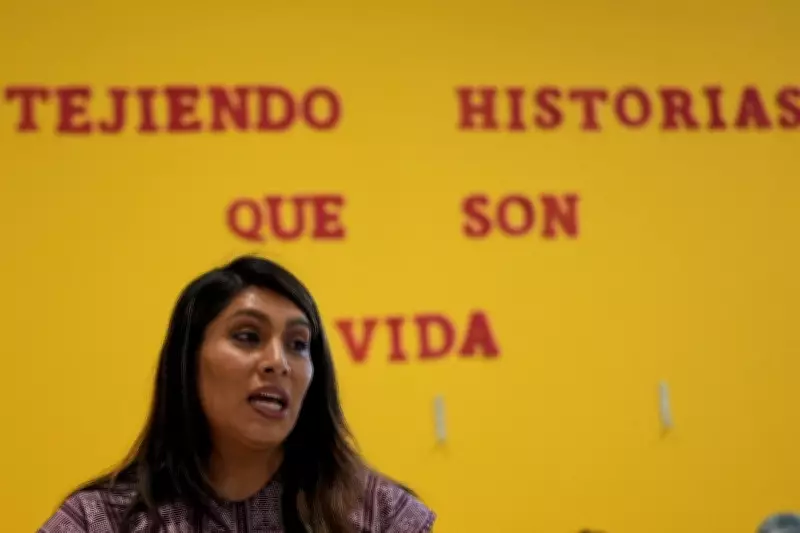
"Everyone is capable of learning how to weave, and it's not just about creating a piece," Merino explained during a recent LGBTQ+ workshop in Mexico City. "It's also about weaving our own stories, as we can come to know ourselves through the loom."
The Cost of Defiance and a Path to Healing
Merino's defiance came at a significant personal cost. At around fifteen, neighbors discovered her weaving on her way to a patron saint feast. The following morning, community leaders summoned all men to discuss "a boy who dared to weave." Forced to stand before a circle of men alongside her mother and grandmother, Merino faced harsh interrogation about violating gender expectations.
Her punishment was to sweep the local church, and the experience cast a long shadow, leading her to nearly abandon weaving altogether. "I developed a deep resentment toward textiles and the customs around them," Merino confessed. "Having the ability to create and not being allowed to use it was like having eyes and having them taken away—I could no longer see."
Reconciliation began when she moved to Mexico City for university, studying communications with courses in cultural management, textile studies, and postcolonial Indigenous resistance. This academic journey helped her reframe her reality. "That made me see how I could use my reality for a greater good," she said. "My loom became a means to healing."
Creating Safe Spaces and Inspiring Change
In her workshops, Merino fosters an inclusive environment where LGBTQ+ individuals can explore weaving as self-expression. Emilia Freire, a trans woman and student, praised Merino's teaching: "I love Xan's way of teaching because she is very human and patient. She made me realize that once I had my weaving set up and began to work, everything I carried with me through the week would come out."
Another participant, Kristhian Cravioto, celebrated the safe space for LGBTQ+ craft enthusiasts and Merino's challenge to the notion that men shouldn't weave. "This is very important for us dissidents," said Cravioto, a designer passionate about Indigenous crafts. "To know that no matter whether you are a man or a woman, what you do matters."

Preserving Tradition Through Enduring Threads
The traditional backstrap loom is a portable frame of cords, threads, and wooden rods, operated by women seated on the ground with one end tied to a post and the other secured around their waist. By leaning back and forth, weavers control thread tension, turning movement into a rhythmic craft. Merino dedicates about a month, working eight hours daily, to complete a single "huipil," a traditional tunic worn by Indigenous Mexican women.
While many migrant weavers adapt to urban materials, Merino returns home to source raw supplies, including a rare purple dye from coastal sea snails, a resource dwindling due to species decline. Despite nostalgia for her hometown, she finds solace in inspiring younger LGBTQ+ community members. "At least five trans women and two men are weaving now in San Pedro Jicayán," Merino reported proudly. "We have gained visibility through the loom, and that's what this fight has been about."





