

Texas 'Antifa' Terrorism Convictions Set Dangerous Precedent for US Protest Crackdown
The conviction of nine activists in Texas on terrorism and related charges earlier this month has established an alarming legal precedent, granting the Trump administration broad scope to target leftwing groups under spurious 'domestic terrorism' labels. The case, stemming from a protest outside an ICE facility near Fort Worth last year, is widely viewed as a critical test of the administration's efforts to penalise protesters and suppress leftwing ideologies.
Details of the Protest and Charges
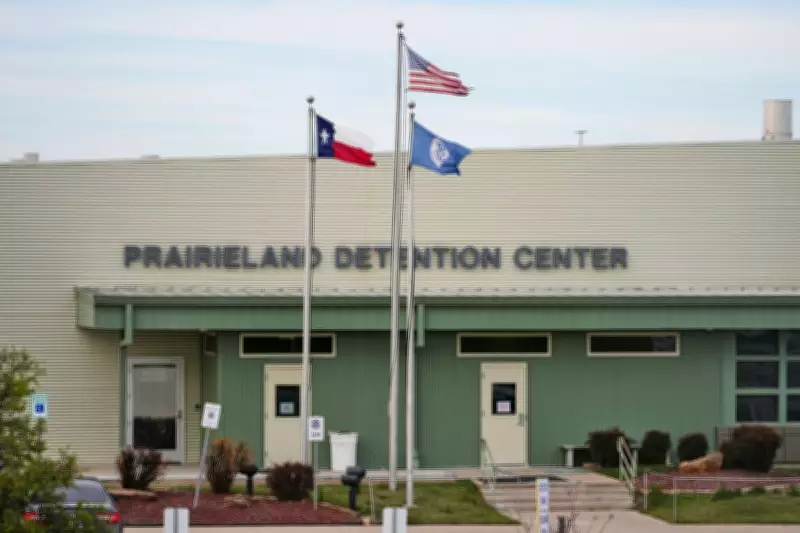
Activists gathered outside the Prairieland Detention Center in Alvarado, Texas, on March 16, 2026, planning to set off fireworks in solidarity with detainees. They travelled with automatic weapons and body armour, claiming these were for self-defence against counter-protesters. During the event, a small group broke away, vandalising cars, spray-painting graffiti, slashing tires on a government van, and breaking a security camera. When a police officer arrived and drew his weapon, one activist, Benjamin Song, opened fire with an AR-15, injuring the officer in the shoulder, though he survived.
Eight protesters were convicted of riot, explosive charges, and providing material support to terrorists. Song was found guilty of attempted murder and additional firearms offences. A ninth individual, not present at the protest, was convicted on charges related to moving a box of zines afterwards.

Trump Administration's Response and Expert Criticism
Following the killing of Charlie Kirk last year, the Trump administration pledged to crack down on 'antifa', labelling it a domestic terror group. This designation faced heavy criticism, as experts note that antifa, short for anti-fascism, is not an organisation but an idea encompassing various leftwing beliefs. The justice department's press release hailed the verdict, using the term 'antifa' 16 times, with US attorney general Pam Bondi stating, 'Today's verdict on terrorism charges will not be the last as the Trump administration systematically dismantles antifa and finally halts their violence on America's streets.'
However, legal experts argue the trial's issues were unrelated to antifa. The terrorism charge focused narrowly on whether defendants provided support for specific crimes, without requiring proof of organisational ties or ideology. US district judge Mark Pittman questioned the relevance of mentioning 'antifa' during jury instructions, noting, 'Whether it's antifa or the Methodist Women's Auxiliary of Weatherford, why does it matter?' The jury instructions included the word only once in passing.
Francesca Laguardia, a terrorism professor at Montclair State University, emphasised, 'This verdict is not a jury saying antifa exists as an organisation and supporting it is support for a terrorist organisation. It will be important for the public to remember that.'
Broader Implications for Protest Rights
Mike German, a former FBI special agent, compared the prosecution to cases from Trump's first inauguration, where hundreds of protesters were arrested for damage caused by a small group. He explained, 'Both of these efforts are less about winning convictions and more about sending a message to protesters that you might be in the wrong place at the wrong time. It's not worth it to come out and protest because you might get arrested for something you weren't involved in.'
Experts expressed alarm at prosecutors using evidence such as protesters' use of Signal for communication, dark clothing, and participation in leftwing book clubs to argue coordinated group activity. Mark Bray, a Rutgers professor studying anti-fascism, warned, 'The precedent is being set that the more cautious you are, the more you could be accused of trying to hide something. The government has gone on record as saying that using Signal is evidence to suggest someone is a terrorist.' Bray consulted as an expert witness for a defendant but did not testify.

Legal Concerns and Future Prosecutions
Seven defendants, excluding the shooter, were acquitted of attempted murder, suggesting jurors rejected prosecutors' narrative of an ambush on law enforcement. Cody Cofer, a lawyer for defendant Autumn Hill, stated, 'People should be scared,' highlighting how easily prosecutors can fabricate conspiracies under current laws. He added, 'There is an online culture that government officials know nothing about, leading to sample bias where cultural traits are misconstrued as criminal conduct.'
While no other pending cases allege terrorism against antifa affiliates, an FBI document from December revealed criminal and domestic terrorism investigations in at least 23 regions. A top justice department official has urged prosecutors to aggressively pursue protesters, advising them to 'go big' and 'go loud'. Laguardia predicted, 'I absolutely think the government is likely to bring more of these cases. There is clearly an interest in prosecuting individuals associated with antifa and building up the idea that it exists as an organisation.'
This verdict underscores growing concerns over surveillance and the chilling effect on protest rights, setting a dangerous precedent for future crackdowns on dissent in the United States.





