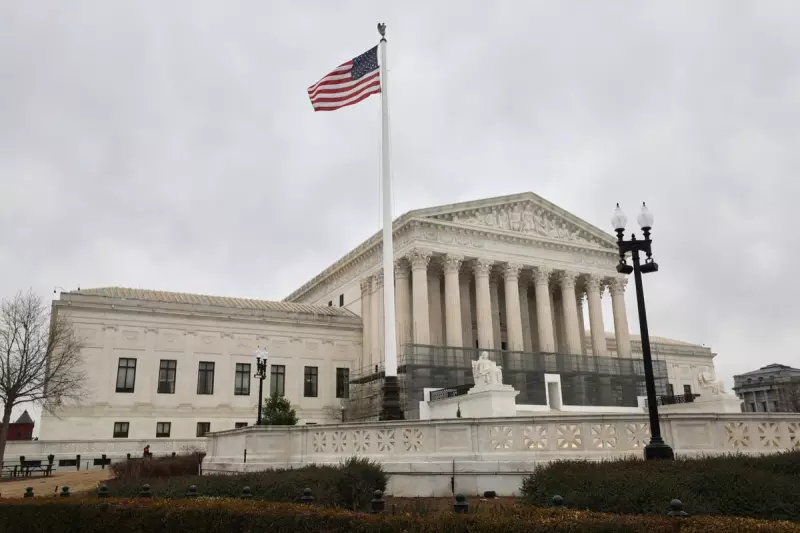
The United States Supreme Court has taken a pivotal step, agreeing to rule on the legality of controversial search warrants that harvest the location history of mobile phone users to identify individuals near crime scenes.
The Case at the Heart of the Debate
This landmark case centres on a specific police investigation into a bank robbery in Midlothian, Virginia, back in 2019. In their hunt for the culprit, authorities served a "geofence warrant" on Google. This type of warrant, an increasingly common tool for detectives, demands location data for every person within a defined geographic area during a set timeframe, regardless of whether they are suspects.
Using the information obtained, police arrested Okello Chatrie. Chatrie ultimately pleaded guilty to robbing the Call Federal Credit Union and received a prison sentence of nearly 12 years.

A Clash Over Constitutional Rights
Chatrie's legal team mounted a fierce challenge, arguing the geofence warrant constituted a gross violation of his Fourth Amendment right against unreasonable searches. They contended it permitted a dragnet collection of sensitive location data from countless innocent people near the bank without any prior evidence linking them to the crime.
Prosecutors countered that Chatrie had forfeited any reasonable expectation of privacy because he had voluntarily enabled Google's Location History service on his device.
The legal journey has seen conflicting rulings. A federal judge found the search did violate Chatrie's rights, yet allowed the evidence because the officer acted in good faith. The federal appeals court in Richmond later upheld the conviction, but with a divided panel. In a stark contrast, the federal appeals court in New Orleans has ruled that such geofence warrants are unconstitutional.
National Implications and Next Steps
The Supreme Court's decision to hear the case brings national clarity one step closer. The justices are expected to hear arguments later this year, potentially in the spring or at the start of the court's next term in October 2026.
The outcome will have profound implications for law enforcement capabilities in the digital age and for the privacy rights of millions of mobile phone users across the United States. It represents a critical test of how centuries-old constitutional protections apply to modern, pervasive surveillance technology.