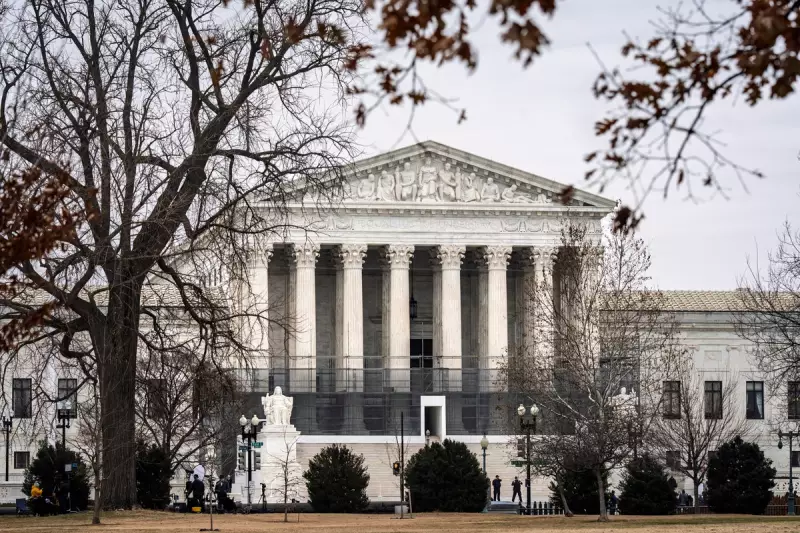
The United States Supreme Court has delivered a significant ruling on the limits of police authority, unanimously finding that officers in Montana acted lawfully when they entered a home without a warrant during what they believed was an emergency.
The Case: A Distress Call and a Confrontation
On Wednesday, 14 January 2026, the high court sided with law enforcement officials from Montana. The case centred on the actions of officers who entered the residence of William Case in 2021. Police were dispatched following a distressing call from Case's former girlfriend, who expressed a genuine fear that he might have taken his own life.
Upon arriving at the property and receiving no answer after knocking, the officers made the decision to enter. Inside, the situation escalated rapidly. Case threw open a closet curtain while holding an object that appeared to be a firearm. In response, an officer discharged their weapon, wounding Case. A handgun was subsequently discovered in a nearby laundry basket.

The Legal Challenge and the Court's Reasoning
William Case was later charged with assaulting a police officer. His defence team argued that all evidence gathered should be suppressed because the initial entry was conducted without a judicial warrant, violating his Fourth Amendment rights. The Montana Supreme Court rejected this, stating officers needed only a reasonable suspicion that someone inside required emergency aid.
Case appealed to the US Supreme Court, urging the justices to impose a stricter probable cause standard, akin to that required for criminal investigations. In an opinion authored by Justice Elena Kagan, the court declined this request. While the justices noted that the standard applied by the state court was arguably too low, they concluded the officers' actions were objectively reasonable under precedent established in prior Supreme Court rulings.
Implications for Police Powers and Public Safety
This ruling clarifies, but does not vastly expand, the emergency aid exception to the warrant requirement. The court emphasised that this exception is narrow. Justice Kagan explicitly noted that entering a property under such circumstances does not grant police a licence to conduct a broad search. Their actions must be strictly limited to addressing the perceived emergency and ensuring their own safety.
The decision reinforces the balance courts must strike between individual privacy rights, as protected by the Constitution, and the practical necessities faced by police responding to volatile and potentially life-threatening situations. It affirms that where officers have an objectively reasonable basis for believing an occupant is in immediate need of help, they may act without first obtaining a warrant.