

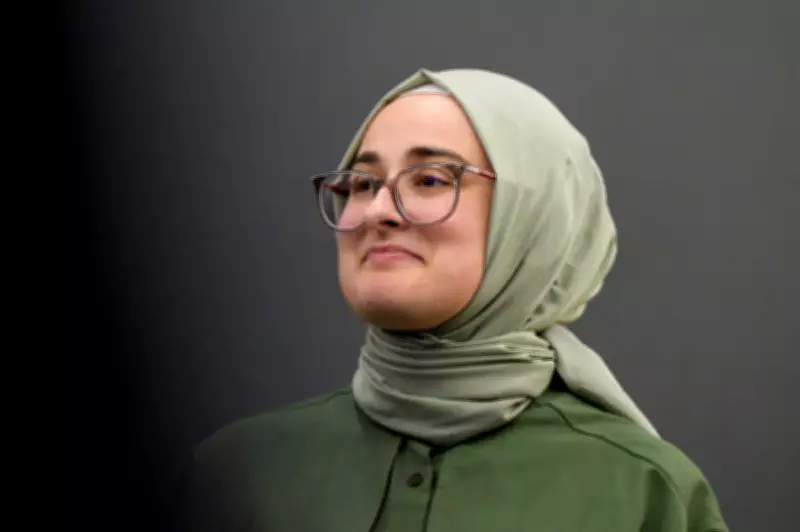
Tufts Student Targeted by Trump Administration Completes PhD and Returns to Turkey
Rümeysa Öztürk, the Tufts University student who was targeted by the Trump administration last year after co-authoring a pro-Palestinian opinion piece, has successfully completed her doctorate in the United States. This week, she traveled back to her native Turkey to begin her academic career, marking the end of a contentious immigration ordeal that drew widespread attention.
Arrest and Viral Video Spark Outrage
Öztürk was detained in March 2025 by masked, plainclothes agents from Immigration and Customs Enforcement (ICE) in Massachusetts. Video footage of her arrest quickly went viral, highlighting her case as part of a broader pattern of international students being targeted for their pro-Palestinian speech and activism. This occurred amid widespread protests on US college campuses against Israel's war in Gaza, which followed the Hamas-led attack on southern Israel in October 2023.
In a statement, Öztürk expressed pride in completing her PhD after 13 years of study, but also frustration over the time lost due to government actions. "The time stolen from me by the US government belongs not just to me, but to the children and youth I have dedicated my life to advocating for," she said. "With them in mind, I am choosing to return home as planned to continue my career as a woman scholar without losing more time to the state-imposed violence and hostility I have experienced in the United States – all for nothing more than co-signing an op-ed advocating for Palestinian rights."

Op-Ed Leads to Visa Revocation and Legal Battles
The controversy began in March 2024 when Öztürk and three others co-wrote an op-ed for the Tufts Daily, their college newspaper, calling for the university to acknowledge what they described as a genocide of Palestinians. A year later, the newly installed second Trump administration used this op-ed as a pretext to accuse Öztürk of antisemitism and revoke her visa. ICE then took her to a detention center in Louisiana, initiating deportation proceedings that led to a lengthy series of court battles.
Internal government records, obtained through a separate lawsuit against US Secretary of State Marco Rubio, revealed that the government had no evidence beyond the college newspaper op-ed to justify revoking Öztürk's visa and deporting her. Rubio had terminated her visa, along with those of other students involved in high-profile pro-Palestinian advocacy, using a little-used authority to rescind visas by accusing some holders of supporting Hamas, though without providing evidence.
Settlement Agreement Resolves Legal Issues
Earlier this month, Öztürk and the federal government reached a settlement agreement, resolving outstanding legal issues in federal court. This led both parties to request that her immigration case be dismissed. The agreement reinstated her international student status, known as Sevis for the government's "student and exchange visitor information system," and allowed her to return to Turkey without interference from the administration.
An immigration judge had earlier terminated Öztürk's case, finding that the government had no grounds to deport her. However, that judge was fired last week as part of efforts to reshape the immigration court system. Although the Trump administration initially appealed the decision, the settlement now calls for the proceedings to be terminated.
Advocacy and Academic Focus Continue
Jessie Rossman, legal director at the ACLU of Massachusetts, commented on Öztürk's resilience. "Dr Öztürk is an academic and scholar. The government's unlawful actions against her forced her into the spotlight," Rossman said. "But in numerous publications over the past year, Dr Öztürk used this platform and her own words to educate the public about what she has experienced, to shine a light on what she witnessed other women in for-profit ICE prisons experience, and to advocate for global human rights with a focus on children."

Öztürk plans to continue her work in child study and human development in Turkey, emphasizing her commitment to advocacy despite the challenges faced in the United States. Her case underscores ongoing tensions around free speech, immigration policies, and international student rights in the US political landscape.





