

Civil Rights Icon Rev. Jesse Jackson Dies at 84, Leaving Legacy of Activism
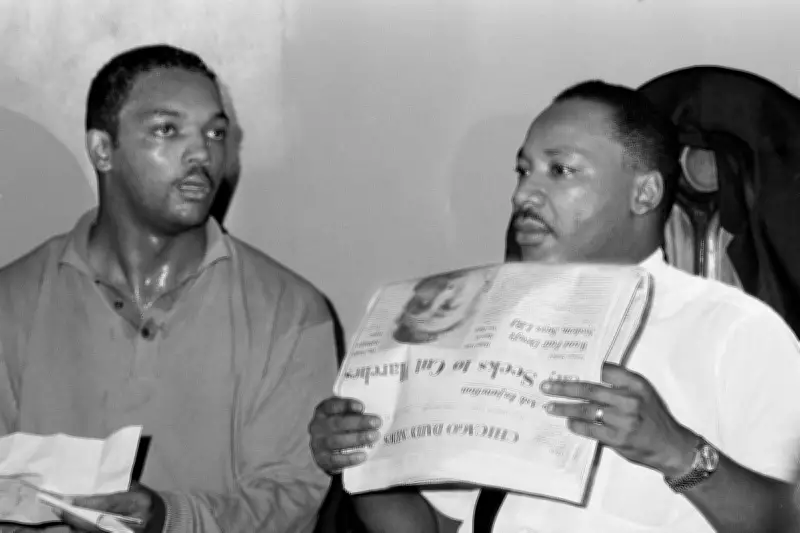
The Rev. Jesse L. Jackson, a pivotal civil rights leader and two-time presidential candidate, passed away on Tuesday at the age of 84. A protege of the Rev. Martin Luther King Jr., Jackson dedicated his life to advocating for the poor and underrepresented, with his lifelong crusades spanning the United States and abroad. His family announced his death with profound sadness, paying tribute to his unwavering commitment to justice, equality, and human rights, which helped shape a global movement for freedom and dignity.
A Life of Service and Advocacy
Jackson grew up in poverty in Jim Crow-era South Carolina, facing societal judgment for being born out of wedlock and personal challenges with his biological father. He learned early on to channel his fears into excellence, a trait that defined his later activism. While attending North Carolina Agricultural and Technical State University, he became active in the civil rights movement, gaining the attention of Dr. Martin Luther King Jr. and being ordained a minister in 1968. Through his charismatic speeches, Jackson energized thousands to boycott businesses that refused to hire qualified Black Americans.
In 1971, he founded the nonprofit Operation People United to Save Humanity, or PUSH, which later merged with his political movement, the National Rainbow Coalition, to form the Rainbow PUSH Coalition in 1996. This organization became a cornerstone of his efforts to mobilize communities and advocate for social change.

Political Milestones and Global Impact
Jackson launched a long-shot bid for the Democratic presidential nomination in 1984 and ran again in 1988, with his historic campaigns marking the first time a Black candidate had won the nationwide Democratic youth vote. His presidential runs elevated the voices of the voiceless and inspired millions to register to vote, leaving an indelible mark on American politics. Later, he served as Democratic President Bill Clinton's special envoy to Africa in the 1990s, extending his influence globally.
His work resonated internationally, as seen in his meetings with figures like former South African President Nelson Mandela, highlighting his role in promoting freedom and dignity worldwide. Jackson's family described him as a servant leader who uplifted the oppressed, the voiceless, and the overlooked, with the world becoming part of their extended family through his efforts.
Health Challenges and Final Days
Jackson was diagnosed with Parkinson's disease in 2017 and had struggled with his health in recent months. In November, he was hospitalized for treatment to regulate his blood pressure and was under observation for progressive supranuclear palsy, a rare neurological disorder affecting body movements, walking, balance, and eye movements. A cause of death was not immediately given, but his family said he died peacefully, surrounded by loved ones.
He is survived by his wife, Jacqueline, whom he married in 1962; their children Santita, Jesse Jr., Jonathan, Yusef, and Jacqueline; his daughter, Ashley Jackson; and various grandchildren. Public observances will be held in Chicago, with final arrangements to be announced by the Rainbow PUSH Coalition.
Jackson's legacy continues through the values he lived by, with his family urging others to honor his memory by continuing the fight for justice and equality. His life of crusades, from voting rights and job opportunities to education and healthcare, remains a testament to his enduring impact on civil rights and social justice movements.






