Two individuals have been permanently blinded after being struck in the face by so-called "less-lethal" munitions fired by federal officers during a protest in California last week. The incidents have ignited fresh scrutiny of use-of-force policies among federal authorities in the United States.
Close-Range Shootings Leave Permanent Damage
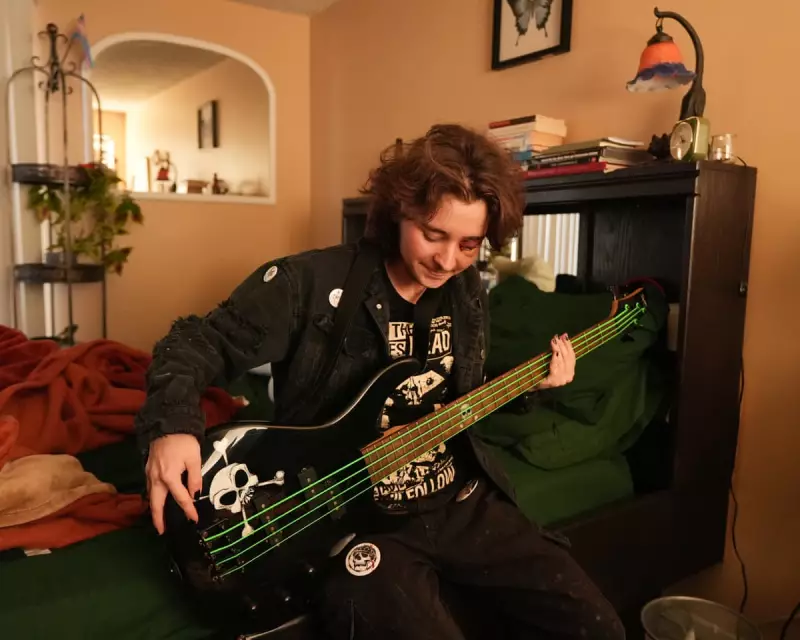
The violent encounters occurred during an anti-ICE protest and vigil in Santa Ana, California, honouring Renee Good, who was fatally shot by an Immigration and Customs Enforcement officer in Minneapolis. Kaden Rummler, 21, was shot in the face from a distance of just a few feet by a Department of Homeland Security agent, according to widely circulated video evidence.
Medical treatment revealed the devastating impact of the round. Doctors extracted glass shards and plastic fragments from his skull and found a metal fragment perilously close to his carotid artery. The shooting destroyed vision in his left eye. "I can’t sneeze or cough because it’s dangerous," Rummler told local news outlet KTLA, noting that a piece of plastic the size of a nickel was removed from his eye. He added that medical staff told him his survival was "a miracle."

Video footage also showed the federal officer dragging the injured Rummler several yards across pavement and into a federal building after shooting him. Rummler, who is 5ft 1in tall and weighs 102lbs, was approaching officers with a bullhorn after they had detained another protester.
A Second Victim and Official Response
In a near-simultaneous incident at the same protest, 31-year-old Britain Rodriguez also suffered a close-range shot to the face with a less-lethal round. He described the sensation to the Los Angeles Times as feeling like his "eye exploded in my head."
These actions appear to directly contradict official policy. The Department of Homeland Security's own use-of-force guidelines classify "uses of impact weapons to strike the neck or head" as a form of "deadly force." When contacted for comment about the Santa Ana incidents, the DHS did not immediately respond.
However, a DHS spokesperson, Tricia McLaughlin, subsequently characterised the protesters as "a mob" that threw rocks, bottles, and fireworks at officers. This account is disputed by local reports. Orange County supervisor Vicente Sarmiento, who attended, described the event as "very peaceful," with attendees including local officials and parents with strollers. Local police and media stated protesters threw only traffic cones, and video of Rummler's shooting shows no objects being thrown at officers.
Escalation and Widespread Concern
The events have raised serious questions about the role of federal agents in crowd control, which is not a typical function for homeland security agencies. It remains unclear why officers engaged with protesters who were not immigration enforcement targets and were demonstrating on public property.
Criminologist Edward Maguire of Arizona State University, an expert in crowd control, noted that recent DHS actions "appear inconsistent with basic principles of crowd management and de-escalation." He emphasised that decades of research show such aggressive responses "tend to escalate tension and conflict" and increase risks to all parties.
Supervisor Vicente Sarmiento expressed profound distress and outrage, stating, "I feel just outraged that some of our federal delegation... are considering continuing to fund these federal agencies that have now gone rogue and are no longer protecting us, but are putting people in critical harm – killing people and maiming people." The blindings in Santa Ana have become a focal point in the ongoing national debate over policing, protest rights, and the conduct of federal law enforcement.