

Pro-Palestine Legal Aid Requests in US Skyrocket by 300% Since 2023
The civil rights organization Palestine Legal has documented a dramatic surge in requests for legal assistance connected to Palestine-related activism across the United States. The group logged a staggering 300% increase in yearly requests compared to levels before Israel's war in Gaza began in late 2023.
Record Numbers and Political Context
In 2025, Palestine Legal recorded 1,131 requests for support. While this figure represents a decrease from the record 2,184 requests received during the peak of student protests and encampments in 2024, it remains substantially higher than the organization's pre-October 2023 yearly average. The group attributes this sustained high demand to what it describes as "authoritarian repression" that intensified following Donald Trump's return to the presidency in January 2025.
"With Trump's return to power in January 2025, the authoritarian repression of the Palestine solidarity movement in the United States – already at unprecedented heights with the Biden administration's crackdown on dissent against the US-backed genocide – went into overdrive," Palestine Legal stated in a recent report.

Student Activism at the Center
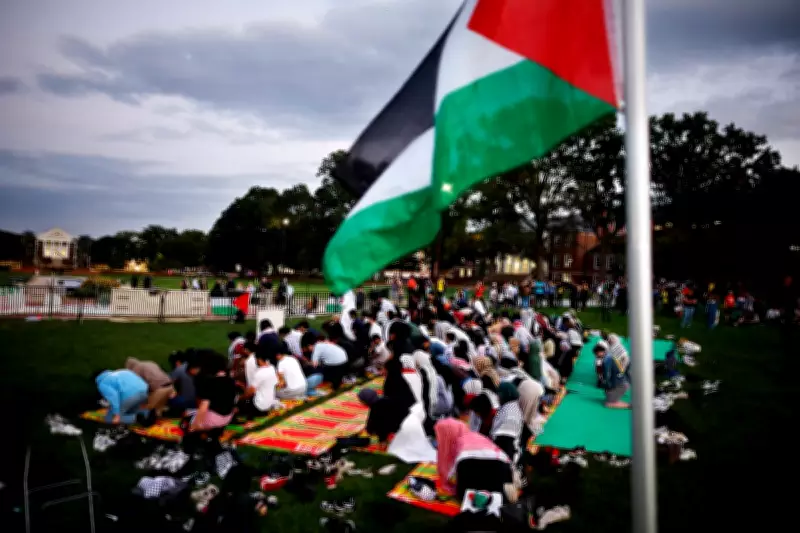
Although pro-Palestinian protests were smaller and less frequent in 2025 compared to the spring of 2024, when thousands of students faced arrests nationwide, universities implemented numerous new restrictions and punitive measures. The Trump administration's return led to significant confrontations between federal authorities and universities accused of tolerating antisemitism.
Most requests handled by Palestine Legal in 2025 involved student activism, including 40 cases at K-12 institutions and 663 at universities. The majority concerned student suspensions and campus bans resulting from Palestine-related advocacy.
One prominent example involves three Harvard University students facing disciplinary action for protesting against a campus appearance by a fossil-fuel company CEO who also serves on the board of weapons manufacturer Lockheed Martin. These students are the first to be investigated by Harvard's newly established University Committee on Rights and Responsibilities (UCRR), created in response to demands from the Trump administration.
"We have said for a long time that Palestine is the canary in the coalmine," explained Tori Porell, an attorney representing the Harvard students. "But once these policies and systems are put in place, they can be used against anyone: climate protesters, those speaking against Trump, racial justice protesters."
Immigration Crackdown and Legal Victories
Following Trump's return to office and his signing of an executive order targeting pro-Palestine student activists, Palestine Legal experienced a significant spike in immigration-related requests. The group described this as leading to "a cascade of unlawful and cruel state-mandated kidnappings intended to intimidate and silence the growing student movement for Palestinian rights."
After immigration authorities detained Mahmoud Khalil, Mohsen Mahdawi, and several other foreign nationals who had been vocal about Palestinian rights, many foreign nationals contacted the organization fearing "being stripped of their status, deported, or detained." Palestine Legal recorded 122 immigration-related intakes in 2025 – more than triple the number of comparable inquiries received in 2024.
The organization, which refers cases to a network of over 2,000 attorneys, also handled 50 requests related to criminal investigations, 163 concerning "adverse employment decisions," and 162 accounts of harassment.
Courtroom Successes and Ongoing Challenges
Despite the challenges, the pro-Palestine movement has achieved several legal victories. Courts have rejected claims against Palestine advocacy groups brought under antiterrorism statutes, as well as lawsuits attempting to characterize pro-Palestine speech – including chants, slogans, and encampments – as discrimination or harassment.

Last summer, the University of Maryland reached a $100,000 settlement with its campus Students for Justice in Palestine chapter after the group sued the university over its ban on an October 7 interfaith vigil mourning Palestinian lives lost in Gaza. Additionally, last fall, a federal judge in Boston ruled in a strongly worded opinion that the detention of Khalil and other students for their Palestine advocacy was unconstitutional and designed to suppress speech.
However, Palestine Legal emphasized that even unsuccessful "lawfare" against the pro-Palestine movement imposes "real costs," noting that "the chilling effect is not incidental; it is the point."
"Students are the biggest threat because they are the ones who are changing public opinion," observed Khalidi, highlighting significant shifts in American perspectives on Israel that are beginning to reshape the political landscape. "They represent a moral compass for all of us."





