

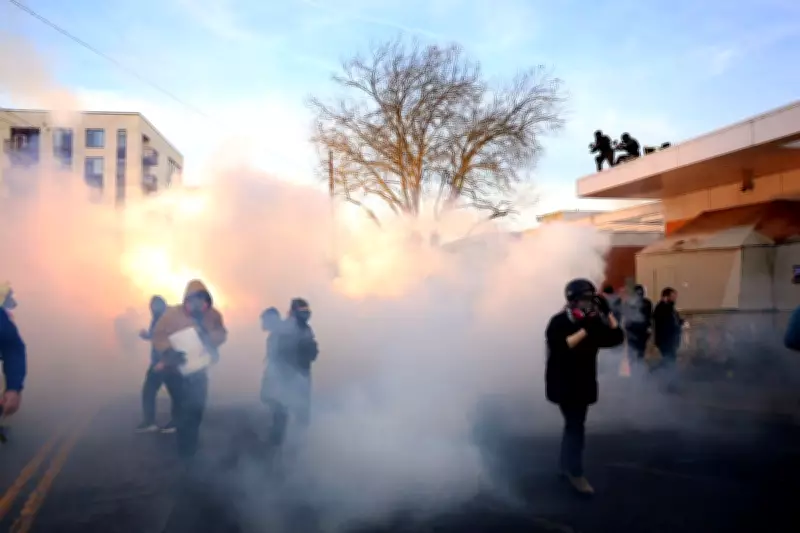
Portland Residents Seek Court Order to Limit Federal Tear Gas Use Near Homes
Residents of an affordable housing complex located directly across from the United States Immigration and Customs Enforcement building in Portland, Oregon, are preparing to provide testimony in federal court this Friday. Their lawsuit aims to impose strict limitations on federal officers' deployment of tear gas during protests at the immigration facility, following months of repeated exposure that has severely impacted their daily lives.
Living in a Chemical War Zone
Multiple tenants at the Gray's Landing apartment complex have resorted to extraordinary measures to protect themselves from chemical munitions used by federal agents. Many have purchased gas masks to wear inside their own homes, while others have meticulously taped windows and stuffed wet towels under doors in desperate attempts to seal out the toxic fumes. Children, seeking a sense of security, have been sleeping in closets to escape the pervasive threat.
The property manager and several residents initiated legal action against the federal government in December. They argue that the indiscriminate use of tear gas, smoke grenades, and pepper balls has violated their fundamental constitutional rights to life, liberty, and property. The chemicals have caused widespread illness, contaminated living spaces, and effectively confined people indoors. The plaintiffs are requesting the court to restrict federal agents from using such munitions unless faced with a genuine, imminent threat.

Health Impacts and Vulnerable Populations
Court documents detail numerous health issues suffered by residents, including severe difficulty breathing, persistent coughing, debilitating headaches, and other acute symptoms following exposure. Canisters have struck apartment windows and been discovered in the building's courtyard and parking garage, according to the formal complaint.
The case highlights particularly vulnerable individuals within the community. Plaintiff Susan Dooley, a 72-year-old Air Force veteran managing diabetes and high blood pressure, was diagnosed with shortness of breath and mild heart failure after a doctor sent her to the emergency room. Another resident, Whitfield Taylor, who uses wet towels to block his window air conditioning unit, had to take his two young daughters, aged 7 and 9, to urgent care for respiratory problems. The girls sometimes sleep in his closet to feel safe.
Of the complex's 237 residents, nearly one-third are aged 63 or older. Twenty percent of the units are designated for low-income veterans, and 16 percent of tenants identify as having disabilities, making them especially susceptible to the harmful effects of chemical agents.
Legal Arguments and Broader Context
The defendants, which include ICE, the Department of Homeland Security, and their respective leaders, contend that officers have deployed crowd-control devices only in response to violent, obstructive, or trespassing protests that have occurred at the building for months. They have challenged the tenants' constitutional claims, arguing that accepting such an argument would mean law enforcement violates the Constitution whenever airborne crowd-control devices inadvertently drift into homes, even if their use is otherwise lawful.
This lawsuit emerges amid escalating national concern over aggressive federal crowd-control tactics, as cities across the country have witnessed demonstrations opposing the immigration enforcement policies championed by the Trump administration.
The plaintiffs recently filed an updated request for a preliminary injunction after federal agents launched tear gas at a crowd that local officials described as peaceful and included young children. Their filing starkly notes, "As this brief is being filed, tear gas is once again inside the homes of Plaintiffs and other residents of Gray's Landing."
This hearing follows a separate Oregon lawsuit where a federal judge temporarily restricted agents' use of tear gas during protests at the same building. That temporary restraining order, secured by the ACLU of Oregon on behalf of protesters and journalists, is scheduled to expire next week, adding urgency to the current proceedings.






