

From 'Stink Bugs' to 'Enemies of the People': Orbán's Media Assaults Blaze Trail for Trump
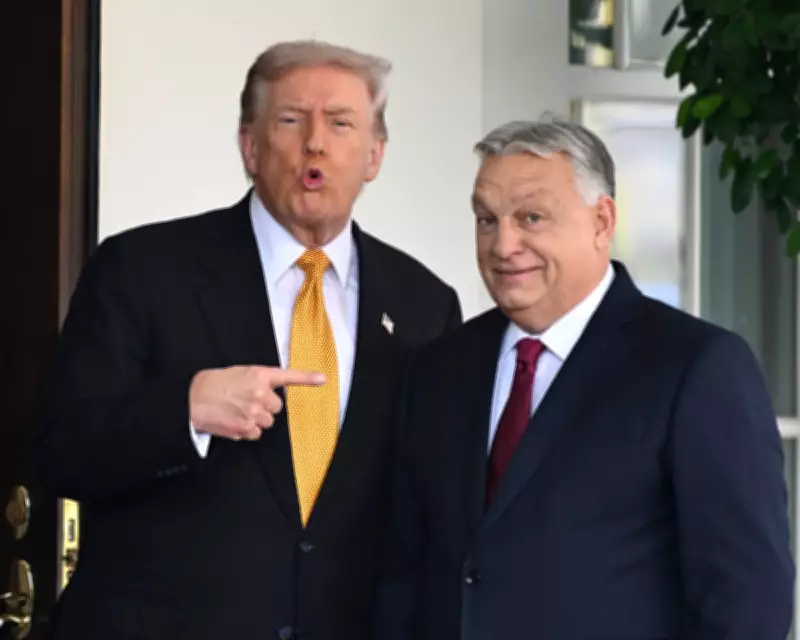
In a striking display of authoritarian alignment, Donald Trump hosted Viktor Orbán at the White House in Washington on 7 November 2025, underscoring a deepening political kinship. This meeting highlighted not just personal rapport but a shared strategy of media repression that threatens democratic norms globally.
Systematic Attacks on Independent Media
Hungary's prime minister, Viktor Orbán, has conducted a relentless campaign against independent media over his 16-year tenure. During his state of the nation address earlier this year, Orbán outlined a chilling vision, vowing to purge Hungary of "bought journalists" and "fake civil society organisations" if re-elected in the 12 April elections. This rhetoric mirrors broader authoritarian trends, as noted by the V-Dem Institute in Sweden, which identifies media repression as the most commonly used weapon in the authoritarian arsenal. Their latest report finds that US democracy is now at its worst level since the 1960s, marked by a sharp decline in media freedom.
In February, Donald Trump endorsed Orbán for re-election, hailing him as "a truly strong and powerful leader" who has delivered "phenomenal results". Beyond praise, Trump has actively adopted Orbán's playbook, restricting media freedom in the US. A report co-authored for the Rule of Law Lab at NYU School of Law and the Hungarian watchdog Mérték Media Monitor documents these parallels, revealing how both leaders use dehumanising language against journalists. Orbán has labelled independent outlets as "fake news factories" and journalists as "stink bugs", while Trump has attacked critical media as purveyors of "fake news" and the "enemy of the people", often using misogynistic epithets against female reporters.

Exclusion and Lawfare Tactics
Both Orbán and Trump employ exclusionary tactics to block independent reporting. Orbán's government routinely bars independent journalists from government events, press conferences, and parliament, with reporters forcibly removed from ruling party campaign events ahead of elections. Similarly, the Trump administration denied access to outlets like the Associated Press from the Oval Office and Air Force One over naming disputes, and closed media offices in the Pentagon after court rulings against access restrictions.
When exclusion fails, both leaders resort to lawfare. In Hungary, the government filed a criminal complaint accusing investigative journalist Szabolcs Panyi of espionage after he reported on confidential EU meetings with Russia. Orbán's allies have also filed numerous costly Slapps (strategic litigation against public participation) against independent media to drain resources, such as lawsuits against outlets citing criticism from a supermarket CEO. Trump has mirrored this with multibillion-dollar Slapps against major news organisations like ABC News, the New York Times, and the BBC.
Regulatory Capture and Media Consolidation
Orbán has targeted regulatory bodies to consolidate media control. Upon taking office in 2010, he enacted media laws to pack Hungary's media regulatory authority with loyalists, leading to actions like revoking Klubrádió's broadcasting licence—a move later ruled a violation of EU law. The authority oversaw the merger of over 470 pro-government outlets into the Central European Press and Media Foundation, bypassing competition rules. As a result, Hungary's rank in Reporters Without Borders' World Press Freedom Index plummeted from 23rd to 68th, with Fidesz now controlling roughly 80% of media.
In the US, Trump is implementing a similar strategy through Brendan Carr, his handpicked chair of the Federal Communications Commission (FCC). Carr has admitted the FCC "isn't independent", approved media mergers favouring Trump allies, waived ownership caps, and issued regulatory threats that induce "anticipatory obedience" among broadcasters. While US media remain more independent overall, Trump's rapid consolidation efforts lack the tempering force of regional oversight like the EU, risking an escalation beyond Orbán's model.

Survival and Global Implications
Despite repression, independent outlets in Hungary have survived through civic trust and innovative funding, offering a glimmer of hope. As Hungarians vote on 12 April, the world must watch closely. The chilling parallels between Orbán and Trump underscore a global trend where enemies of media freedom learn from each other, demanding that advocates for a free press unite and adapt strategies to defend democratic values.





