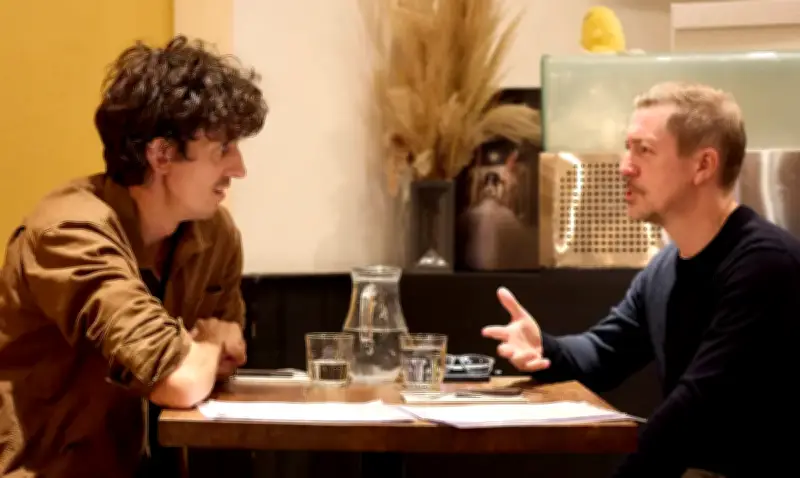
Edward, a 38-year-old English teacher from Bristol, and Martin, a 55-year-old personal trainer from Brentford, met for dinner to discuss their political differences. Their conversation covered net zero targets, the size of the civil service, and defence spending.
Initial Impressions and Dinner
Martin admitted he was initially apprehensive, wondering if the evening would descend into an argument, but found Edward to be a really nice guy. Edward said they got on really well and it was a delightful evening.
Martin ordered squid to start, then crab pasta with pistachio and chilli, a Sicilian lemonade, and his favourite dessert, affogato. Edward had tuna tartare, beef ragu with a glass of red wine, and finished with an affogato.
Disagreement Over Net Zero
Martin expressed his view that net zero is basically impossible, and that giving people an impossible target makes them give up. He argued that carbon capture is fundamental to the UK's ability to hit net zero, but nobody has yet proved it can be scaled beyond test sites.
Edward countered that without a target, nobody works towards anything, but agreed there needs to be more oversight to ensure money is put into the most effective areas. Martin noted the temperature limit was supposed to be 1.5C but could be as bad as three, making it pointless if missed by that much. Edward called Martin's perspective slightly nihilistic.
Civil Service Size and Defence
Martin said the civil service employs more than 550,000 people, which he thinks is too many. He suggested technology could fix many issues rather than throwing more bodies at them. Edward disagreed, saying that given the scale of issues and population size, the number isn't crazily large, but better management is needed.
On defence, Martin called for increased spending on cyberwarfare and drone technology rather than soldiers. He appreciated Edward's take that some defence costs will be triggered by the climate crisis, leading to conflicts over resources and mass migration. Edward said they agreed future attacks are unlikely to be bombs or invasions, but attacks on banking systems or drone attacks. He argued for energy independence as a strong line of defence, mentioning the UK's sea, sun, wind, and nuclear potential.
Takeaways from the Evening
Martin said his takeaway was realising that not everybody invested in the environmental movement thinks the same way, and while Edward didn't change his mind, he made him think. Edward said it was lovely to meet someone he wouldn't normally come across, and that they are not so different in what they want, just different ways of getting there.