Muslim Neighbours Rally Around London Synagogue After Arson Attempt
In a powerful display of interfaith solidarity, members of the Somali Bravanese community have stood alongside their Jewish neighbours at Finchley Reform Synagogue (FRS) in London, following a disturbing attempted firebombing earlier this week. This act of support returns a profound favour from over a decade ago, when the synagogue opened its doors to the Muslim community after their own centre was destroyed by arson.
A Determined Gathering Amidst Fear
Three days after bottles containing a suspected flammable liquid were thrown at the synagogue building, hundreds of congregants gathered for Shabbat services in a show of resilient, if slightly anxious, unity. The atmosphere inside was one of buzzing warmth and communal strength, with families singing and swaying together, toddlers in party dresses adding to the cheerful hubbub. This stood in stark contrast to the heightened security measures outside, where high gates, security guards, police officers, and volunteer patrols enforced strict entry protocols, including ID checks and pre-approved guest lists.
The incident, being treated by authorities as an antisemitic hate crime, has led to the arrest of a man and a woman. It follows a separate attack last month in nearby Golders Green, where four ambulances owned by a Jewish charity were firebombed by a group with links to Iran. Local MP Sarah Sackman acknowledged the "fear and genuine anxiety" within the Jewish community but praised its "strong show of resilience."
Returning a Historic Favour
The most poignant attendees at the service were members of the Somali Bravanese Welfare Association (SBWA). Their presence marked the full circle of a remarkable community bond. Thirteen years ago, when the SBWA's centre was destroyed in an arson attack, the Finchley Reform Synagogue offered its space for evening prayers throughout the holy month of Ramadan. This arrangement lasted for four years until a new Muslim centre was ready.
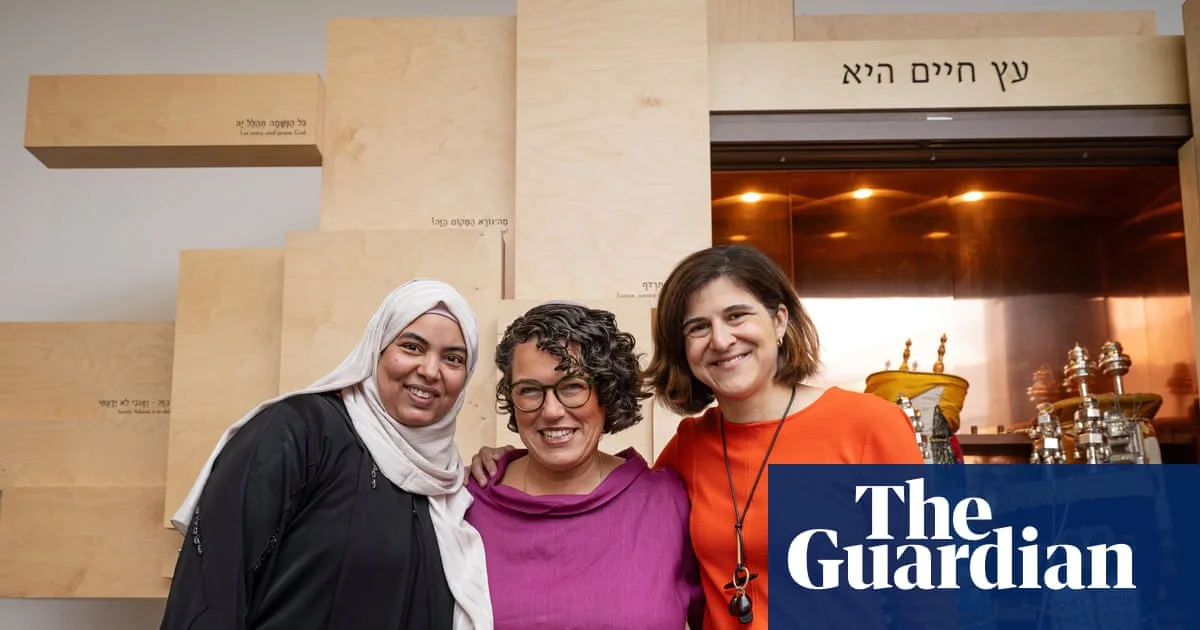
"We became a family," said Asmaa Mohamed Ali, director of the SBWA, after warmly embracing FRS's Cantor Zöe Jacobs. "We got to know the similarities that we have." Upon hearing of the attack on the synagogue, Mohamed Ali's community immediately asked, "What can we do?" In response, SBWA members brought homemade signs and donuts to share, while children proudly displayed banners celebrating the bond between the two groups.
A Rising Tide of Antisemitism
This attack occurs against a backdrop of significantly increased antisemitic incidents in the UK. According to research by the Community Security Trust (CST), which provides security to Jewish communities, there were 3,700 incidents in 2025. This represents a sharp rise following the Hamas attacks on Israel in October 2023 and the subsequent war in Gaza.
The deadliest of these was the October knife attack at Heaton Park synagogue in Manchester, which resulted in two fatalities and three serious injuries—the first fatal antisemitic incident recorded by the CST since it began keeping records in 1984. Dave Rich, CST's head of policy, noted the extensive policing efforts now dedicated to protecting Jewish communities, calling it a sign of how seriously the threat is taken.
Quiet, Radical Acts of Solidarity
MP Sarah Sackman described the partnership between the synagogue and the Muslim community centre as a "quiet, radical act of solidarity and allyship." She emphasised that FRS is more than a place of worship; it hosts a nursery, a homeless shelter, a refugee drop-in centre, and various educational and community activities. "It is a place that embodies the best of community and which reaches outwards," Sackman stated. "British Jews do not want to live behind higher and higher walls."
This sentiment was echoed by Cantor Zöe Jacobs, who recalled initially opposing the construction of a fence around the synagogue building four years ago, wanting it to remain open. "Now, honestly, that feels a bit naive," she admitted, "and I guess I'm glad I didn't win that one."
A Message of Resilience and Welcome
Addressing the congregation, Rabbi Deborah Blausten acknowledged the pain caused when "dark forces come knocking at our doors." However, she firmly stressed that the synagogue remains "a place of welcome … Whatever life throws at us, we do not walk alone." The service concluded with announcements of further interfaith outreach, including synagogue members joining worshippers at a local Anglican church on Sunday.
As congregants were instructed to socialise inside and not linger beyond the secured gates, the message was clear: resilience and openness would prevail. The support from the Somali Bravanese community, returning a kindness from years past, stands as a powerful testament to the enduring strength found in mutual respect and shared humanity amidst rising hatred.






