

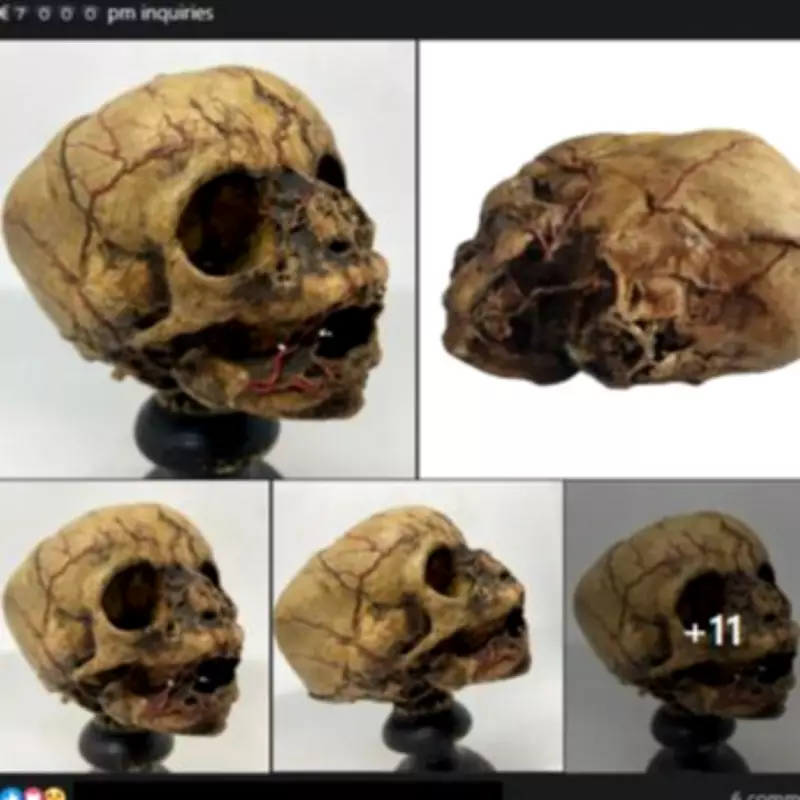
Ministers are facing mounting pressure to outlaw the sale of human remains after exclusive revelations that a six-year-old child's skull was among body parts being marketed on social media platforms and online marketplaces. Chilling evidence has emerged of a growing trade in bones, tissue, and skulls, often crafted into jewellery and furniture, with experts warning it fuels grave thefts and heritage crimes.
Shocking Revelations of Online Trade
Campaigners have disclosed that thousands of human remains are sold in the UK each year, with items appearing on sites like Facebook, Instagram, and eBay. Buyers frequently have no knowledge of the origins of these macabre items, raising severe ethical and legal concerns. In one particularly disturbing case, a skull belonging to a six-year-old child was offered to collectors, while another involved a human skeleton dressed as a vampire in a fake coffin.
Expert Warnings and Dark Origins
Dr Trish Biers, co-coordinator of the Trading and Sale of Human Remains Taskforce, highlighted the brutality of what is often called the "red trade." She revealed that sellers have contacted her with photos from freshly dug graves, offering skeletons for sale. "There's more tracking with a vegetable than a human head," Dr Biers stated, criticising false claims of ethical sourcing. She emphasised that remains donated for medical research are being torn apart and repurposed, contrary to donors' expectations.

Dr Lauren McIntyre, a fellow coordinator and osteoarchaeologist, noted that many remains sold online show signs of having been buried, indicating they likely come from churchyards, archaeological sites, or other locations. She explained that trafficked remains from countries like India and China, imported in the 20th century, are also part of this trade. The lack of regulation has led to an uptick in church and graveyard vandalism, as individuals seek to profit by selling bones for hundreds of pounds.
Political and Public Health Concerns
Last week, Labour backbencher Bell Ribeiro-Addy voiced her horror in Parliament, detailing how items such as necklaces, wallets, crucifixes, and candlesticks made from human remains are being sold online. She has introduced a Bill demanding action, stating, "Most people would be shocked to discover the growing market for human remains. What's more shocking is the fact that this grotesque trade is currently legal."
Beyond ethical issues, the trade poses significant public health risks. Dr Biers warned that antiquated remains may be treated with pesticides and other chemicals, while mummified items can harbour spores and mould, creating health and safety hazards. The curiosity market, including events like Satanic flea markets and horror conventions, further fuels demand, with private collectors driving sales.
Platform Responses and Regulatory Gaps
Meta, which owns Facebook and Instagram, asserts it has strict rules to prevent the sale of human remains. An eBay spokesperson stated, "The sale of human body parts, and items containing human body parts, is prohibited on eBay. We work diligently to prevent any items that breach our policies from being listed." However, experts argue that current measures are insufficient, with algorithms and monitoring teams struggling to curb the illicit trade effectively.
As calls for a new law intensify, the government faces urgent demands to close loopholes and ban the sale of human remains permanently, protecting both public health and ethical standards in the UK.






