A migrant who crossed the English Channel twice after being sent back to France says he is determined to keep coming back, declaring: “I would rather die than return to France.”
Baran, 33, fled Iran after being targeted by the authorities over his political activities, saying he had been shot at with rubber bullets and had his home raided by intelligence officers. He eventually reached northern France and crossed the waterway in a small boat in January with another Iranian man, Aso, 28. But both were detained after arriving in Britain and subsequently returned to France under the “one in, one out” scheme.
Hunger strike and detention
Baran was so desperate to avoid being sent back that he went on hunger strike. His Home Office detention notes recorded that he told officials: “I would rather die than return to France.” He was nevertheless flown to Paris in February.
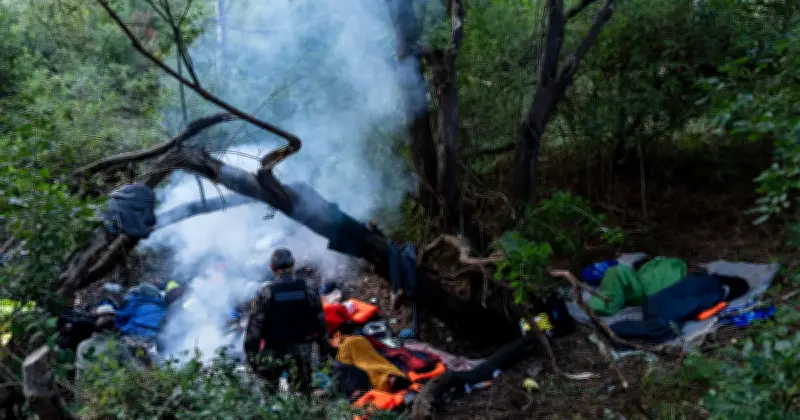
Baran said that after his return, smugglers who had not been paid for his journey tracked him down and took him to the so-called Jungle camp in Dunkirk. He claimed they beat him with sticks and their hands, threatened him with guns and forced him to wash dishes and clothes for up to 10 hours a day. The Iranian said: “I was a slave for the smugglers.”
He then made his way back to Britain in a lorry in March, was discovered hiding inside it at Dover and was detained again.
Friend's similar ordeal
His friend Aso suffered a similar fate. Aso had converted from Islam to Christianity and said he feared being executed by the Iranian regime if he was returned to Iran. After being sent back to France in March, he said he was placed in an immigration camp in Paris before being evicted and left homeless. He later lived in woodland around Dunkirk, where he said he feared being found by smugglers.
In May, Aso wrote: “I can’t stay in France any more. Either I will return to Iran and let them execute me or I will go back to the UK.” He eventually returned to Britain hidden in a lorry in June. Aso added: “If France were safe and my life were not in danger, I would never have risked returning to the UK. I do not feel safe anywhere else. The United Kingdom is the only place where I am protected from the Iranian regime and criminal smuggler networks.”
End of the one-in, one-out scheme
The men's experiences have emerged as the one-in, one-out arrangement between Britain and France comes to an end. The scheme, announced by Sir Keir Starmer and French president Emmanuel Macron last year, allowed Britain to return some small-boat arrivals to France in exchange for accepting an equivalent number of asylum seekers from France.
More than 1,400 people who arrived in Britain by small boat had been returned to France under the agreement by the end of September, while 1,117 people had been transferred legally from France to the UK. The pilot formally ended on October 1 after talks over extending it stalled. Flights carrying people already detained under the scheme are expected to continue for several weeks, but no new cases are being processed.
The agreement's end comes despite thousands continuing to cross the Channel. Between January 1 and September 27, 19,135 people arrived in Britain by small boat in 2026, according to the latest figures. That was 42% lower than the same period last year, although the figures do not include people entering Britain hidden in lorries or by other routes.
The one-in, one-out scheme was intended to deter migrants from making the dangerous crossing, but people returned to France have subsequently made their way back to Britain. The Guardian tracked more than 30 people forcibly returned to France, while asylum seekers estimated that around 200 returnees had subsequently reached the UK again.
Baran was later returned to France for a second time. He said he had no friends or plan there and was sleeping in a park, adding: “My only hope is to find a way to return to the UK. But I don’t know how.” His current whereabouts are unknown.