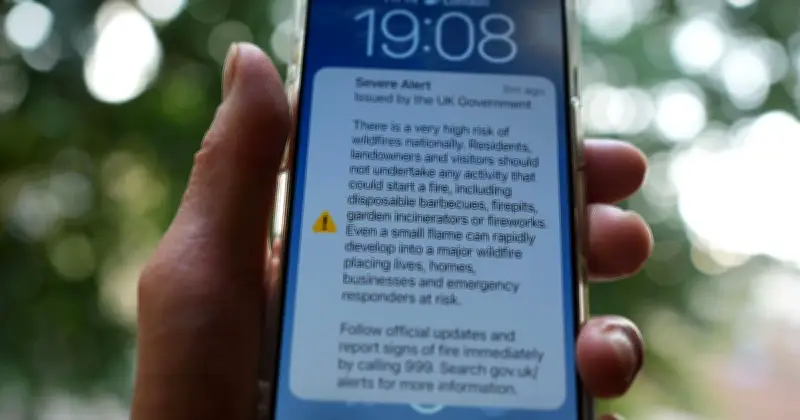
Labour has been warned that Britain's emergency alert system must not be used as a "nanny state megaphone", amid growing concern over its multi-million pound cost to the taxpayer. Alarm has been raised after the system was most recently used to warn Britons about the dangers of igniting wildfires by using disposable barbecues or fireworks during the August heatwave.
System's cost and origins
The system, which makes mobile phones sound a siren and display a warning message, was devised under the last Conservative Government, which had said development costs would come to a maximum of £25.3million. Contracts were awarded to four mobile phone operators with a total value of nearly £16million.
A Reform UK spokesperson said emergency warnings "should be in place to keep the public safe" but said the UK has "an unreliable service that has been used to warn people about disposable barbecues". Noting the "substantial funding to deliver these alerts", the spokesperson added: "Taxpayers deserve better."
Criticism from campaigners
William Yarwood of the Taxpayers' Alliance predicted taxpayers would be "baffled". He said: "Emergency alerts should be reserved for genuine crises, not turned into a nanny state megaphone for routine warnings". Mr Yarwood said ministers must "prove this system is delivering value for money."
The system was designed to alert Britons to major threats of life such as pandemics, severe weather, terrorism dangers, bomb disposal evacuations, wildfires and coal tip hazards.
Concerns over public confidence
The most recent warning has drawn strong criticism. Former Conservative minister Oliver Dowden, who launched the system, said last month he was "surprised at the decision to issue this nationwide alert". He said people should know that if they receive the alert it is a "genuine imminent emergency" and warned that if "that confidence is lost, people will simply ignore it".
Campaigners have also warned that the alert across England and Wales put people at risk of domestic violence by potentially revealing the location of a hidden phone to an abuser. Women's Aid warned last month that survivors of domestic abuse "frequently turn to second phones to help them access lifesaving support or flee from abuse".
Government defends the alert
A Government spokesperson said: "There is no cost to sending an individual Emergency Alert. The system, which has been run by successive governments, is a straightforward way to give life saving advice to people in an emergency. We took the decision to issue the emergency alert this summer at the direct request of the emergency services, who were tackling 43 wildfires across the country on the day, stretching resources to the very limit and requiring military support. By following the advice issued, people were able to take the necessary steps to keep themselves safe, and the emergency services recorded a significant decrease in incidents in the following days."