Joe Rogan Condemns UK's Social Media Arrest Epidemic
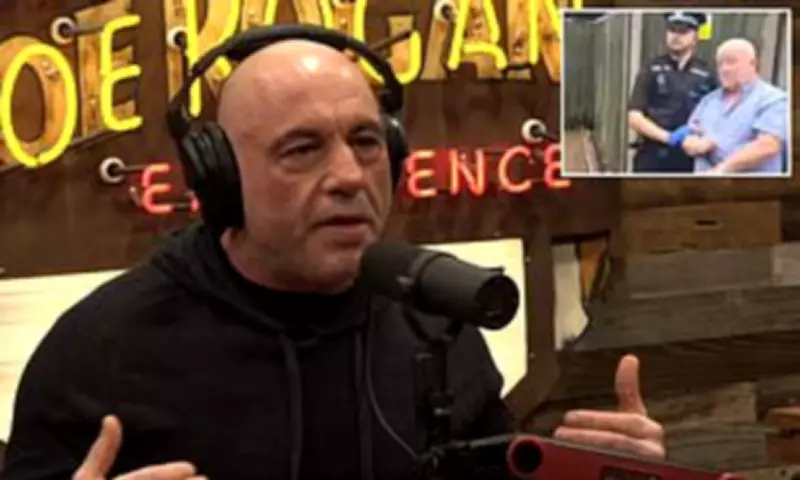
In a recent episode of his immensely popular podcast, The Joe Rogan Experience, released on February 4, host Joe Rogan displayed visible disgust while discussing what he perceives as a severe lack of free speech protections in the United Kingdom. The conversation, featuring English comedian and commentator Andrew Doyle, immediately turned to the topic of woke ideology and its tangible repercussions for British citizens.
Staggering Arrest Statistics Revealed
Rogan highlighted a shocking statistic, stating, 'More than 12,000 people have been arrested in the UK in the past year for social media posts.' He elaborated, expressing disbelief that many of the posts in question are 'not even remotely terrifying.' This figure, originally reported by The Times, translates to police making more than 30 arrests per day for content deemed 'offensive.'
The legal basis for these arrests primarily falls under Section 127 of the Communications Act 2003 and Section 1 of the Malicious Communications Act 1988. These laws criminalise sending 'grossly offensive' messages or sharing content of an 'indecent, obscene or menacing character' via electronic communications. The potential penalties are severe, including up to two years' imprisonment or an unlimited fine.

A Transatlantic Perspective on Censorship
Andrew Doyle voiced his concern that Americans now view Britons as 'crazy' due to these restrictive speech laws. Rogan confirmed this perception, bluntly replying, 'We do. We do now. We think you've lost it.' The discussion contrasted the UK's legal framework with the robust protections offered by the First Amendment in the United States, which Doyle openly admired.
Rogan speculated on a broader cultural and political shift, suggesting, 'We also think something happened where your leaders are intentionally trying to tank your country. It seems like they're trying to bring in as many migrants as possible... and then create chaos on the streets because of it.'
Case Study: The Arrest of Darren Brady
To illustrate the real-world impact, Doyle detailed the 2022 case of Darren Brady, a 51-year-old Army veteran. Brady was arrested by Hampshire Police officers at his home in Aldershot for 'causing anxiety' with a social media post. The post in question shared an image, originally posted by online figure Laurence Fox, which depicted four Pride flags arranged into a swastika shape.
A viral video of the arrest captured Brady asking officers, 'Why am I in cuffs?' to which an officer responded that someone had experienced anxiety due to his post. Brady was later released without further action. Rogan questioned how such an image could be legally offensive, concluding, 'That's the problem. You could find anything offensive... if you're extremely sensitive.'
Systemic Issues and 'Anarcho-Tyranny'
Doyle introduced the term 'anarcho-tyranny' to describe the situation, explaining it as a system that 'punishes people who aren't breaking the law, but protects those who are.' He noted that these types of arrests are not new, revealing that even back in 2020, approximately 3,000 people had been arrested for 'grossly offensive speech.'
Doyle argued the problem extends beyond arrests. He pointed out that police routinely checking on individuals for alleged offensive speech creates a chilling effect. He also highlighted Scotland's Hate Crime and Public Order Act 2024, which allows for prosecution based on speech made within a person's own home.
'So I think it's worse than just the arrest,' Doyle stated. 'I think it's a rotten system that is being trained by activists in the college of policing that no government will deal with.'
A Call for Cultural Change
Both Rogan and Doyle agreed that a significant cultural shift is necessary. Rogan pessimistically suggested that radical change might only be demanded by the public if the situation deteriorates dramatically. The conversation underscored a deep concern about the trajectory of free speech and state overreach in the UK, framed through the lens of American commentary and domestic British criticism.

The episode served as a powerful critique of UK law enforcement priorities and legal statutes governing online expression, painting a picture of a nation where the boundaries of acceptable speech are increasingly policed, often with severe consequences.