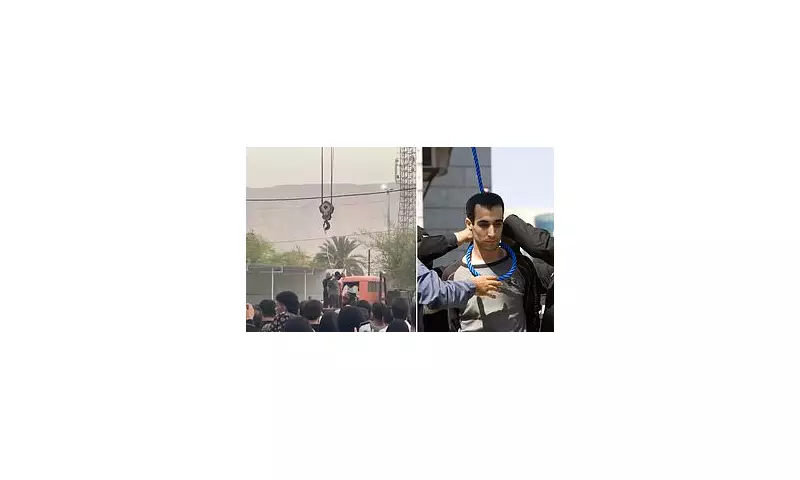
Iranian authorities are intensifying a severe crackdown on dissent, with arrested protesters now facing the possibility of execution for demonstrating against the regime. This escalation follows widespread anti-government unrest, where security forces have reportedly killed thousands.
A Surge in State-Sanctioned Killing
The situation under Supreme Leader Ali Khamenei, in power for 36 years, has grown increasingly dire. Iran is now one of the world's most prolific executioners, second only to China. Recent figures are stark: executions in 2025 have more than doubled compared to the previous year. The Norway-based Iran Human Rights group verified at least 1,500 executions by the start of December 2025.
This wave of judicial killings appears systematic. The United Nations has previously accused the regime of using the death penalty 'at an industrial scale'. Recently, clothes shop owner Erfan Soltani was reported to be the first protester formally sentenced to death for participating in demonstrations last week, signalling a harsh new phase in the state's response.

Brutal Methods and Public Spectacles
Execution methods in Iran range from firing squads to being thrown from heights, but hanging is the most common. However, the process is often designed to maximise suffering. Unlike in Japan or Malaysia, where gallows are engineered for a quick death, Iran frequently uses mobile cranes to hoist prisoners by the neck.
This method strangles the condemned, restricting blood flow to the brain. Death can take up to 20 minutes of agonising torture. These executions are sometimes turned into public spectacles, with crowds, including children, encouraged to watch. Multiple hangings are conducted at once, and the scenes are occasionally televised.
In a horrific practice believed to be ongoing, some are executed by stoning—a medieval method where the condemned are buried and pelted with rocks until they die. Since 1980, over 150 people have been killed this way, disproportionately affecting women.
Women Bear a Heavy Burden
The regime's treatment of women has deteriorated sharply, partly driven by insecurity following mass protests like the 2022 Mahsa Amini uprisings. The number of women executed has more than doubled as a result. In 2022, 15 women were executed; in just the first nine months of 2025, that number rose to 38.
According to the exiled National Council of Resistance in Iran (NCRI), women are largely executed for two reasons. First, for drug trafficking, where impoverished women are often exploited by networks with alleged ties to the Revolutionary Guards. Second, for the premeditated murder of abusive spouses, a desperate act in a system where women cannot easily divorce and have few protections from domestic violence.
The Iranian Penal Code allows for extreme combinations of punishment, such as hanging alongside flogging, amputation, or crucifixion. As the regime feels increasingly threatened, the brutal machinery of state repression is accelerating, casting a long shadow over the nation's future.