

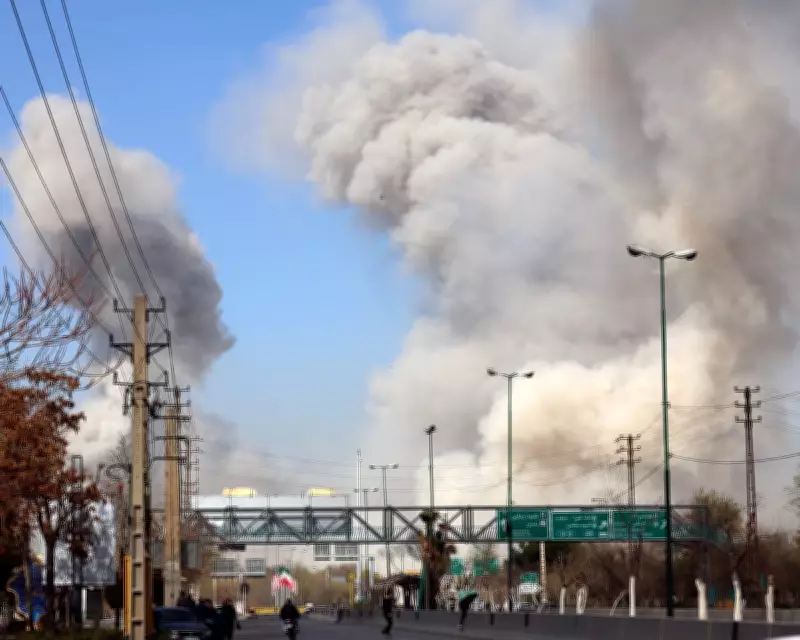
Iran's Internet Blackout Exacerbates Civilian Danger During Airstrikes
As US and Israeli military forces continue their bombardment of Iran, civilians are facing the onslaught in an information vacuum, cut off from vital warnings about impending strikes and emergency updates. Human rights organisations are raising alarms that the Iranian government's near-total internet shutdown, now exceeding 100 hours, is significantly worsening the human cost of the conflict by denying people access to evacuation alerts and real-time safety information.
Civilians Left in the Dark as Communication Channels Fail
According to internet analysis experts, Iran's internet traffic has plummeted to approximately 1% of normal levels since the shutdown began shortly after the attacks commenced on Saturday. While some domestic networks remain partially operational, most Iranians are effectively isolated from external communication channels. This means that evacuation warnings posted by the Israeli Defense Forces on social media platforms are failing to reach the vast majority of civilians in targeted areas.
"Information barely gets through," reported Ali, a Tehran resident who managed brief connectivity via VPN. "If there's no internet, we know absolutely nothing. Not about other cities, not even about what's happening a few streets away."

Contradictory Information and Psychological Warfare
Iranian state media has been broadcasting limited and sometimes contradictory information about the airstrikes, further complicating the situation for civilians. While extensively documenting some attacks on civilian sites like the Minab primary school, state-affiliated channels have dismissed evacuation warnings as "psychological operations by enemies" and urged the public to ignore such rumours.
Fereidoon Bashar, executive director of digital rights organisation ASL19, expressed concern about this approach. "It's alarming to see reporting and narratives being pushed through these channels trying to portray that cities and certain areas are safe and that life is continuing as normal," he stated.
Limited Access to Critical Information
Only a small segment of the population has maintained internet access during the blackout, including those with Starlink terminals and certain government-approved entities. This creates a dangerous information disparity where most civilians remain unaware of which areas are being targeted, which medical facilities remain operational, and where new rounds of bombing are imminent.
Researchers from Project Ainita and the Outline Foundation have determined that even when warnings do reach some individuals, they often arrive too late for effective evacuation, particularly since many military installations are located within urban areas.
Civilian Infrastructure Under Fire
The conflict has already resulted in significant damage to civilian infrastructure across Iran. According to Iranian foreign ministry spokesperson Esmaeil Baqaei, at least 33 civilian sites have been hit or damaged, including schools, hospitals, and markets. The strike on Minab primary school represents the worst mass casualty event so far, with at least 168 reported fatalities, predominantly young children.
Medical infrastructure has also suffered extensive damage, with the International Federation of the Red Crescent reporting damage to seven of their bases and branches, three rescue vehicles, and fourteen medical and pharmaceutical centres.
Documentation and Humanitarian Challenges
The internet shutdown is severely hampering efforts to document the full human toll of the conflict and coordinate humanitarian responses. Human Rights Activists News Agency has reported 1,114 civilian deaths as of 4 March, including 181 children, but acknowledges that verification has become increasingly difficult without reliable communication channels.
"During military attacks, a nationwide internet disruption is not merely a technical issue – it directly affects the flow of information, the ability to conduct field verification, citizens' access to safety information, and communication among families," the organisation stated, emphasising that Iran's government has obligations under human rights law to ensure access to information.

For civilians enduring the bombardment, the situation remains profoundly distressing. "No one knows when the war will end," said Ali. "There's this constant anxiety: what if it doesn't end?" The combination of physical danger and information deprivation has created what human rights groups describe as a perfect storm for increased civilian casualties in the ongoing conflict.





