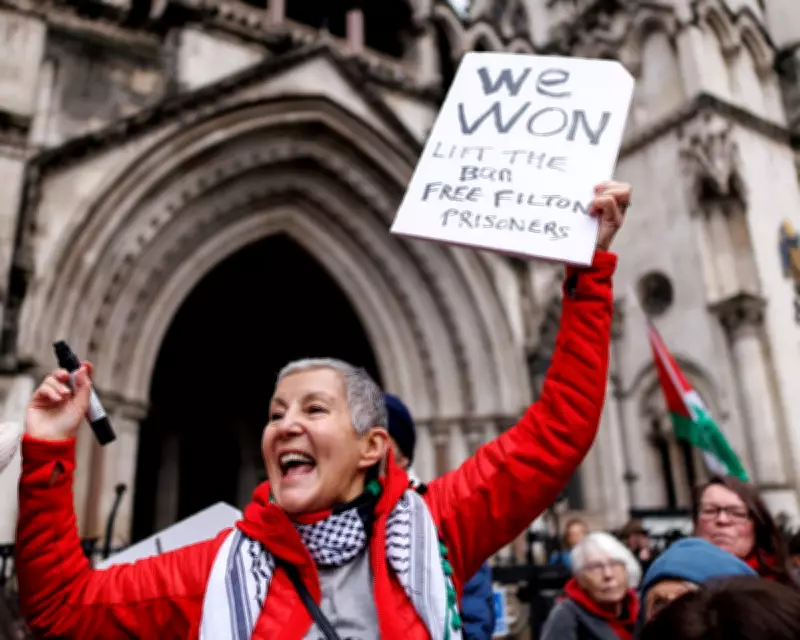
High Court Overturns Palestine Action Proscription, Retirees Declared Vindicated
Supporters of Palestine Action celebrated outside the High Court last week following a landmark ruling that overturned the organisation's proscription. The decision, made by three of the UK's most senior judges, has been hailed as a victory by many of the nearly 3,000 individuals arrested since the ban was imposed. However, the legal battle is far from over, as the government has announced plans to appeal the judgment, leaving many protesters in a state of legal limbo.
Retirees Feel Vindicated by Court Decision
Among those arrested are retirees who have expressed a sense of vindication following the High Court's ruling. Chris Romberg, a former army colonel and ex-military attache, was arrested last August and has yet to enter a plea. He stated, "I am pleased and satisfied that this proscription, which we knew was illegitimate, has now been shown to be unlawful as well." Romberg, a member of Holocaust Survivors and Descendants against the Gaza Genocide, criticised the government, suggesting it has abandoned its values and liberties.
Since July last year, police have arrested at least 2,787 people across the UK for displaying signs with statements such as "I oppose genocide, I support Palestine Action," according to the civil liberties organisation Defend Our Juries. The arrests have sparked widespread controversy and legal challenges.

Legal Grounds for Overturning the Ban
In a written judgment, Dame Victoria Sharp, president of the king's bench division, ruled that the proscription of Palestine Action was unlawful on two key grounds. Firstly, it breached human rights laws, and secondly, it violated the home secretary's own proscription policy, which requires the government to assess the genuine threat posed by the group to the UK. While the ban was overturned in principle, Sharp indicated that she would hear from both sides before issuing an order to remove the proscription during the appeal process.
Following the decision, the Metropolitan police announced that officers would cease arresting people for expressing support for Palestine Action. However, they will continue to gather evidence at protests, maintaining a cautious approach amid the ongoing legal proceedings.
Mixed Reactions and Ongoing Uncertainty
Trisha Fine, who was arrested in Cardiff and spent 27 hours in police custody, described the ruling as "good news, but with big reservations." She expressed frustration, noting that many friends believe her ordeal is over, but she emphasised, "It bloody isn't. It seems like our jolly government has got all the cards in their hands." Fine, who was denied antibiotics for a gum infection while in custody and faced a travel ban, added, "I want to get my life back. I've had enough."
Richard Whitmore-Jones, arrested at a silent vigil in Parliament Square on 9 August last year, shared a similar sentiment of caution. "Obviously yesterday was such a good day, we were all ecstatic that the proscription ban was overturned, but I think today I'm feeling a little bit more circumspect about what might happen in future with the appeal," he said. Whitmore-Jones, who has been arrested six times and pleaded not guilty to the first charge, criticised the saga as a "disgraceful waste of money" that could be better spent elsewhere.
Government Criticism and Broader Implications
Father John McGowan, a Catholic priest arrested at the same protest as Whitmore-Jones, expressed anger at the government's decision to appeal. "They do not seem to understand the anger of probably the majority of British people at them for supporting Israel. If they want to know the reason why they're unpopular, this is one of them. Their unconditional support for Israel," he said. McGowan, who lived in Jerusalem for five years, believes the government is "on the wrong side of history" and out of touch with public sentiment.

All arrestees interviewed by the Guardian, except for Fine, stated they would repeat their actions. McGowan affirmed, "And if I have to go to prison, I would do so. I could justify it to my conscience." Whitmore-Jones echoed this, saying he would act again "in a heartbeat." They also voiced frustration over the ongoing violence in Gaza, with Whitmore-Jones noting, "At least one child is being murdered every day in Gaza... And our country is supporting it. I'm just horrified."
Legal Limbo and Future Proceedings
As the government prepares to lodge an appeal, all individuals with outstanding charges or open police investigations remain in legal limbo. It is unclear whether they will still face trial on terror charges. Whitmore-Jones received a summons to a plea hearing on the same day he was celebrating the High Court's decision, highlighting the ongoing complexities. The appeals process may eventually reach the Supreme Court, but for now, the ruling represents a significant blow to the government's credibility, as noted by Romberg.
The case underscores broader issues of civil liberties, government accountability, and international policy, with protesters determined to continue their advocacy despite the risks. The outcome of the appeal will be closely watched by both supporters and critics of Palestine Action.