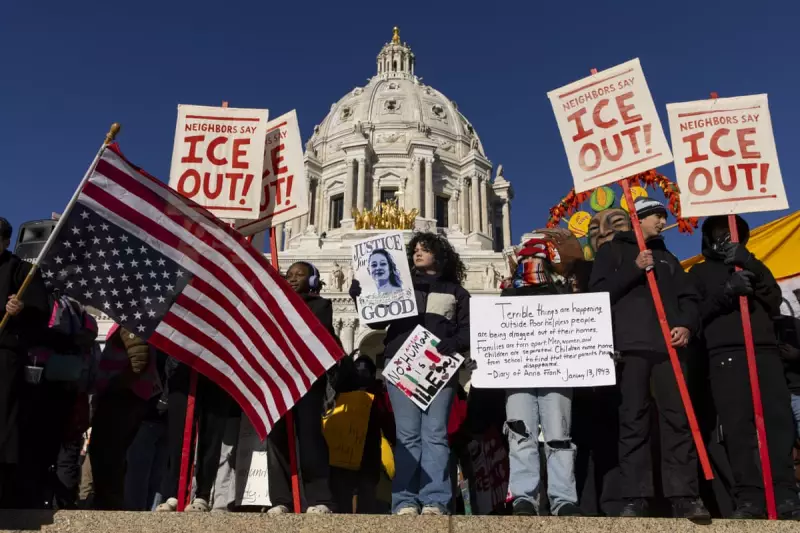
Grassroots organisers in the United States are calling for a nationwide walkout on 20 January, the anniversary of Donald Trump's inauguration, to protest against the administration's policies. The action, dubbed the 'Free America Walkout', urges people to leave their workplaces, schools, and businesses at 2pm local time.
A Weekday Withdrawal of Labour
Unlike the large weekend rallies that characterised the Women's March after Trump's first inauguration, this year's action is deliberately planned for a weekday. Rachel O'Leary Carmona, executive director of the Women's March, explained the strategy. The group wants to test new methods of mobilisation by having people withdraw their labour and refrain from shopping or commerce.
The call comes amid what organisers describe as escalating attacks on rights, including increased ICE (Immigration and Customs Enforcement) raids, assaults on gender-affirming healthcare, cuts to health services, and the deployment of National Guard troops in US cities. The Women's March has put out the initial call, but local groups are coordinating over 600 individual events in their own communities.

Walking Out and Walking In
The nature of the events will vary significantly by location. Carmona noted that while people are walking out, what they "walk into" will differ. In Houston, participants plan to walk into their elected representatives' offices. Other cities are arranging mutual aid events, rallies, and discussion circles with groups like Leaving Maga.
This decentralised approach is intentional. "The movement can only get so big if organizations are always at the centre of it," Carmona stated, emphasising the goal is to put ordinary people at the heart of the action. The walkout follows recent student protests in Minneapolis and other districts against ICE raids in their communities.
Measuring the Impact of Protest
Walkouts have a long history in US activism, from the civil rights era to recent movements against gun violence. Their impact, however, can take time to materialise. Organisers cite the 1968 East Los Angeles walkouts, where 15,000 Chicano students protested educational discrimination. Although demands were not immediately met, the action spurred long-term cultural change, leading to curriculum reforms and greater Latino representation in teaching.
To gauge the effectiveness of the Free America Walkout, the Women's March is partnering with American University sociologist Dana Fisher to collect and analyse participation data. Carmona views the event as a "stress test" for the movement's capacity to resist what she terms a drift towards fascism. While the results are unknown, the high level of planned engagement gives her hope. "This is the most engagement in action we've had in our organization's history," she said, suggesting many Americans are ready to take to the streets.