

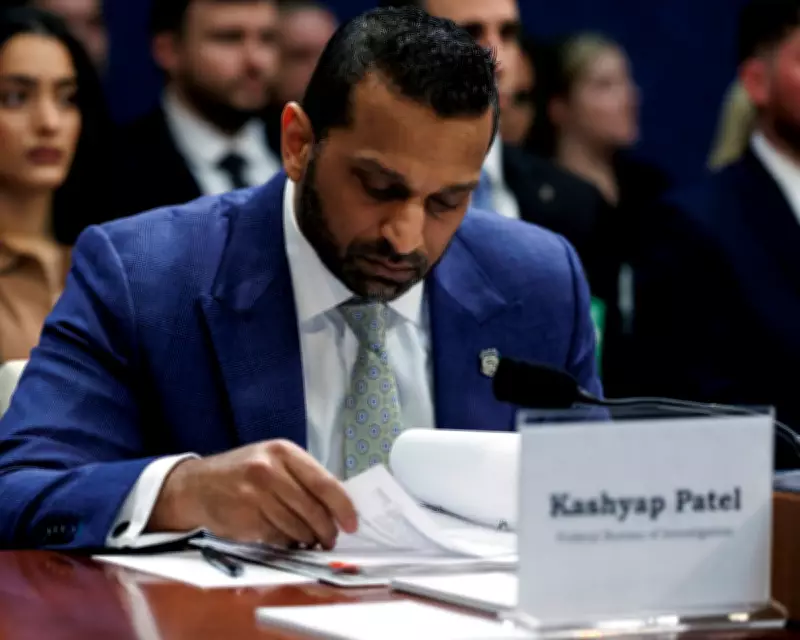
FBI Director Kash Patel Confirms Agency Buys Americans' Location Data
In a hearing before the House select committee on intelligence at the US Capitol on 19 March 2026, FBI Director Kash Patel disclosed that the agency has resumed purchasing location data on Americans. This admission has raised significant questions about privacy, constitutional rights, and the methods used by federal law enforcement to track individuals without warrants.
Constitutional Concerns Over Warrantless Surveillance
Federal law enforcement agencies typically require a warrant, based on probable cause approved by a judge, to collect historical or real-time cellphone location data. The US Supreme Court has ruled that the Fourth Amendment, which protects against unreasonable search and seizure, prohibits the warrantless gathering of such information. However, buying location data in bulk allows agencies to circumvent this requirement, leading privacy advocates to label the practice as unconstitutional.
Patel's Testimony and Wyden's Response
Patel's revelation came in response to questioning from Democratic Senator Ron Wyden of Oregon, a long-time opponent of warrantless surveillance. Wyden referenced testimony from Patel's predecessor, Christopher Wray, who stated in 2023 that the FBI was not purchasing location data derived from internet advertising at that time, though it had done so previously.

When Wyden asked if this was still the case and requested a commitment to not buy Americans' location data, Patel responded, "We do purchase commercially available information that's consistent with the constitution and the laws under the Electronic Communications Privacy Act, and it has led to some valuable intelligence for us." Wyden criticized this stance, calling it an "outrageous end run around the fourth amendment" and highlighting the dangers of using artificial intelligence to analyze vast amounts of private data.
Sources and Uses of Location Data
Location data primarily originates from mobile phones, where apps track movements for services like mapping. Nathan Freed Wessler of the ACLU's Speech, Privacy, and Technology Project explained that this data is often sold as a product, allowing apps to monetize user information. Government agencies, companies, and malicious actors can purchase this data to learn intimate details about individuals, such as daily routines, social interactions, and attendance at events like political rallies or medical appointments.
Data brokers play a key role in this ecosystem, collecting and selling granular location data along with other personal information like health or political preferences. Lena Cohen of the Electronic Frontier Foundation noted that when users grant location permissions to apps, they often unknowingly allow embedded software from other companies to access their data. This has created a multi-billion-dollar industry with minimal oversight.
Government Applications and Backlash
Federal agencies, including the FBI and Department of Homeland Security, have used location data for investigations, such as tracking undocumented immigrants or monitoring border areas. Recent reports have highlighted instances where data from apps, including Muslim prayer apps, ended up with US military entities. In response, congressional Democrats have called for investigations into warrantless data purchases by agencies like ICE and DHS.
Privacy advocates argue that these practices violate the Fourth Amendment by bypassing warrant requirements. Senator Wyden has introduced legislation to prohibit the federal government from buying location data without a warrant. In the meantime, the EFF recommends steps for individuals to protect their privacy, such as disabling location IDs and limiting app permissions, though experts like Wessler stress that Congressional action is essential for broader protection.






