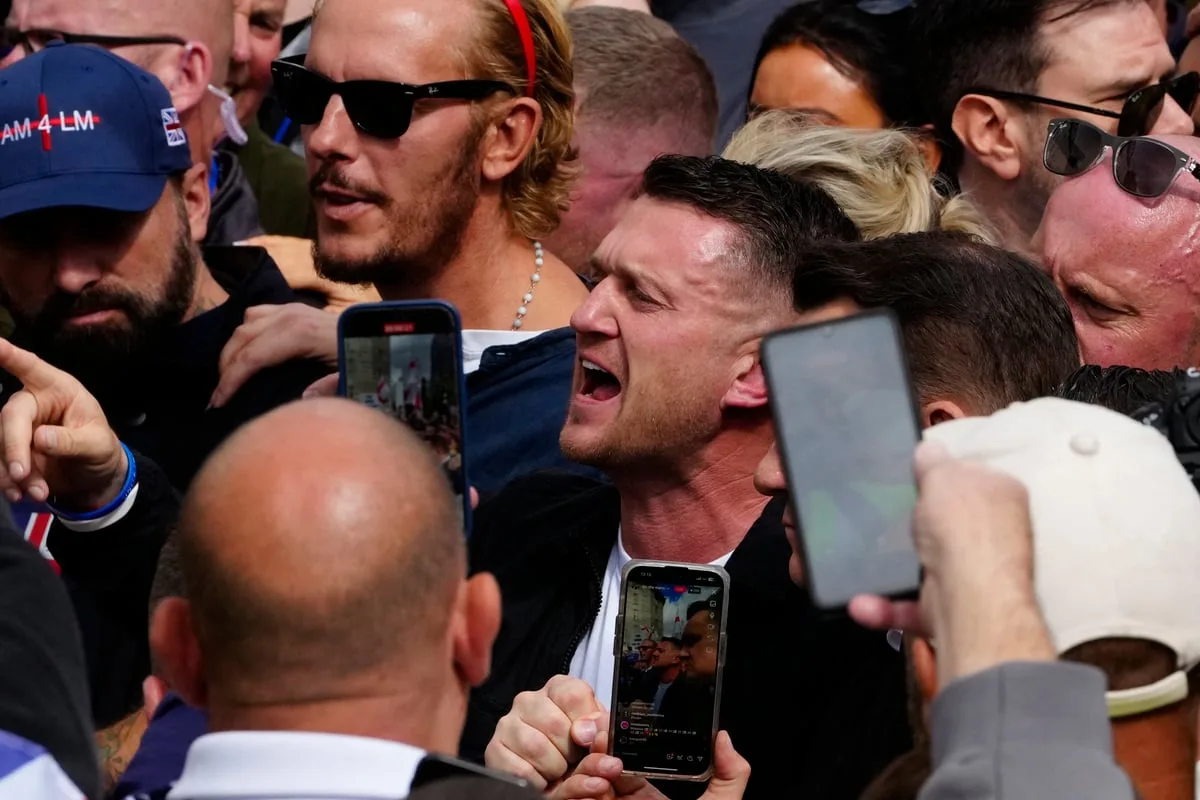
Tommy Robinson, whose real name is Stephen Yaxley-Lennon, has claimed on social media that the UK recorded the highest number of arrests for “online comments” in 2023, with 12,183 arrests. The post, which has garnered millions of views, compares the UK to 19 other countries, including authoritarian states like Saudi Arabia, Russia, and Iran.
However, the claim lacks a credible source. The Standard could not verify the list, and no reputable organisation publishes such comparative data. The figure appears to originate from a Times article, which reported arrests under Section 127 of the Communications Act 2003 and Section 1 of the Malicious Communications Act 1988. These laws cover a broad range of communications, not just online comments, and include serious offences such as domestic abuse.
The Times article also notes that the number of arrests decreased from 2022 and that most did not lead to prosecution. Convictions for communications offences have fallen over the past decade, according to government data. This nuance is lost in Robinson's post, which presents the statistic without context.
Comparisons with other countries are problematic. For example, Belarus, listed second with 6,205 arrests, does not publish such data. Freedom House reports 6,386 arrests in 2023 for online activities, including libel and extremism, but this is not directly comparable due to differing legal frameworks and transparency levels.
In summary, the claim that the UK is “number one” for online comment arrests is misleading. The data is not comparable across countries, and the UK figures include a wide range of communications offences, many unrelated to free speech.