

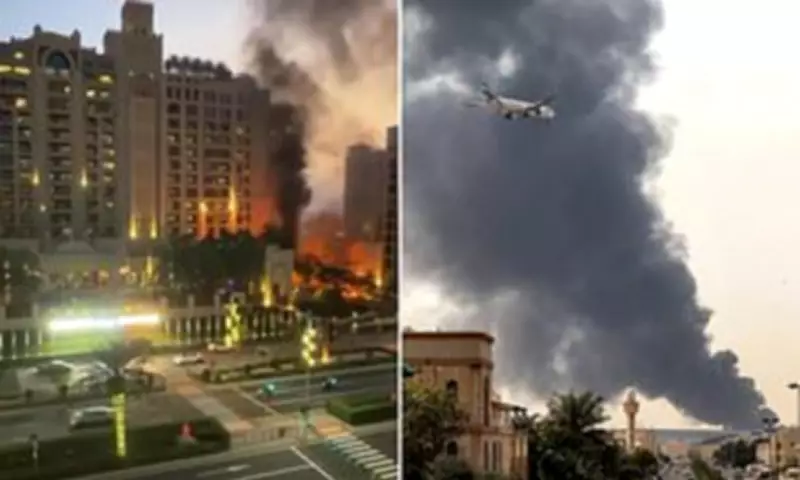
Paranoid Dubai Residents Report Group Chat Members Over Iranian Attack Footage
Human rights activists have disclosed that anxious residents in Dubai have begun reporting members of group chats who distribute pictures of Iranian drone and missile strikes to local authorities. The ongoing Middle Eastern conflict has witnessed Iran launch numerous assaults against its Gulf neighbours for over a month, with distressing footage and images circulating globally, largely due to residents in cities like Dubai capturing and sharing them on social media platforms.
Draconian Laws and Severe Penalties
The distribution of these visual materials allegedly threatens the 'national security and stability' of Gulf nations, which have meticulously cultivated their reputation as secure and luxurious travel destinations. Consequently, tourists, expatriates, and cabin crew who have dared to share clips of these attacks have been detained in overcrowded police cells and prisons. In some instances, detainees have been denied sleep, food, and medicine, falling afoul of stringent laws designed to protect 'national security and stability'.
Even passively receiving an image is considered illegal under the most severe regulations, which can result in sentences of up to ten years imprisonment or fines reaching £200,000. Radha Stirling, whose organisation Detained in Dubai assists British nationals arrested for photographing attacks, informed the i newspaper that the situation has deteriorated to the point where UAE city residents are informing authorities about individuals who send photos of Iranian attacks via group chats.

Emirati Legal Framework and Enforcement
Emirati laws explicitly prohibit anyone from taking or publishing photographs that could 'disturb public security'. Following an Iranian strike, nearby individuals receive a text message in both Arabic and English stating: 'Photographing or sharing security or critical sites, or reposting unreliable information, may result in legal action and compromise national security and stability.'
Police reportedly approach people in affected areas and demand to inspect their mobile phones. Those found with photos of attack sites are immediately arrested, while individuals who receive such images through applications like WhatsApp are also tracked down and detained.
British Nationals Among the Detained
As many as seventy Britons have been incarcerated in the United Arab Emirates for capturing photos and videos of drone and missile attacks, as revealed by The Mail on Sunday this week. The volume of arrests has overwhelmed the legal system, meaning detainees face months in custody before formal charges are filed, according to human rights group Dubai Watch.
Some arrested individuals have been released on bail but have had their passports confiscated, preventing them from leaving the Emirates. Campaigners warn that expatriates whose work visas expire during this period will be unable to work and risk homelessness. Dubai Watch is currently representing eight arrested Britons, but its founder David Haigh reports that local lawyers indicate at least thirty-five Britons have been detained in Dubai, with a similar number in neighbouring Abu Dhabi.
Legal and Consular Challenges
In certain cases, detainees have allegedly been forced to sign statements in Arabic that they could not comprehend. Access by British consular staff is understood to be 'restricted or outright denied', and the Foreign Office is not automatically notified of all cases. Some arrested individuals have been advised against contacting the British Embassy due to fears it might prolong their legal proceedings.
Officials estimate that only five British detainees are currently receiving consular assistance related to photographing incidents. Prior to the conflict, more than 240,000 Britons resided in Dubai, with approximately half believed to have returned home since Iran commenced firing missiles and drones across the Strait of Hormuz.

Official Response and Warnings
The Emirati embassy in London has confirmed that people have been warned against taking or sharing photos from 'incident sites', adding: 'Disseminating such materials or inaccurate information can incite public panic and create a false impression of the UAE's actual situation.' This stance underscores the government's commitment to maintaining its carefully constructed image amid regional instability.





