New figures show the most deprived areas in the UK are hosting more than six times as many asylum seekers as the wealthiest. At the end of June, almost 81,000 asylum seekers were receiving Home Office support across England, with nearly 22,000—well over a quarter—living in the top 10% of the most deprived councils.
That works out to 25.6 asylum seekers for every 10,000 residents. By comparison, the least-deprived councils in the country are home to just 4.2 asylum seekers per 10,000 residents, meaning the most deprived councils are housing asylum seekers at six times the rate of the least deprived.
Long-standing imbalance
Prime Minister Andy Burnham has vowed to tackle the issue, saying in August: "We cannot have a situation where it's only the poorest communities in the country that receive all of the dispersal of refugees and asylum seekers."
This phenomenon is not new, however. Local leaders were highlighting the issue as far back as 2015. Then, the Mayor of Liverpool, Joe Anderson, talked about an "asylum apartheid", claiming poorer northern cities have to look after asylum seekers while their richer southern counterparts do not.
Mr Anderson, reported in the Liverpool Echo, said previously: "The poorest places take the asylum seekers, like Liverpool and Glasgow... Southern cities don’t actually take them."
Dispersal policy changes
The Home Office launched a new "full dispersal" policy in 2023 to more evenly distribute asylum seekers across the country in response to concerns. In June 2022, before the policy review, the most deprived areas of the country still took in a greater share of asylum seekers than wealthier areas, but that share was weighted more towards poorer areas than it is now.
Four years ago, the most deprived councils had 21.1 asylum seekers per 10,000 people, compared with 1.6 per 10,000 in the least deprived councils—13.5 times as many. Today, the ratio between the two is 6.1.
The number of councils not taking any asylum seekers has also shifted over that time. In June 2019, almost half of councils in the UK (42%) took no asylum seekers whatsoever. By 2022, that had dropped to one in five councils (20%), and it now stands at just one in 24 (4%).
Highest rates and proposed centres
Glasgow has the highest number of asylum seekers of anywhere in the UK, both in absolute terms and relative to its population. There are 3,938 asylum seekers receiving Government support in the city, which works out to 60.6 per 10,000 people. However, because Glasgow is in Scotland, it isn’t included in the Government’s deprivation analysis, which only covers England.
Hyndburn in Lancashire has England’s next-highest number of asylum seekers relative to its population. The area, which includes the town of Accrington, has 426 asylum seekers in receipt of Home Office support, equivalent to 49.5 for every 10,000 people. It’s also in the top 10% of most deprived areas in the country. The fourth and fifth highest rates can be found at two other Lancashire towns, which are also in the top 10% most deprived areas. Burnley has the equivalent of 47.5 asylum seekers per 10,000 residents, while Blackburn with Darwen has 46.8 per 10,000.
Completing the top five, though, is the Essex town of Braintree, which is among the least deprived council areas in England. There are 791 asylum seekers receiving Government support in the area. That works out at 48.1 per 10,000. Braintree is also home to Wethersfield Airfield, a former military airbase now used for asylum accommodation. These dedicated facilities increase the number of asylum seekers in the local population.
Proposed facilities in wealthier areas
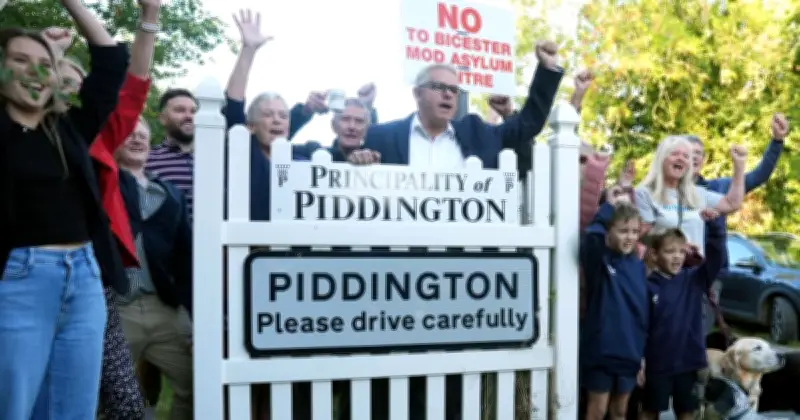
The Home Office's plan to open an asylum housing centre at a former barracks near Piddington in Cherwell attracted media attention recently, with the parish going so far as to declare its independence from the UK. There are currently 106 asylum seekers in Cherwell, which works out to 6.2 per 10,000 people. The proposed facility is expected to house an average of 1,200 asylum seekers. That would work out to 76.6 per 10,000 people living in Cherwell—the highest rate anywhere in the UK, surpassing Glasgow.
Cherwell is in the 20% of the least deprived areas of the country; however, it would represent more well-off areas, which would take a greater share of asylum-seeker housing. Similarly, a proposed new centre at an RAF site in Barnham, West Suffolk, would also see a huge increase. There are currently 38 asylum seekers in West Suffolk, equivalent to 2.0 per 10,000 people. Increasing that number to 1,200 would push the rate up to 65.7 per 10,000, which would also take it past Glasgow. Again, though, West Suffolk is among the least deprived parts of the country, so it would also represent a rebalancing of asylum seekers away from less well-off areas.
A Home Office spokesperson said: "We are working to fairly house asylum seekers across the country and will close every asylum hotel by the end of this Parliament – a process which has already helped to save taxpayers £1 billion since the General Election. Instead, we are moving asylum seekers into alternative accommodation, including former military sites, to reduce the impact on local communities. As part of this work, we will engage with local authorities and police forces to minimise the impact on surrounding areas."