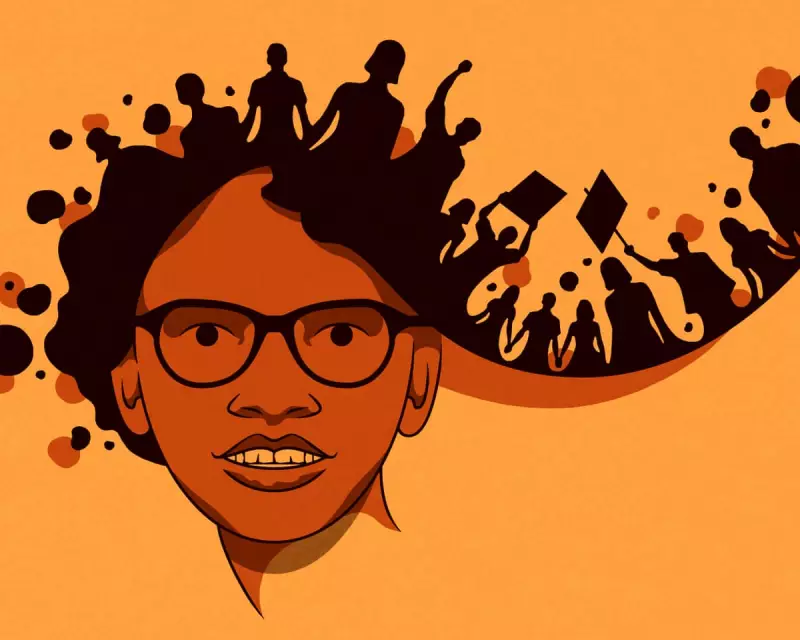
The death of civil rights pioneer Claudette Colvin this week serves as a powerful reminder that the fight for justice is built on countless acts of courage, many of which history overlooks. Colvin, who passed away in a Texas hospice, was just 15 years old when she made her stand against segregation in Montgomery, Alabama, on 2 March 1955 – nine months before Rosa Parks’s more famous protest.
The Overlooked Pioneer of the Bus Boycott
On that day in Montgomery, the teenage Colvin refused an order to surrender her bus seat to a white woman. The driver called the police, who physically assaulted her before arresting her and charging her with offences. Her lawyer, Fred Gray, believed her case could powerfully challenge the city’s segregation laws. However, the male-dominated, church-led black leadership in Montgomery decided she was not the ideal public face for their campaign. They considered her a liability: she was young, poor, dark-skinned, and unapologetically outspoken. “The black leadership in Montgomery at the time thought that we should wait,” Gray later recalled.
When Rosa Parks was arrested in December 1955 for a similar act of defiance, the same leaders saw her as the perfect candidate. A local organiser, ED Nixon, admitted, “I probably would’ve examined a dozen more before I got there if Rosa Parks hadn’t come along.” In the intervening months, Colvin fell pregnant and receded into the footnotes of history for decades, working later in life as a nurses’ aide in New York, largely unknown and uncelebrated.

Four Enduring Lessons from a Life of Resistance
Colvin’s life offers critical, urgent lessons for understanding social change. Firstly, popular history is shaped by ordinary people like Colvin doing extraordinary things, yet it is often rewritten as a simple tale of saintly figures. This diminishes everyone involved. Rosa Parks, for instance, was no accidental heroine; she was a committed militant feminist and anti-racist who admired Malcolm X and had a long history of activism.
Secondly, systemic inequalities of race, class, and gender influence who gets honoured, but this takes nothing away from the bravery of those who are sidelined. Colvin herself understood the pragmatic choice to rally behind Parks, telling an interviewer, “They picked the right person… They needed someone who would bring together all the classes. They wouldn’t have followed me.” The challenge is not to diminish recognised heroes but to also lift up the names of those like Colvin, or Silverio Villegas González, an undocumented migrant shot by ICE, whose stories are too often forgotten.
Collective Action and an Unfinished Struggle
The third lesson is that the Montgomery story was never about one or two individuals. The successful 13-month bus boycott that followed required immense organisation – much of it by women – and the collective sacrifice of thousands. An individual can resist, but lasting change demands a movement.
Finally, and perhaps most crucially, resistance never stops. The very rights Colvin fought for are under renewed threat today, with key civil rights and voting protections being rolled back. In a stark illustration, Donald Trump recently claimed civil rights had led to “white people [being] very badly treated.” For Colvin, there could be no closure. When asked if she would help promote a Rosa Parks museum, she refused, asking, “What closure can there be for me?... This does not belong in a museum, because this struggle is not over.” Her fight, she insisted, was for the future of her grandchildren.
Claudette Colvin’s legacy, now rightly celebrated in global obituaries, is a testament to the power and necessity of collective, unwavering defiance in the perpetual march toward justice.