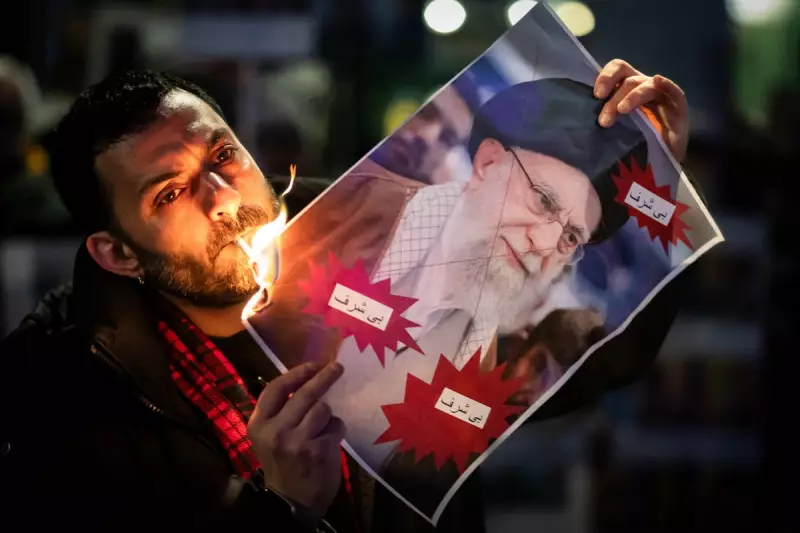
A simple, defiant act filmed in Toronto has ignited a global movement, transforming an anonymous woman into a powerful symbol of resistance against Iran's regime. The video, showing her using a burning image of Supreme Leader Ayatollah Ali Khamenei to light a cigarette, has ricocheted across social media and inspired real-world imitations from Israel to the United States.
The Viral Act of Defiance
In just 34 seconds of footage, the woman, a self-described Iranian refugee in her mid-20s, commits a series of potent transgressions against the Islamic Republic's laws and norms. With her curly hair uncovered, flouting hijab rules, she sets alight a photo of Ayatollah Khamenei—an act punishable by death in Iran. She then casually lights a cigarette from the flame, a gesture considered immodest. The video, filmed on 7 January 2026, was released a day before the Iranian regime imposed a near-total internet blackout, allowing it to spread rapidly.
The woman, who uses the online pseudonym Morticia Addams, told media outlets she is a "radical feminist" now living in Toronto under refugee status. She stated her intention was to show solidarity with friends in Iran, saying, "I just wanted to tell my friends that my heart, my soul was with them." The Associated Press confirmed the authenticity of her interviews, though she has withheld her real name for safety reasons, fearing for family members still in Iran.

A Personal History of Dissent and a Global Echo
Her act was rooted in personal experience of the regime's brutality. She claims she was first arrested at age 17 during the "bloody November" protests of 2019. She told The Objective she was "arrested with tasers and batons" and detained without her family's knowledge. Released on bail, she remained under surveillance. During the 2022 protests following Mahsa Amini's death, she participated in anti-hijab programming and received threats. In 2024, after commenting on President Ebrahim Raisi's death, she was arrested again in Isfahan, subjected to "severe humiliation and physical abuse," and released on high bail before fleeing to Turkey and eventually Canada.
Her symbolic gesture has leaped from screens to streets. Opponents of the regime worldwide have replicated the act, lighting cigarettes from photos of the ayatollah. The imagery has been amplified by figures like U.S. Senator Tim Sheehy, who posted "Smoke 'em if you got 'em. #Iran." This comes amid a severe crackdown in Iran, where activists report at least 2,615 people killed—a death toll surpassing decades of previous unrest.
The Battle for Narrative in the Age of Disinformation
In 2026, social media remains a central battleground for narrative control. While protesters frame the unrest as a demonstration against the regime, Iranian state media labels it a foreign plot. The regime targets Starlink satellite dishes to control the flow of information. In this climate, the "cigarette girl" video was inevitably scrutinised. Questions arose about its authenticity, location, and whether it constituted "psyops"—psychological operations. The U.S. Army's 4th Psychological Operations Group has openly referenced "PSYWAR," highlighting the modern reality of information warfare.
Regardless of its origins, the symbol's power proved undeniable. It cut through the noise of misinformation, providing a stark, repeatable image of personal autonomy against state control. The woman's solitary act in Canada has become a unifying emblem for a scattered diaspora and protesters on the ground, proving that in the digital age, a single flame can start a global fire of defiance.