The question of whether you can be English and non-white keeps resurfacing in political discourse. Last weekend, former prime minister Rishi Sunak, in a column in the Times, argued that national identity should not be turned into a DNA test. Sunak, the UK's first prime minister of colour, was responding to claims by a prominent podcaster that he was not English because he was a “brown-skinned Hindu”.
Sunak described this as a “reverse Tebbit test”, referring to the sociological concept measuring immigrant loyalty based on which cricket team they supported. He wrote: “Once we say that this or that person isn't really English or British because they are not white, then we are on a very slippery slope.” He added that some argue English is an ethnic identity and British a civic one, but those nuances are rarely heard by most people.
Insidious questioning of belonging
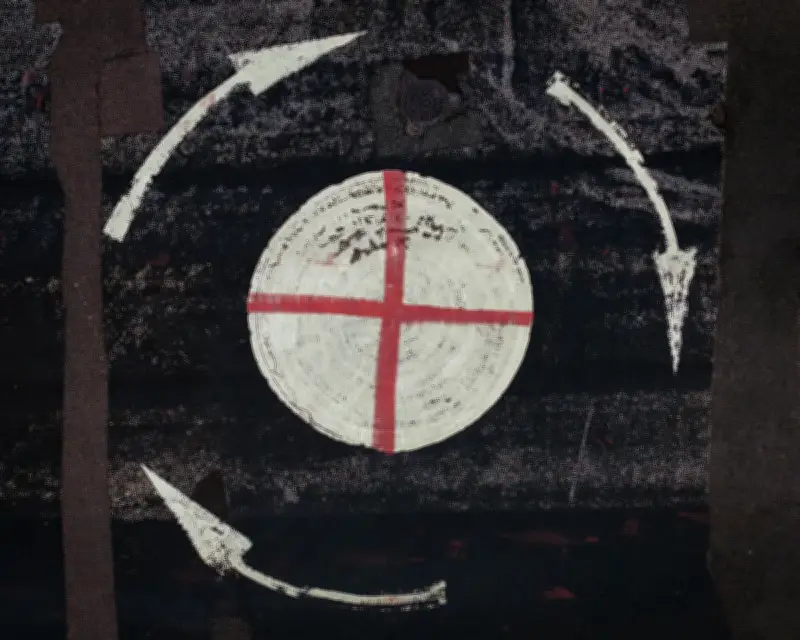
Sunak is right that this conversation isn't about nuanced distinctions between ethnic and civic identities. The questioning of one's Englishness is deeply insidious, presented not just through “legitimate concerns” about immigration or crime, but as a question of first principles: whether you are a “good” or “bad” minority, a citizen or non-citizen, or whether your ancestry or skin colour means you will never truly belong. The idea that your claim to belong is implicitly lesser than those who could trace ancestry back to Oswald of Northumbria is rejected by both progressives and many conservatives.
There is growing concern among sections of the British right about increasingly “ethnonationalist” impulses emerging on its fringes, particularly with the rise of Rupert Lowe's hard-right Restore Britain. These beliefs belong to what the Financial Times's Robert Shrimsley described as the right's own “woke wing”, which fusses over “the great replacement theory and the betrayal of the west”. More moderate conservatives want to distance themselves from these views as much as from the black-clad far-right mobs that descended on Portsmouth and Dover this summer.
Public legitimacy and pushback
Some of these views are gaining greater public legitimacy. An analysis by the Institute for Public Policy Research (IPPR) last year found that the percentage of those who believed “Britishness” was something you were born with had almost doubled in two years, from 19% to 36%. However, only 3% of people believe that being a “good” British citizen requires having white skin, while at least 74% of English people believe Englishness is not defined by ethnicity.
The hard right's attachment to a politics of ethnicity threatens to upend a project the broader conservative movement has built: a multi-ethnic coalition that can hold anti-immigration views without questioning the Englishness or Britishness of its own members. This means maintaining a definition of national belonging that minorities can actually attain.
Jacob Rees-Mogg, no ally of Sunak, released a series of videos on X stating that “everyone who has a British passport is equally British or English” and positing that the English are “a mongrel people, not an Aryan master race”. Two of Sunak and Rees-Mogg's lead opponents were minority politicians on the hard right: Reform spokespersons Suella Braverman, who insists she cannot be English, and Zia Yusuf, who recasts the argument in culture war terms and insists “people are furious about what Rees-Mogg and Sunak are saying”.
Historical context and enduring truth
This preoccupation isn't new. In 1701, Daniel Defoe wrote The True-Born Englishman, a poem defending William III from xenophobic attacks, writing: “Thus from a mixture of all kinds began, / That het'rogeneous thing, an Englishman”, referring to the English as a “mongrel half-bred race”. Englishness has never been a property passed down intact from generation to generation; it has been remade through migration, assimilation, conquering, marriage, conversion and settlement.
Attempts to impose a simplified ancestry-based definition quickly become absurd, as Lowe saw in August when he could not answer whether he would consider King Charles, whose father was born in Greece and who has German and Danish ancestry, a “white Briton”. Even a more inclusive civic-nationalist definition raises questions with no settled answer: is it defined through citizenship, language, accents, behaviours, “values”, culinary preferences or sporting affiliation?
Even if ethnonationalist views are stymied by more moderate voices, the surfacing of these discourses is still deeply troubling for many ethnic minorities. Interestingly, ethnic-minority adults themselves are more likely to view Englishness as tied to heritage, and prefer an identification with Britishness. There is no single, historically fixed population from which today's “English” have descended. From the Celts, the Romans, the Anglo-Saxons, the Vikings, the Normans, the Huguenots, Jewish and Irish communities – England is ancestrally mixed. That waves of arrivals over the past century have been Caribbean, African and South Asian has only made this more observable.
For those who believe Englishness is threatened by demographic change, it is precisely this process that has allowed it to endure: continued participation and attachment, not bloodlines and biological inheritance. Even if the ethnonationalist right wants to project a future based on racial nostalgia, English history itself offers very little support for it. It is a politics with nowhere to go.