The public identification of the notorious British Army agent known as Stakeknife could be a pivotal step in encouraging more Catholics to join the Police Service of Northern Ireland (PSNI), the force's Chief Constable has told a parliamentary committee.
A Case for Transparency to Heal Division
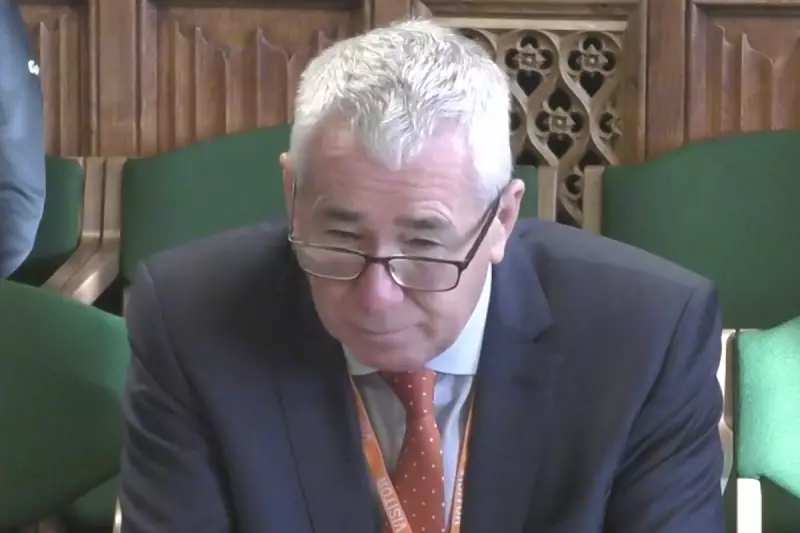
Jon Boutcher, who led the major Operation Kenova investigation before becoming Chief Constable, argued that moving beyond the Government's long-standing 'neither confirm nor deny' (NCND) policy in this specific case would demonstrate a new accountability. He told the Northern Ireland Affairs Committee on Wednesday 14 January 2026 that the current approach damages community relations.
"The nationalist community see this as a continuation of what’s always happened: protection of wrongdoing by the state," Mr Boutcher stated. He linked the issue directly to ongoing PSNI recruitment efforts, saying, "To help society move forward, to help me get Catholic officers into the PSNI, we need to start making some difficult choices."

National Security Concerns Dismissed
The Chief Constable directly challenged the Government's primary argument for secrecy – that naming Stakeknife would endanger national security and hamper intelligence work with current agents. He pointed to past instances where agents had been identified without catastrophic results, remarking that "the sky didn’t fall in".
He also expressed scepticism that adversaries like Russia, China, or Iran would alter their behaviour based on the revelation of an agent from the Troubles era. "I find it hard to believe... that people are looking at us naming the agent Stakeknife… that means they’re not going to work for the security forces," he told MPs.
The Legacy of Operation Kenova
Operation Kenova, which published its final report in December 2025, investigated the activities of Stakeknife, an agent embedded within the IRA's internal security unit. The report linked the agent to at least 14 murders and 15 abductions and recommended the UK Government publicly name him.
The agent is widely believed to have been Freddie Scappaticci, a west Belfast man who died in 2023 aged 77. Despite Kenova's call, the Government has resisted, maintaining its NCND stance on agent identities to protect national security.
Sir Iain Livingstone, the current head of Operation Kenova, who also gave evidence, suggested that a recent Supreme Court ruling on a separate Troubles case did not prevent Northern Ireland Secretary Hilary Benn from authorising the disclosure. Mr Benn has previously stated a decision would await the conclusion of that legal process.
Mr Boutcher's compelling testimony frames the naming of Stakeknife not just as a matter of historical record, but as a crucial gesture for building future trust in policing across all communities in Northern Ireland.