

Afghan Data Breach Victims Still Stranded and in Danger Months After MoD Leak
Thousands of Afghans who were put at risk after their personal information was leaked by the Ministry of Defence in a catastrophic blunder are still waiting to be brought to safety in the United Kingdom, more than six months after the scandal first emerged. The Independent can reveal that approximately 400 individuals who supported British efforts in Afghanistan, and whose data was compromised by the UK government, have been left "trapped" in Afghanistan and neighbouring nations, struggling desperately to secure evacuation.
An additional 1,900 family members of these individuals have also been left in a state of limbo, uncertain of their futures. One Afghan analyst has urgently called on the government to "redouble its efforts" to evacuate the final families, emphasising that hundreds continue to "live in real danger of reprisals from the Taliban."
Slow Evacuation Pace Amidst Grave Threats
The latest figures, obtained through freedom of information requests and dated December 2025, illustrate how UK evacuation efforts are "working far too slowly when people's lives are threatened," according to campaigners. Tan Dhesi, Chair of the Defence Select Committee, acknowledged that bringing people from Afghanistan to the UK is not straightforward but stressed that "every month counts." He added, "Time is obviously of the essence for Afghans entitled to resettlement in the UK who remain in Afghanistan."

In response, the MoD has stated that it remains committed to evacuating people from Afghanistan and maintains that the data breach did not increase the risk to those affected. However, the scale of the initial breach was immense: some 18,700 applicants to the government's Afghan resettlement schemes had their personal details and contact information leaked due to an MoD error in 2022. This mistake was only discovered in the summer of 2023 after a portion of a spreadsheet was shared on social media.
Secret Government Operation and Ongoing Struggles
The discovery of the data breach triggered one of the most extraordinary secret government operations in modern history, driven by fears that up to 100,000 lives could be in jeopardy. An unprecedented gagging order was employed to conceal the breach, with affected families only learning of the potential danger when the superinjunction was lifted in July of last year.
When the MoD's data loss was publicly revealed, officials indicated that around 600 Afghans, along with 2,400 family members, who were eligible for UK relocation due to their work for the British and the data breach, still needed evacuation. A further 2,400 individuals, eligible solely because of the data loss, also awaited evacuation as of last July. Officials note that these estimates are not directly comparable with the FOI-released figures due to differing calculation methods.
John Healey, the Defence Secretary, stated in July last year, "We will honour the 600 invitations already made to any named person still in Afghanistan and their immediate family," affirming, "When this nation makes a promise, we should keep it."
Financial Barriers and Withdrawn Support
Despite these assurances, campaigners and Afghans already in the UK warn that many families lack the financial resources to cover necessary visas and transport costs to escape the Taliban-controlled country. An independent caseworker, referred to as Person A, who alerted the government to the MoD data breach in summer 2023, reported that the UK government has withdrawn evacuation support for Afghan families, leaving them effectively "trapped."
One former Afghan soldier, relocated to the UK under the MoD's Afghan Relocations and Assistance Policy (Arap), shared that his brother and family were approved for relocation over a year ago but remain unable to leave Afghanistan. The former special forces commando expressed frustration, saying, "My brother is in a bad financial situation as he is not able to work under the Taliban government. I am angry because my brother was one of the most eligible people to come to the UK. He was injured during his service to the British forces; others who are not soldiers have got into the UK, while those like my brother have been left behind."

He added, "I am grateful for the help and support that I have received for myself, but my brother is in a dire situation and I cannot do anything for him. His and his family's life is in danger."
Recent Developments and Ongoing Delays
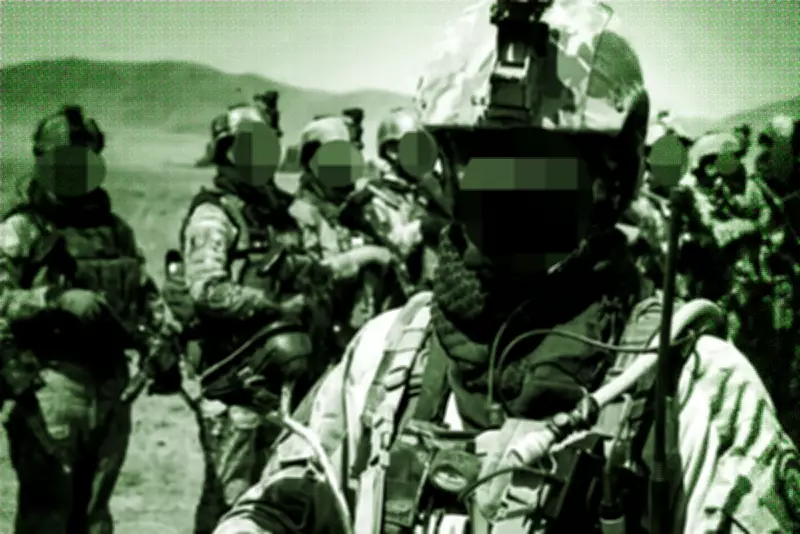
In a recent development, the government announced that hundreds of former members of the Afghan special forces have been granted a path to resettlement in the UK following a review of previously rejected cases. A total of 884 decisions affecting ex-special forces soldiers have been overturned, though the timeline for their evacuation remains unclear.
Daniel Carey, partner at Deighton Pierce Glynn, commented, "The 884 grants are welcome and many of our clients are among them. However, around three-quarters of these were approved over a year ago. This figure, therefore, highlights the very low approval rate under the review, with thousands rejected."
New figures published this month reveal that tens of thousands of Afghans are still awaiting decisions on whether they will be granted sanctuary in the UK. The National Audit Office found that 29,655 people are pending outcomes under Afghan resettlement schemes, while officials estimate around 9,741 individuals are waiting to be brought to the UK after acceptance.
Ministers had pledged to relocate all eligible Afghans by March 2029, but the officer overseeing the programme believes this target will be missed without "urgent intervention."
Campaigners Call for Accelerated Action
Sarah Fenby-Dixon, Afghanistan consultant at the Refugee Aid Network, stated, "While I applaud the government's continuing efforts to relocate members of the Afghan special forces and their families who were affected by the data breach, the process is appallingly slow. On a personal level, this means that people who went into hiding in 2021 continue to be unable to work and have to change their location regularly, causing dreadful psychological and economic consequences. The Arap process is largely working, but it is working far too slowly when people's lives are threatened. The government needs to redouble its efforts and ensure eligible applicants are taken to safety as soon as possible."
Labour MP Mr Dhesi echoed these concerns, noting, "Bringing people from Afghanistan to the UK is obviously not straightforward. But every month counts. The committee have heard of individuals and families in hiding and destitution, and in some cases, even losing their lives. As we conclude our inquiry, I am sure we will want to ask defence ministers about those left behind in Afghanistan as well as about those who have been successfully brought to the UK."
Person A further highlighted, "The withdrawal of government support for families to transfer to Pakistan means people are trapped in Afghanistan with no way out. These families are destitute, having had no income since July 2021. The delays across all evacuations are having severe consequences, with families being impacted by airstrikes in Afghanistan, Iran and Lebanon. We have lost contact with a number of families in the last two weeks, and we fear the worst."
An MoD spokesperson reiterated, "We remain absolutely committed to the promises we have made to our Afghan friends and allies – including relocating eligible Afghans to the UK. Eligible Afghans are continuing to be relocated to the UK once they receive UK visas, and we are still aiming for all Afghan Resettlement Program eligible people who wish to relocate to the UK to do so during this parliament. The Rimmer review was clear that it is unlikely that those impacted by the data incident are at an increased risk of targeting purely as a result of being on the dataset."





