
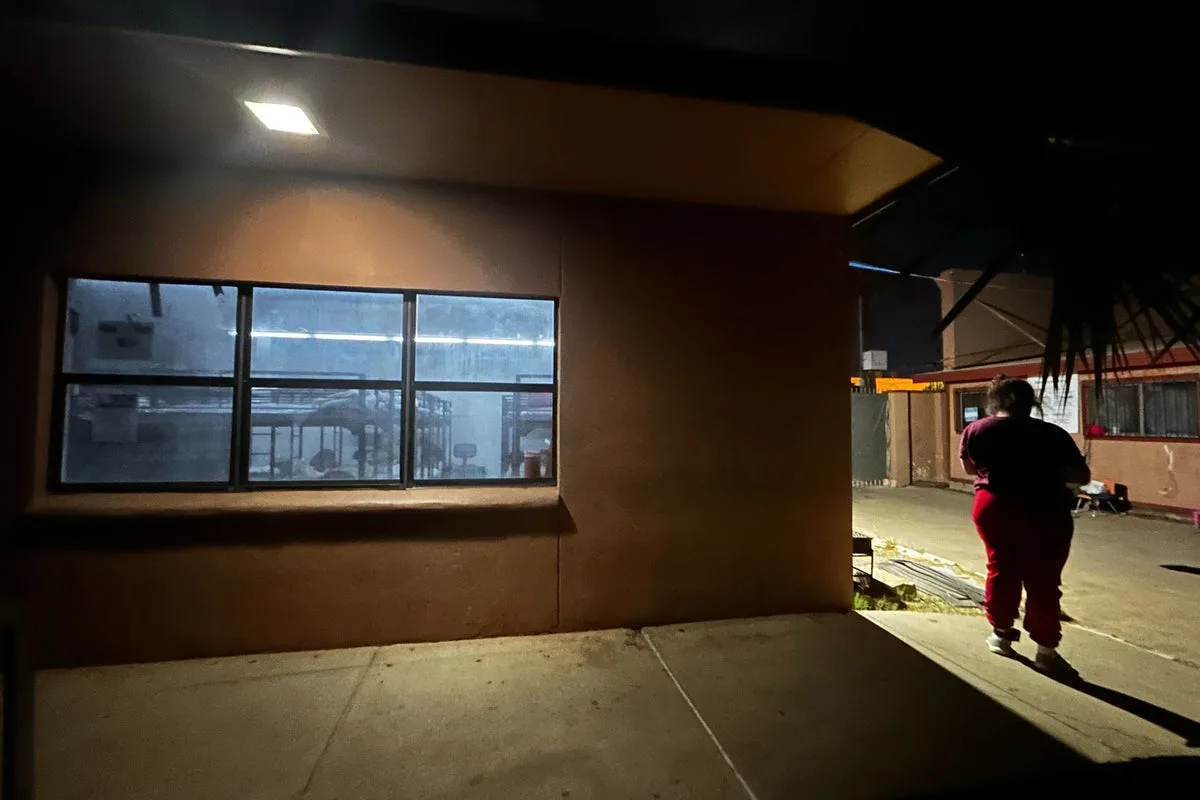
Families held at the Dilley Immigration Processing Center in south Texas have described poor conditions including worms in food, inadequate medical care, and lights left on 24 hours a day. The facility, which was reopened by the Trump administration last spring, now holds more than 1,300 detainees, many of whom have been kept for months.
A 29-year-old Ecuadorian mother, who spoke on condition of anonymity, said her 7-year-old daughter wept nightly and asked, “Mom, what crime did I commit to be a prisoner?” The mother and daughter were sent to Dilley after being detained by Immigration and Customs Enforcement (ICE) agents in Minnesota, 1,300 miles from their home. Her husband was deported to Ecuador shortly after their arrest.
Christian Hinojosa, a Mexican immigrant held at Dilley with her 13-year-old son for over four months, said her son questioned why 5-year-old Liam Conejo Ramos, whose detention in Minneapolis drew national attention, was released after just 10 days while they remained. “My son says, ‘That’s unfair, Mama. What’s the difference between him and us?’” Hinojosa said.
According to data from the University of California, Berkeley’s Deportation Data Project, ICE booked more than 3,800 children into detention during the first nine months of the new administration. Nearly two-thirds of detained children were eventually deported, while about a quarter were released in the U.S. The number of detainees at Dilley has nearly tripled since last autumn, reaching over 1,300 by late January.
Lawyers and advocates note that many families now held at Dilley have lived in the U.S. for years, with established roots in communities. The government is holding many children beyond the 20-day limit set by a longstanding court order. “We’ve started to use 100 days as a benchmark because so many children are exceeding 20 days,” said Leecia Welch, chief legal director at Children’s Rights.




