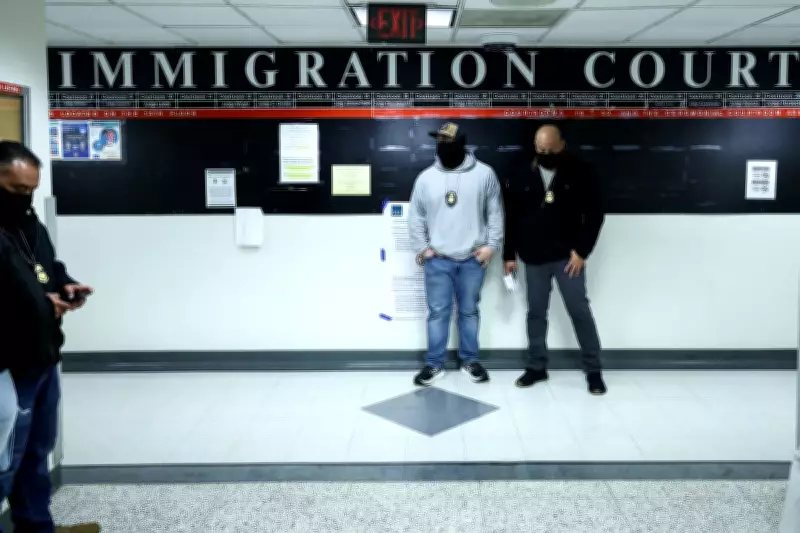
Immigration courts across the United States are increasingly scheduling hearings for 100 or more individuals in a single time slot, a tactic aimed at accelerating mass deportations under the Trump administration. These so-called 'mega masters' hearings are designed to process large numbers of immigrants quickly, often targeting those without legal representation.
Criticism from Immigration Attorneys
Immigration attorneys have condemned the practice as a 'cattle call-style' hearing that undermines due process rights. Vanessa Dojaquez-Torres, practicing policy counsel at the American Immigration Lawyers Association, told NPR that immigrants without lawyers are less likely to receive proper notice, making default deportation orders more likely. 'It's almost like they are being designed to increase' the number of such orders, she said.
Rekha Sharma-Crawford, an immigration attorney, wrote last week that 'railroading' immigrants through a court system controlled by the Department of Justice is 'fundamentally wrong' and 'represents a betrayal of the Constitution.'

How Mega Masters Hearings Work
The American Immigration Lawyers Association alerted members to the tactic in its newsletter, noting that 100 or more immigrants could be scheduled for a single time slot. If an immigrant fails to attend, the judge can issue a deportation order 'in absentia,' making them vulnerable to arrest and removal. The group warned that the policy raises 'serious practical and due process concerns.'
Administration officials have frequently cited a growing backlog of over 3 million active cases in immigration courts. Immigration and Customs Enforcement has told Congress it plans to deport 1 million people in 2026 and 2027 and hold at least 99,000 people daily in detention centers.
Broader Changes to Immigration Courts
Immigration courts operate under the Justice Department's Executive Office for Immigration Review, unlike federal district courts. Last year, the Trump administration ordered judges to dismiss virtually any case when immigrants show up for hearings, making them immediately vulnerable to arrest. The administration also instructed judges to deny bond, upending decades of precedent.
These shifts have led to scenes of masked agents patrolling courthouse hallways and arresting immigrants in what critics call 'ambush' arrests. A federal judge has banned the practice in New York City's immigration courts.
Mass Firings and New Hires
More than 100 immigration judges have been fired or forced out over the past year, with dozens more retiring or resigning. Simultaneously, the administration boasts of hiring over 150 judges in the last fiscal year, including 77 new judges and five temporary military lawyers. However, firings often coincide with new hires; several judges in New York and California were fired the same week the Justice Department announced record hiring.
Acting Attorney General Todd Blanche stated that the administration is committed to 'reestablishing an immigration judge corps dedicated to restoring the rule of law.' Yet, the Justice Department has lowered standards for temporary hires, giving handpicked judges broad discretion over tens of thousands of cases.
Last year, the Department of Defense approved sending up to 600 military lawyers to immigration courts to help address the backlog. The Independent has requested comment from the Justice Department.