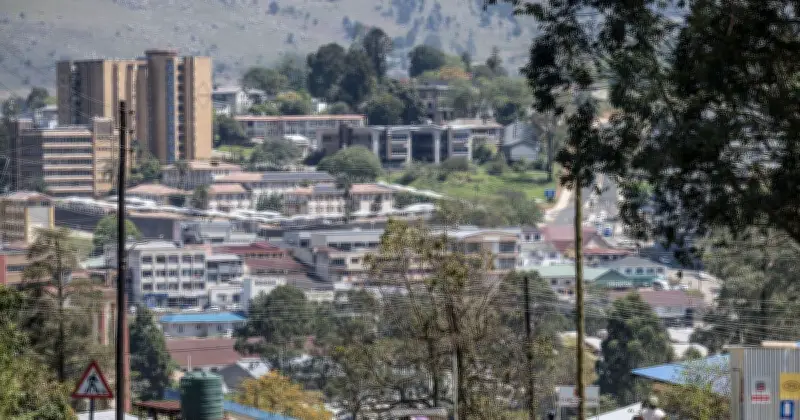
A Sri Lankan convicted sex offender was forcibly relocated from the UK to Eswatini, formerly known as Swaziland, in a covert deal never disclosed to Parliament, it has been revealed. Kishanth Peramalya, 35, a refugee with a history of severe mental illness and suicide attempts, took his own life months after arriving in the African country.
British officials had been working to make his placement permanent before his death, with the BBC claiming the UK agreed to cover his resettlement costs for up to three years. Migration experts say this was the first known case of the UK government forcibly resettling a refugee permanently overseas in such a manner.
How the relocation unfolded
Peramalya's journey to British custody began in 2021, when the Royal Navy intercepted him and dozens of fellow Sri Lankan asylum seekers in the Indian Ocean as they attempted to sail from India to Canada. They were then detained in a camp on Diego Garcia, an island in the British Indian Ocean Territory run exclusively as a UK-US military base.
The island's authorities, who answer to London, recognised that Peramalya and others could not safely return to Sri Lanka and awarded them refugee protections. But the group remained in the camp for three years while British officials debated their future. A court later ruled their detention had been unlawful.
As a teenager, Peramalya had been tortured and sexually abused by officers in the Sri Lankan military and was later diagnosed with PTSD. He later suffered depression and anxiety and made repeated suicide attempts. While on the island he committed a series of crimes, including assault and arson, and spent 24 weeks in prison. He was also convicted of four counts of sexual assault, for which he received a suspended prison sentence.
Failed attempts to find a destination
In December 2024, most of the Sri Lankan asylum seekers were allowed to enter the UK, but ministers refused to let Peramalya join them because of his crimes. He remained on Diego Garcia. The High Court upheld the UK's refusal to admit him, in part because of the risk he posed and because ministers were making genuine efforts to find somewhere else safe for him to live.
Court documents, seen by the BBC, show the UK approached more than 20 countries and could not secure an agreement. Then, in February 2026, the US began using its military base on Diego Garcia in its war with Iran, and the island authorities began withdrawing non-essential personnel.
At the end of March, the Maldives offered to take Peramalya for 30 days. He was transferred there before being sent on to Eswatini. At the time of his death, the British and Eswatini governments had been finalising the agreement for Peramalya to live there permanently, with the UK to pay for the "reasonable costs" of his accommodation, healthcare, and other support for up to three years.
Reactions and aftermath
Thabile Mdluli, a spokesperson for Eswatini's government, said: "The initial arrangement was temporary in nature and intended to safeguard Mr Peramalya's safety while the government of the UK worked towards a long-term solution regarding his circumstances."
Speaking from India, Peramalya's sister, unaware her brother was a convicted sex offender, said the family had not been aware of the plan to make his transfer permanent. She said: "My brother did not want to go there at all. He couldn't manage being there alone, he was very lonely." On 13 September, he took his own life.
The United Nations High Commissioner for Refugees (UNHCR), which had raised concerns about Peramalya's condition on Diego Garcia, said it was "deeply saddened" by his death, adding: "UNHCR recognises that asylum seekers and refugees may, in certain circumstances, be lawfully transferred to a third country. However, this requires that specific safeguards are in place and those conditions are fulfilled in practice."
Peter Walsh, of Oxford University's Migration Observatory, described the case as "highly unusual". He said: "In most cases, people with criminal convictions who cannot be returned to their home country would simply remain in the UK. Third countries are generally quite reluctant to accept foreign national offenders."
Zakithi Sibandze, of the Eswatini Rural Women's Assembly, which campaigns to protect women and girls, said it was "very painful" that a sex offender had been relocated to her country. "Why did they think it was okay to send him to Africa?" she asked. "The UK seems to be saying it is fine for people to commit crimes against women in poor countries."
A government spokesperson told the Express: "Keeping the British public safe will always be our first priority, and we will continue to take the decisions necessary to protect the British people. That includes taking steps to ensure high harm foreign criminals cannot enter the UK. We continue to work with the Eswatini authorities in relation to this case."