
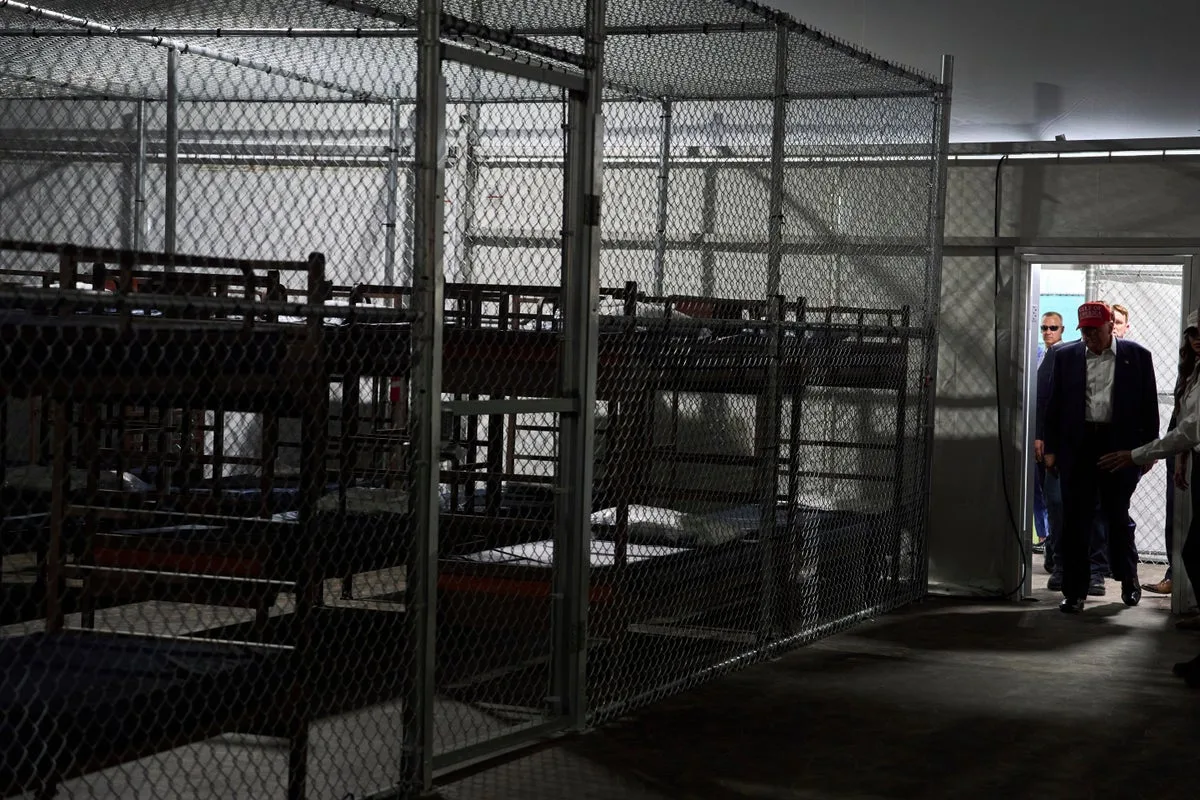
Federal judges across the United States are dealing with a surge in habeas corpus petitions from immigrants detained under the Trump administration's mass deportation campaign. Unlike under previous administrations, where individuals with no criminal record could generally request bond hearings, current policy mandates detention without bond for many.
In Georgia, U.S. District Judge Clay Land declared an “administrative judicial emergency” on January 29 due to the volume of habeas petitions from Stewart Detention Centre. He noted that the administration refused to provide bond hearings despite his rulings against mandatory detention, requiring individual court orders for each case.
In Minnesota, Chief Judge Patrick Schiltz stated in a January 26 order that Trump officials had made “no provision for dealing with the hundreds of habeas petitions” resulting from the enforcement surge. His court received over 400 such petitions in January alone, and he reported that the government had failed to comply with scores of court orders to release or provide relief to detainees.
In the Southern District of New York, Judge Arun Subramanian described the district as “flooded” with petitions from immigrants posing no flight risk or danger. He granted a habeas petition for a 52-year-old Guinean woman, writing that “the way we treat others matters.”
The Department of Homeland Security (DHS) said the administration was prepared to handle the legal caseload, while the Justice Department accused “rogue judges” of not following the law. On Friday, a 5th U.S. Circuit Court of Appeals panel issued a 2-1 ruling backing the administration's detention policy, marking a major legal victory for the government.
Immigrant attorneys have accused the administration of defying court orders, including a November ruling by Judge Sunshine Sykes that found mandatory detention illegal. Sykes expressed concern that the government told immigration judges to ignore her decision, calling it “troubling.”




