
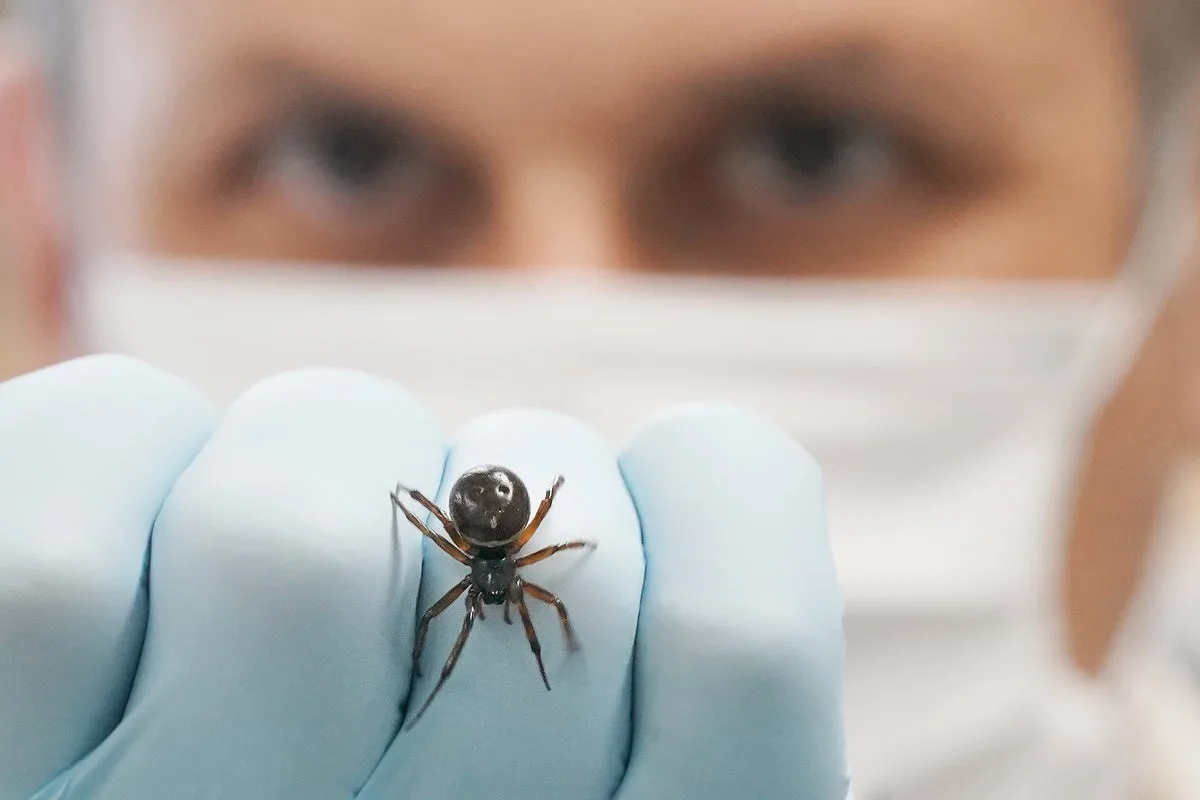
Hospital admissions for spider bites in England have doubled over the past decade, with experts attributing the rise to an “explosion” in the population of false widow spiders. Provisional NHS figures obtained under a freedom of information request show 100 admissions in 2025 due to “contact with or the toxic effect of spiders”, compared with 47 in 2015.
The noble false widow spider, described as “the most dangerous spider breeding in Britain”, is believed to be behind the increase. The species, which originates from Madeira and the Canary Islands, was first reported in southern England in 1879. Oxford University ecologist Clive Hambler said the species has become “hugely more abundant” in Britain, particularly in the south, and that people are coming into contact with them much more often than they realise.
Mr Hambler noted that the venom can cause pain and itching, but more serious effects are due to bacteria carried by the spider, potentially leading to “amputation, sepsis and death”. He urged the public to be more aware of the risks without being alarmed, stating: “You now need to treat spiders in Britain as you might in many other parts of the world – as something to be very respectful of.”
Dr Michel Dugon, a zoologist at the University of Galway, said the rise is “not surprising” given the “explosion in the population of noble false widow”. He added that bites from this species are painful, comparable to a wasp sting, but emphasised that spiders are “not aggressive animals” and that 100 cases is a relatively minor number. Professor Adam Hart of the University of Gloucestershire also downplayed concerns, noting that most bites are mild and severe reactions are rare.




