

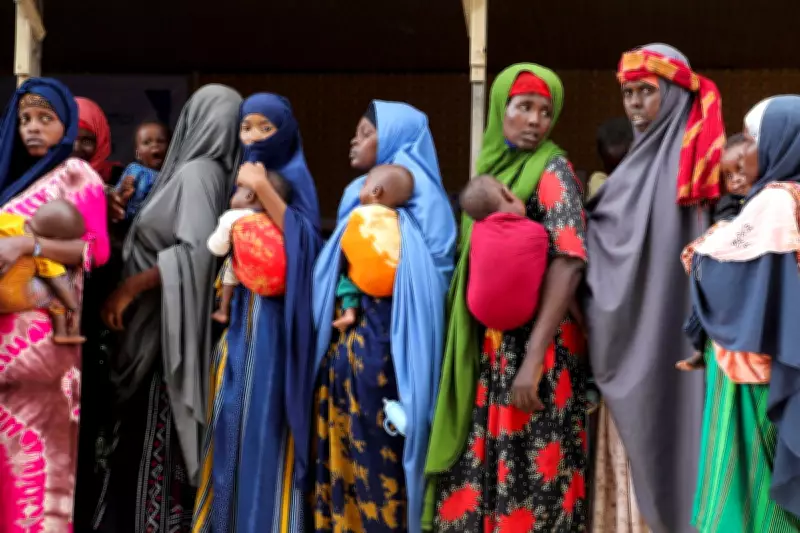
A devastating drought has plunged Somalia into its worst hunger crisis on record, with millions facing starvation as international aid dwindles and global prices soar due to the Iran war. According to the United Nations, the 2026 drought is the most severe in the country's history, surpassing even the catastrophic events of 2011 and 2022.
Pastoralists and Families Devastated
Abdi Ahmed Farah, a 70-year-old pastoralist, has watched most of his 680 goats perish as rain has failed for three consecutive years. Burdened by debt and with his water reservoir nearly empty, his family survives on a single daily meal of rice with sugar and oil. His youngest child, born just three weeks ago, receives only occasional drops of breast milk. 'I have considered abandoning my family because I cannot provide for them,' Farah confessed.
In Usgure village, community leader Abshir Hirsi Ali reported the collapse of the local economy, with shops closed and food rations critically low. A brief downpour only left puddles of dirty rainwater, which desperate families drank, leading to widespread fever. Muhubo Tahir Omar, a mother of 11, sold her goats to pay school fees, but when the money ran out, teachers left. Her last remaining goat is now gravely ill.

Aid Cuts and Funding Shortfalls
Aid funding to Somalia plummeted to $531 million in 2025, largely due to cuts by the United States, previously the top donor. In 2022, funding was nearly five times higher at $2.38 billion. The World Food Programme aimed to assist two million people this year but has reached only 300,000 due to funding gaps. 'Unless there is a sudden and substantial response from donors, the outlook is deeply concerning,' warned Antoine Grand, head of the International Committee of the Red Cross in Somalia.
Children at Greatest Risk
Unicef reports that nearly half a million children could face severe acute malnutrition, a figure higher than during the 2011 and 2022 droughts. At a hospital centre in Qardho, Puntland, therapeutic milk is rarely in stock, forcing nurses to use homemade alternatives like cow's milk. Four-year-old Farhia, weighing just 7.5 kilograms, exemplifies the crisis, with sunken eyes and prominent bones. Her mother Najma, who fled after all their goats died, said, 'I don't know what to hope for.'
Displacement and Desperation
Decades of conflict have already displaced millions, and this year's drought has forced another 200,000 from their homes. Families traverse harsh landscapes with minimal supplies. In a displacement camp near Shahda village, 80 families reside, relying on handouts for one meal a day. Shukri, a mother of four, said children developed diarrhoea from dirty water, and malnutrition worsened. 'I know a few people who have died,' she added.
Many are heading to Mogadishu, where food remains scarce. Fadumo, a mother of seven, moved from Lower Shabelle after water sources dried up and conflict with al-Shabab militants worsened. 'The water sources we depended on for farming, including the river, dried up,' she explained.
Kevin Mackey, Somalia director for World Vision, noted that people are on the move, and when people move, they die. He recently encountered individuals who walked for nine days to reach aid in Dollow. The crisis is compounded by soaring global prices driven by the Iran war, as Somalia imports most of its fuel and 70 per cent of its food.
The Somali government and UN estimate 6.5 million people, a third of the population, face crisis-level hunger, a 25 per cent increase since January. Hameed Nuru, UN World Food Programme director for Somalia, stated, '2026 is the worst year on record for Somalia in terms of drought. Children have started dying.'






