

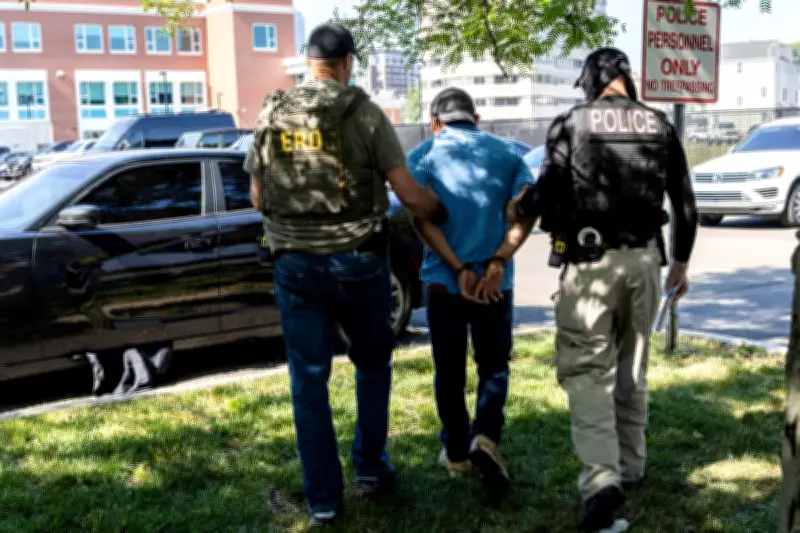
A recent survey indicates that a growing number of American adults believe the United States has ceased to be a welcoming destination for immigrants under President Donald Trump's stringent immigration enforcement policies.
Key Findings from the AP-NORC Poll
Approximately six in 10 respondents to the Associated Press-NORC poll conducted last month stated that while the US used to be a great place for immigrants, it no longer holds that status. Another third reported that they or someone they know had been directly affected by the Trump administration's crackdown in the past year, a figure that rises to about 60% among Hispanic adults.
Nearly half of Hispanic adults surveyed said they now carry proof of US citizenship or permanent residence out of fear of detention or deportation by federal immigration agencies.

Changing Perceptions Under Trump
The poll paints a stark picture of shifting opinions over the 14 months since Trump returned to the White House and initiated what he termed the "largest deportation operation in US history." Thousands of immigration agents, sometimes supported by the military, have been deployed to cities and states to detain individuals residing illegally in the country, often resulting in violent confrontations.
In separate incidents in Minneapolis in January, two unarmed US citizens, Renee Good and Alex Pretti, were shot and killed by Immigration and Customs Enforcement (ICE) or Customs and Border Protection (CBP) officers while protesting the government's actions.
"It's just plain wrong," said Reid Gibson, a 72-year-old retiree from Missouri. "This is not a good country for immigrants any more."
Birthright Citizenship Views
The survey also explored opinions on birthright citizenship, which Trump has attempted to curtail via an executive order currently blocked by federal courts and under Supreme Court review. Overall, 65% of respondents believe all children born in the US should be entitled to citizenship regardless of their parents' status, and 75% support this for children of non-citizen parents legally present on work visas. However, only 49% extend this view to children born to parents in the country illegally. Trump's order seeks to limit citizenship to those with at least one parent who is already a citizen.
Personal Impact and Partisan Divides
The AP found that Democrats are more likely than independents or Republicans to know someone affected by the crackdown. Those with personal connections are more inclined to say the US is no longer a great place for immigrants.
Kathy Bailey, a 79-year-old Illinois Democrat, observed the policies' impact in her small-town swim class, where two naturalized US citizens now carry passports when leaving home. One woman from Latin America was particularly anxious about standing out in a predominantly white community. "She's an American citizen now, but she's so scared that she has to carry her passport," Bailey said. "She's just another sweet old grandmother swimming at five in the morning."
Nick Grivas, 40, of Massachusetts, noted his grandfather's immigration from Greece made him more aware of Trump's policies. He believes the US has stopped being a promising place for newcomers. "We can see how we're treating children and the children of the immigrants, and we're not viewing them as potential future Americans," he said. Grivas added that fear of deportation deters immigrants from investing in local communities. "You're less willing to commit to the project if you don't think that you're gonna be able to stay," he concluded.






