
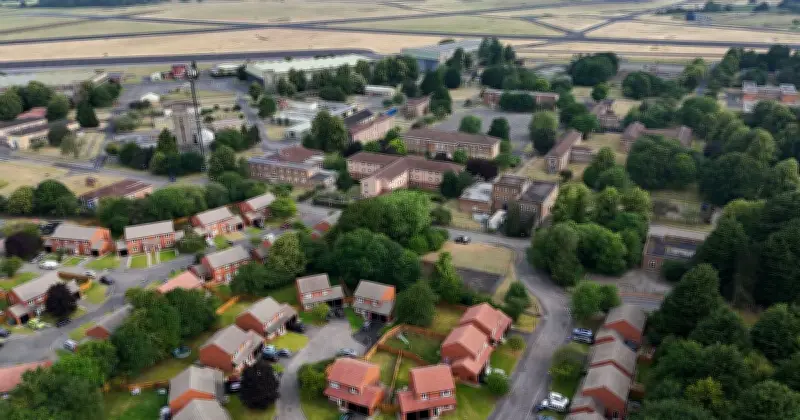
North Yorkshire Council has called on the government to rethink plans to accommodate up to 1,250 single adult male asylum seekers at the former RAF Linton-on-Ouse site near York. Council leader Cllr Carl Les described the proposal as “the wrong proposal in the wrong location” in a letter to Border Security and Asylum Minister Anna Turley.
Infrastructure concerns raised
Cllr Les noted that the village of Linton-on-Ouse, with a population of around 600, lacks the necessary amenities, services, jobs, and support networks to support such a large development. He also highlighted rural roads prone to flooding and disruption. The letter stressed that the site’s remote location would not aid the wellbeing or integration of either residents or asylum seekers due to limited public transport and employment opportunities.
“We do not believe that accommodating large numbers of asylum seekers in such a remote environment represents best practice or serves their short or long-term interests,” Cllr Les wrote. He also pointed out shortfalls in safeguarding planning to protect both local residents and the wider community.
Local and political backlash
Resident Howard Cooper expressed frustration to the BBC, noting the village has only about 300 men. “Probably only 300 men live in the village at the moment and you're looking at putting five times that on a site close by,” he said. Cooper questioned the government’s promise to provide transport, saying 40 coaches would be needed for 80 movements a day to move people off the base, calling it “unworkable and very worrying.”
Conservative leader Kemi Badenoch said the site “is not appropriate and the government should stop the plan,” adding, “A small village in Yorkshire should not have to deal with that scale. There are only 600 people in that village.” Former Prime Minister and North Yorkshire MP Rishi Sunak also backed the letter.
Government defends approach
Border Security and Asylum Minister Alex Norris defended the plans, stating the government is closing asylum hotels and moving people to ex-military sites. “Twenty more hotels have closed, and hotel numbers have more than halved since their peak. Instead, we’re moving asylum seekers into ex-military sites that are a far cry from the hotels the last Government left us with,” he said.
A government spokesperson previously told the BBC that discussions are at an early stage and subject to planning permission, feasibility assessments, and due diligence, with engagement with local stakeholders and communities. No final decisions will be taken until all necessary arrangements are in place.




