

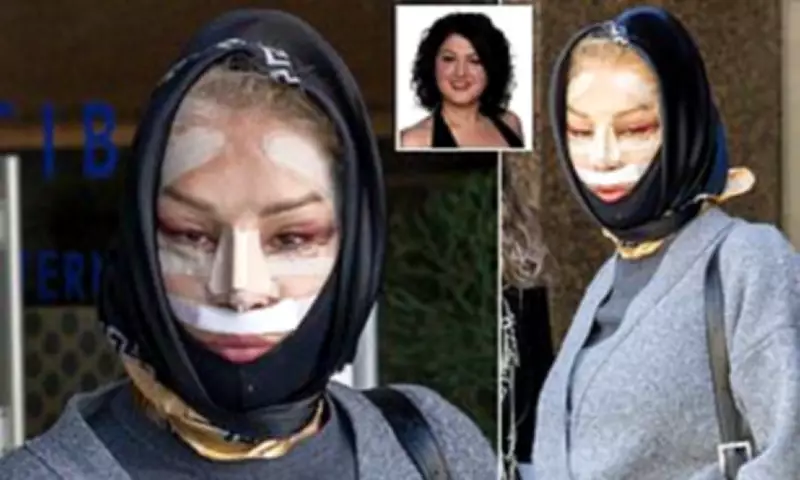
Big Brother legend Nadia Almada appeared completely unrecognisable as she emerged from a Turkish hospital after undergoing a facelift. The reality TV icon, 48, shot to fame after winning the fifth series of Big Brother UK in 2004, becoming the first transgender contestant on the show.
Post-Surgery Appearance
As she left the Trio Clinic in Istanbul, Nadia, who lost six stone last year after having a gastric sleeve fitted, showcased the gruelling aftermath of the surgery. Her face was wrapped in a black support bandage, while her nose, lips, and forehead were sealed with bandages across bruised skin. She was surrounded by aides who assisted her departure, stepping into a lavish waiting car while displaying her painful image. Nadia was casually dressed in jeans as she left amid her recovery, also wrapping her neck in a scarf.
Supreme Court Ruling Reaction
Last year, Nadia insisted she would 'rather refuse treatment than wake up on a male ward' as she slammed what she deemed a 'terrifying' Supreme Court ruling. The Supreme Court announced that the definition of a woman is based on biological sex in a landmark judgment.

Nadia said: 'It's a terrifying time for me. The whole idea that we are not a woman for that matter, based on our sex. It's terrifying... For me, for us, people from our generation who have lived with those experiences of being discriminated and now having those protected rights taken away from us, it's very, very dehumanising. It's terrifying. I don't even know what else to say.'
When asked about her pains, she continued: 'It pains me that my identity is being questioned and also where the sex and gender comes first. With the Supreme Court ruling, it's making such binary terms, it doesn't really include non-binary or recognise non-binary or intersex people. Is sex really binary? I don't think it is.'
'For me, it's about my identity. Most of the time, people identify me as transgender, but I believe in my way, of how I carry my life, I'm a woman first and second a trans identity. This is how I live my life and how I navigate through society. This is quite important to me, if I'm going to be classified anything other than female because of certified sex versus birth sex, it's troubling times.'
'Generally speaking with the community, we all express the same sentiment. The idea of waking up in a male ward - I would rather refuse treatment than have to be subjected to that... Once this happened [the Supreme Court ruling], it triggered the whole idea of how feminine I am, how are people going to see me, do I have the right westernised views of what a woman should look like or present as. And then I went insane about my identity.'






