
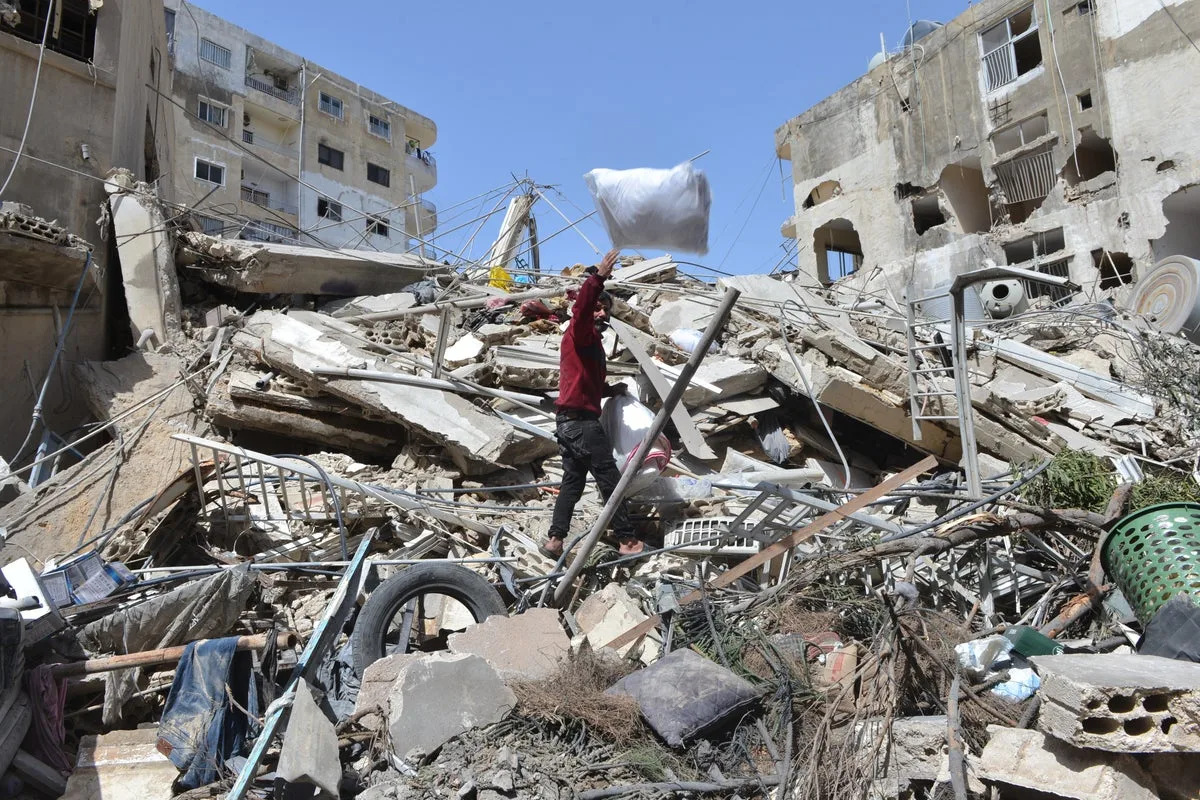
Lebanon's health ministry has announced that the death toll from the latest round of fighting between Israel and Hezbollah has surpassed 3,000, reaching 3,020. The ministry reported that this figure includes 292 women and 211 children, despite the existence of a fragile ceasefire.
The current conflict began on March 2, when Hezbollah fired at Israel, two days after the US and Israel attacked Iran. Israel subsequently launched a ground invasion of southern Lebanon and has carried out air strikes on Beirut and other areas, stating that its operations are aimed at preventing Hezbollah from rearming. Hezbollah, which is also a dominant political force in Lebanon, has resisted demands to disarm, including pressure from the Lebanese government.
The fighting has displaced more than one million people in Lebanon, with many sheltering in makeshift tents along roadsides and coastal areas of Beirut. Meanwhile, Israel has faced recurring difficulty in halting Hezbollah drone attacks.
Direct talks between Israel and Lebanon, facilitated by the United States, led to a ceasefire that began on April 17 and has been extended into June. The two countries have been in an official state of war since Israel's creation in 1948. Israeli officials have prioritised the disarmament of Hezbollah and have framed the negotiations as a possible stepping stone towards normalising diplomatic relations. Lebanese officials, however, have said they are seeking a security agreement or armistice that falls short of full normalisation.
On the Israeli side, 20 soldiers, two civilians and a defence contractor working in southern Lebanon have been killed. Six UN peacekeepers serving in southern Lebanon have also lost their lives, caught in the crossfire. US President Donald Trump has publicly called for a meeting between Lebanese President Joseph Aoun and Israeli Prime Minister Benjamin Netanyahu, but Aoun has so far declined to meet or speak directly with Netanyahu, a stance likely intended to avoid domestic backlash in Lebanon, where talks with Israel have already sparked protests.




