

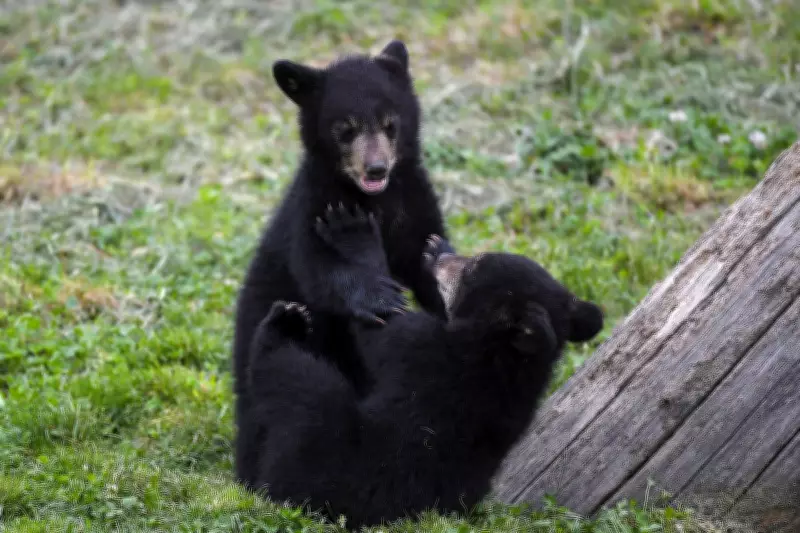
Japan is experiencing a significant increase in bear sightings as the animals emerge from winter hibernation, prompting authorities to warn of heightened danger ahead of the upcoming Golden Week holidays.
Rising Bear Encounters in Urban Areas
In recent years, bears have been spotted in urban areas across northeastern Japan, triggering alerts in Fukushima, Iwate, and Aomori prefectures. The encounters have become increasingly dangerous, with 238 attacks last year resulting in hundreds of injuries and at least 13 fatalities.
In a recent incident, a woman was found dead in Iwate after a suspected bear attack, and a police officer was injured nearby. This is believed to be the first bear-related fatality this year. In another case, police shot and killed a 100kg bear in a residential area after a prolonged standoff.

According to government data, five people were killed in animal attacks in Iwate between July and October last year. The last known bear attack before the hibernation period occurred on 3 November in Yuzawa, Akita prefecture, as reported by the environment ministry.
Authorities Issue Warnings
This year, authorities issued warnings after at least five Asiatic black bears were sighted within 10 days in Aomori. Similar alerts were issued in Iwate and Fukushima. In response to the rising threat, a town in northeastern Japan has moved daily exercise indoors, according to the Asahi Shimbun.
In Kurihara, Miyagi prefecture, residents have become increasingly fearful following dozens of bear encounters last year and a fatal attack on a 75-year-old woman in October. A local supermarket has opened a 560-meter climate-controlled indoor walking course for people to exercise without the risk of encountering bears, which are appearing more frequently near residential areas.
Government and Expert Responses
Last year, the Japanese government deployed the military in Akita prefecture to help contain the surge in bear attacks. The warnings come ahead of Japan's Golden Week from 29 April to 5 May, which includes multiple public holidays.
Experts have suggested that a shortage of beechnuts, a key component of the bear diet, could be driving bears into towns. This year, local authorities and residents hope for relief as experts predict a better crop of beechnuts.
The Japanese black bear, found across much of the country, can grow to nearly 130kg, while the brown bear inhabiting Hokkaido can weigh up to 400kg. Mami Kondo, a bear-control specialist with the Akita prefectural government, told local media that a "turbulent spring" often follows a winter with an unusually heavy presence of bears. This pattern was evident after the end of 2023, which recorded the second-highest number of bear attacks since 2006. "I have significant concerns this spring as well," she said.
Bears appearing near human settlements in spring may stay until late autumn or early winter, feeding on persimmons and other crops. They may even hibernate nearby and reappear the following spring. Shinsuke Koike, an ecological professor at Tokyo University of Agriculture and Technology, warned of a "potential hike in bear sightings this spring."
Koike said people collecting edible wild plants in the mountains are particularly at risk of attacks, since bears also feed on these plants after emerging from hibernation. "It's particularly important to implement preventive measures from spring so that bears cannot access any human food sources," Koike said. "These steps include, for example, locking up warehouses containing edible items and not leaving anything to eat under eaves."






