

A 36-year-old Jewish man has been indicted in Israel following a violent assault on a nun near Jerusalem's Old City last week. The indictment comes after security camera footage of the attack went viral online, marking the latest in a series of incidents targeting religious symbols.
Details of the Indictment
Yona Schreiber, from the Israeli-occupied West Bank settlement of Peduel, was identified as the alleged attacker. He was arrested last week, and Israel's attorney general recommended extending his detention for the duration of the case. Schreiber's lawyer declined to speak to an Associated Press journalist at the court.
According to the indictment, Schreiber attacked a woman in Jerusalem, just outside the walls of the Old City, because she was wearing a habit identifying her as a Catholic nun. He pushed her and then kicked her while she was lying on the ground. He also attacked a passerby who attempted to intervene. Schreiber faces charges of simple assault and assault motivated by religious hostility.

Reactions and Context
Olivier Poquillon, director of the French School of Biblical and Archaeological Research, stated that the nun was a researcher at the school. He called the attack an "act of sectarian violence" in a post on X.
Religious groups have documented a rise in acts of harassment and violence against Christian pilgrims, clergy, and Palestinian Christian residents, including assaults and spitting, often by extremist ultra-Orthodox Jews.
The arrest comes as Israel's treatment of religious minorities faces scrutiny. Weeks earlier, police limited access for holiday worship at Jerusalem's holiest sites due to security concerns during the Iran war. Latin Patriarch Cardinal Pierbattista Pizzaballa was prohibited from holding a private Mass at the Church of the Holy Sepulchre on Palm Sunday, the first time in centuries Catholic leaders were prevented from observing Palm Sunday there. After an uproar, police eventually arranged a compromise for a limited Easter Mass.
Israel also faced international criticism after a soldier photographed himself bludgeoning a fallen statue of Jesus on the cross with an ax in southern Lebanon. Israeli leaders disavowed the incident, stating the soldier would be reprimanded, and assisted local residents in replacing the statue.
The Israeli military opened an investigation into a soldier photographed shoving a cigarette into the mouth of a statue of the Virgin Mary, an incident the military views with "utmost severity." Questions have also arisen about Israeli soldiers bulldozing parts of a Catholic convent in southern Lebanon. Last month, Israel's Foreign Ministry appointed former Ambassador George Deek as special envoy to the Christian world in response to these incidents. Deek, Israel's first Arab Christian ambassador, condemned the soldier's actions and stressed that Israel "is committed to preserving religious freedom and the dignity of all religions."
Broader Concerns
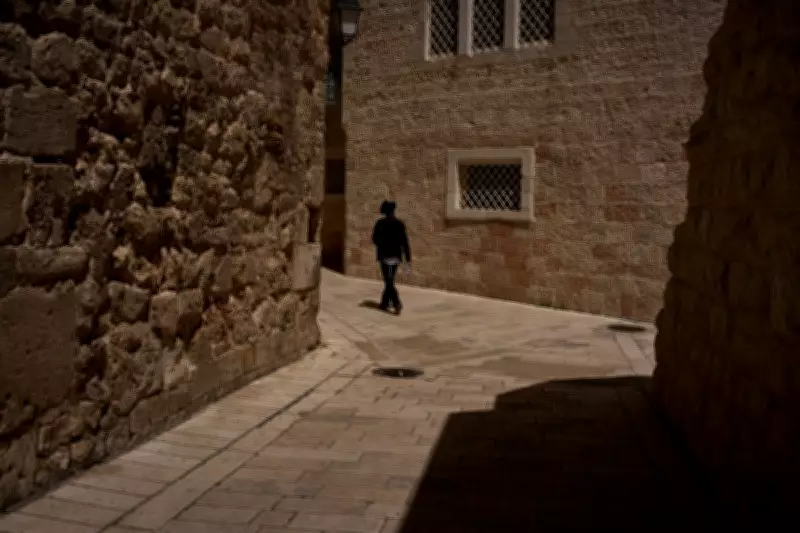
Israel's founding declaration includes safeguarding freedom of religion and all holy places, and the country portrays itself as an oasis of religious tolerance in a volatile region. However, some church authorities and monitoring groups have lamented a recent increase in anti-Christian sentiment and harassment. The issue is particularly pronounced in Jerusalem's Old City, a densely populated area with narrow alleyways of ancient stones, housing holy sites for Judaism, Christianity, and Islam.
Wadie Abunassar, coordinator of the Holy Land Christian Forum, called attacks targeting Christians a growing phenomenon. He attributed the quick response to the attack on the nun to the fact that it was caught on video. He expressed "great anger on the system and great sadness, because I feel that this will not end anytime soon." He noted that insufficient deterrence is a problem, stating, "Many times in such cases there are no arrests and if there are arrests, sometimes after one or two days, (suspects) are released. In some cases, the police do not recommend the prosecution to file charges or to indict them. And in some cases, when there is indictment, the indictment is mild."






