

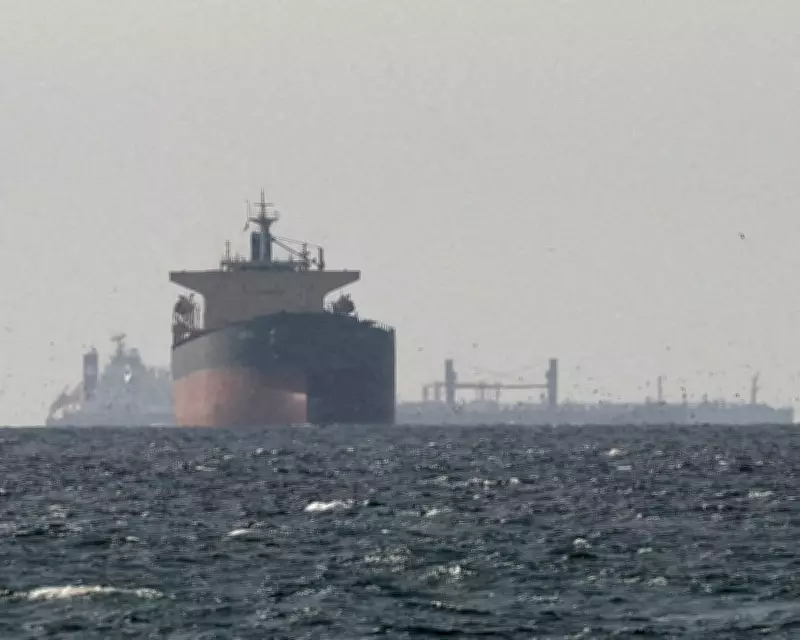
Iranian Foreign Minister Abbas Araghchi has declared that vessels entering the Strait of Hormuz are required to cooperate with the Iranian navy, amidst emerging reports of a ship being seized near a United Arab Emirates port and diverted towards Iranian waters. The statement was made during Araghchi's attendance at a Brics meeting in India.
Seizure Incident Near Fujairah
The UK Maritime Trading Organisation reported that a docked ship was taken by "unauthorised personnel" while anchored off the coast of the UAE port of Fujairah, situated near the southern entrance to the Strait of Hormuz. The vessel was subsequently moved towards Iranian territory.
Araghchi's Remarks at Brics
Araghchi described Iran as invincible and emphasised that the Strait of Hormuz remains open to all commercial shipping, provided they cooperate with Iranian naval forces. He also addressed the UAE delegate, stating that collaboration with Israel would not ensure the Gulf state's protection. This follows Israeli Prime Minister Benjamin Netanyahu's claim of a secret wartime visit to the UAE, which the UAE has denied.

Since the onset of the US-Israeli bombing campaign, Iran has largely closed the Strait of Hormuz, which previously handled approximately one-quarter of the world's seaborne oil and gas supplies. In response, the US imposed a counterblockade on Iranian ports last month, leaving thousands of ships stranded.
Araghchi asserted that Iran has not created obstacles, blaming the US for the blockade and expressing hope for its resolution. He called on Brics nations to condemn what he termed violations of international law by the US and Israel, including "horrific genocides, shocking violations of state sovereignty, and outright piracy on the high seas." He urged the international community to shatter the "false sense of superiority and immunity" held by Western powers.
UN Security Council Developments
A communique supporting Iran from the Brics group is unlikely, partly due to the UAE's presence. Meanwhile, Iran faces a significant challenge at the United Nations, where over 110 nations are co-sponsoring a Security Council resolution, tabled by Bahrain and the US, condemning the Iranian blockade. A previous resolution was vetoed by Russia and China on 7 April. The new draft is expected to be discussed as early as Thursday.
Iran claims to have reached an agreement with China, allowing a large number of oil tankers bound for China to transit the Strait of Hormuz since Wednesday night. This arrangement reportedly involves limited charging, with costs estimated at around $1 per barrel, undercutting US opposition. This suggests China has accepted Iran's altered shipping rules in the strait.
The initial draft text, proposed by Bahrain and vetoed on 7 April, invoked Chapter VII of the UN Charter, authorising member states to use all necessary means to secure transit passage. It was later watered down at French insistence to endorse only defensive measures, yet still faced vetoes from Russia and China.
The latest resolution demands that Iran cease attacks on shipping, remove illegal mines, drop proposed tolls in the Strait of Hormuz, disclose mine locations, and cooperate on a humanitarian corridor. While it contains no specific threat of force, Russia considers it unbalanced due to the absence of criticism of the original US-Israeli attack on Iran.
A joint letter from six Gulf States to the UN, excluding Oman, calls on Iran to refrain from implementing any rules or measures that would restrict international navigation. Oman has been in talks with the UN to explore a new administrative regime for the strait, including payment for services.






