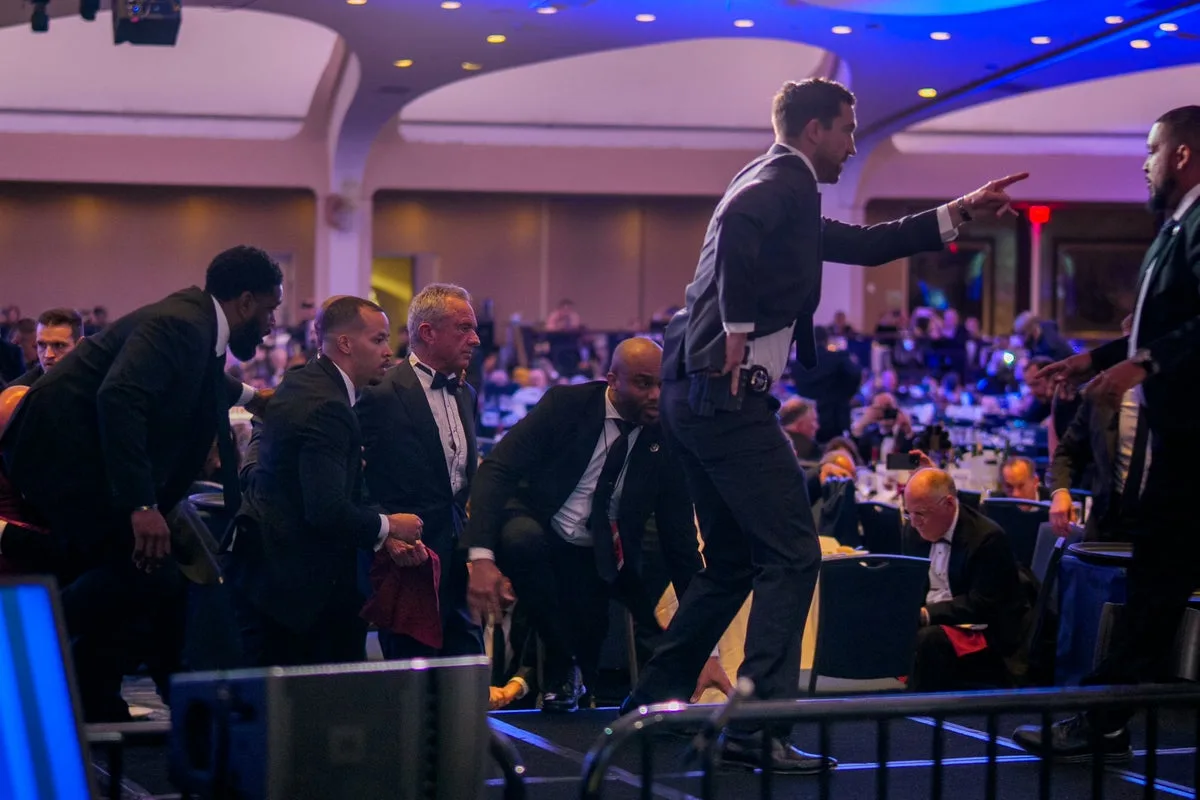
Former Secret Service agents have said that the attempt by a gunman to storm the White House Correspondents’ Association dinner exposed security gaps that need addressing. Bobby McDonald, who protected Presidents Bill Clinton and George W. Bush, told The Independent: 'The system worked. Could it be much better? Yes. We had a positive outcome, not a successful one.'
The suspect, Cole Tomas Allen, 31, of Torrance, California, was allegedly armed with a shotgun, handgun and knives when he breached a checkpoint at the Washington Hilton hotel but was stopped before entering the ballroom. The hotel was the site of the 1981 shooting of President Ronald Reagan. Allen reportedly checked in on Friday after travelling by train and sent relatives a manifesto criticising security as focused 'outside' and stating: 'What the hell is the Secret Service doing?'
Secret Service spokesperson Anthony Guglielmi said: 'While the protective model for White House Correspondents’ Dinner event proved effective, the key takeaway for future events is that enhancements should be expected at every level.' He added that the agency is 'actively focused on identifying the trigger for this incident'. President Donald Trump praised the Secret Service for acting 'quickly and bravely'.
Former agent Bill Gage, who served in the Washington field office, described the protective model as 'concentric and overlapping layers of security'. He noted that the suspect 'got past the magnetometer but he didn't get to the next layer'. Gage likened the incident to previous assassination attempts against Trump, calling them 'low-tech attacks by people with no training'. He said there was probably 'nothing to be done' to identify Allen beforehand, adding: 'We're a free country. We don't keep tabs on our citizens.'
McDonald, who retired as assistant special agent in charge of Joe Biden's security detail, said there were 'numerous things that could have been done' to further safeguard the ballroom. With Trump insisting the event be rescheduled within 30 days, McDonald said the Secret Service would need to 'blow up their plan' and develop creative security ideas.