
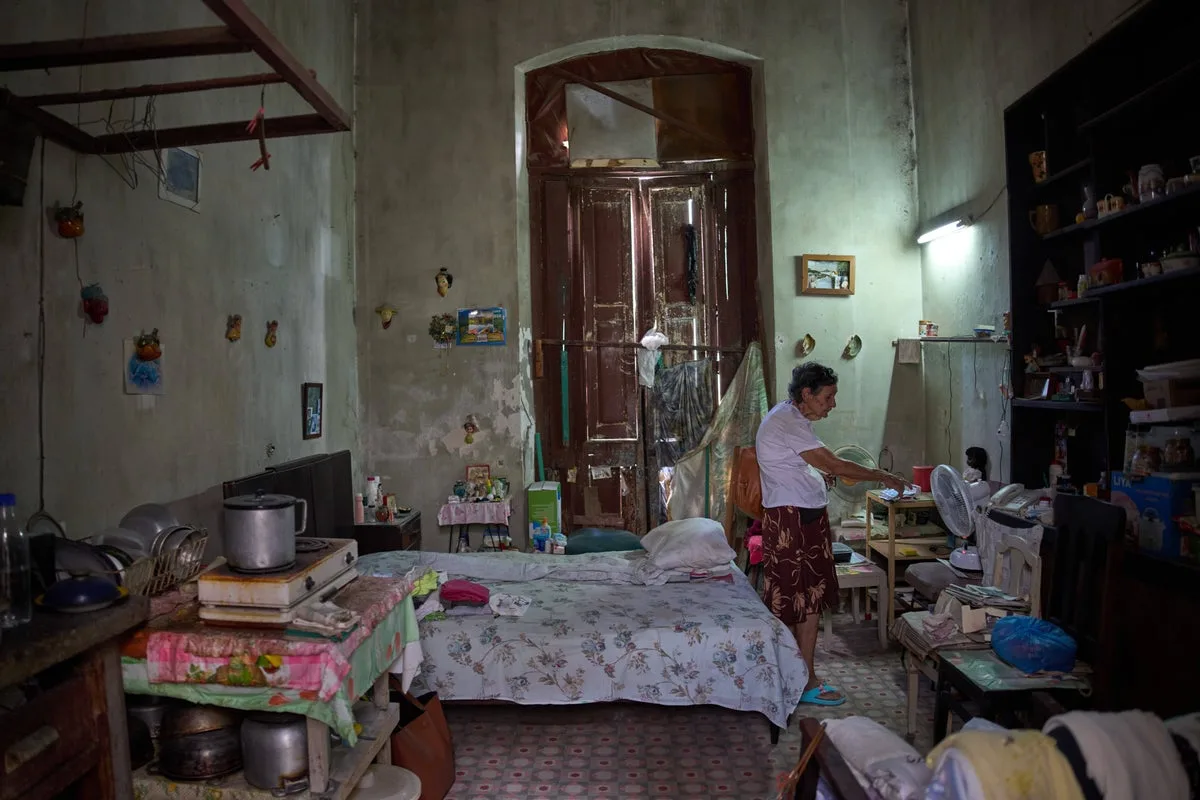
At the Church of the Holy Spirit in Old Havana, dozens of elderly residents gather three times a week for a meal of ground meat, rice, red beans and crackers topped with mayonnaise, followed by strong Cuban coffee. Before eating, they chant a blessing: 'May the Lord bless from his height, the meal our belly will take with delight.'
Among them is Carmen Casado, an 84-year-old retired chemical engineer who attends without fail. Her monthly pension of 2,000 Cuban pesos is worth about $4 at the informal exchange rate. Living alone with no children and no remittances from abroad, she relies on the church meals to supplement the meagre rations of bread, rice and beans from state-run stores. 'This is a lifeline for us retirees with small pensions,' she said. 'What we get from the bodegas alone is not enough.'
The elderly are among the hardest hit by Cuba's severe economic crisis, worsened since the start of the year by a US oil embargo. Most are former government employees whose pensions are often less than $10 a month. They face cuts to subsidised goods and the loneliness of a shrinking population, with nearly 1.5 million Cubans emigrating in the past five years. Almost 26% of the population is aged 60 or older, nearly double the regional average.
In response, the government has authorised private entrepreneurs to run elder care services and residential facilities, a departure from the traditional state monopoly. Casado, despite her poverty, remains mentally sharp, physically independent and blames the country's woes on the United States. 'We’re doing well,' she insisted.




