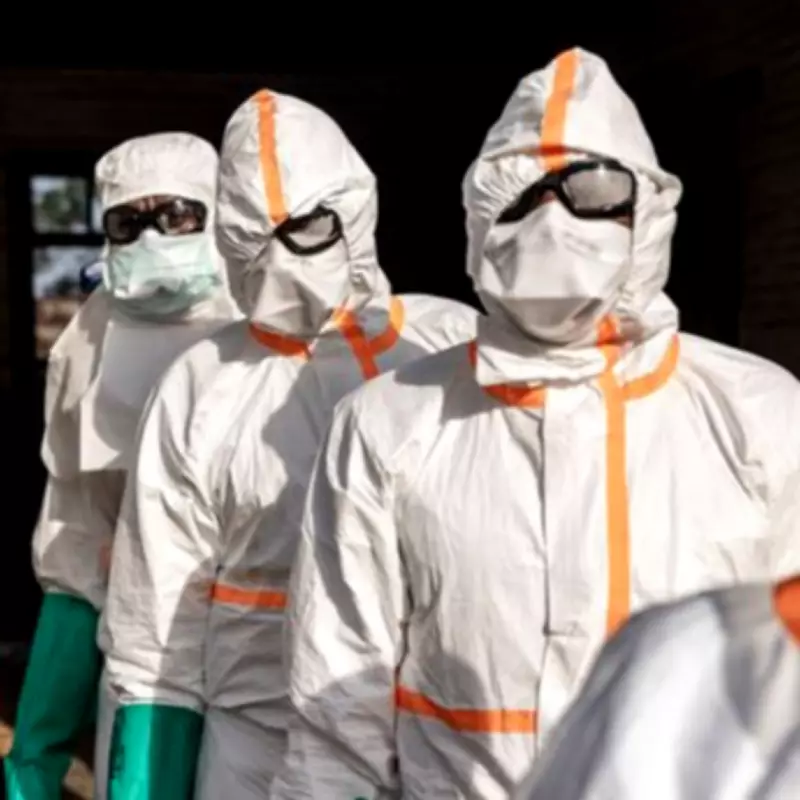
A doctor has detailed why the ongoing Ebola outbreak in Africa is a serious concern. Cases have been reported in the Democratic Republic of the Congo (DRC) and neighbouring Uganda, with the World Health Organisation (WHO) declaring it a 'public health emergency of international concern'. More than 130 people are believed to have died, with nearly 600 cases recorded in the DRC alone.
Doctor's Warning on Ebola
Dr Ahmed, an A&E doctor with over 560,000 TikTok followers, described the virus as 'not a laughing matter'. He explained that the WHO's declaration indicates international concern but not a pandemic-level threat. Ebola spreads through contact with bodily fluids such as faeces, vomit, semen, and sweat, via direct contact or contaminated surfaces.
Once inside the body, the virus causes viral haemorrhagic fever. It first attacks the immune system, suppressing its ability to fight the virus, then triggers an extreme immune overreaction leading to viral sepsis. This can result in Disseminated Intravascular Coagulation (DIC), a condition where small clots form throughout the body, causing mini-strokes and depleting clotting factors. Patients then bleed from multiple sites, including gums, eyes, nose, and rectum, leading to death. DIC has a survival rate below 10%.

Dr Ahmed noted that there is no vaccine or specific treatment for Ebola, only supportive care. He urged prayers and support for the affected people in Congo and Uganda.
UK Response
The UK Foreign, Commonwealth and Development Office has pledged £20 million to international containment efforts, supporting frontline health workers, infection control, and disease surveillance. Foreign Secretary Yvette Cooper emphasised the need for global action, stating that 'outbreaks like Ebola do not stop at borders'. A meeting with Health Secretary James Murray is planned to coordinate the UK's response, including protecting British nationals abroad.
The UK Health Security Agency (UKHSA) has activated its 'returning workers scheme' to monitor travellers from the UK to affected areas and is assessing entry routes to provide symptom information. Dr Mike Reynolds, UKHSA incident director, said the outbreak is 'serious' but poses a 'low' risk to the UK population, with NHS procedures in place for any cases.
What is Ebola?
Ebola is a rare, highly contagious, and often fatal disease transmitted via bodily fluids. Symptoms include high temperature, extreme tiredness, vomiting, diarrhoea, muscle pain, and bleeding. Outbreaks occur periodically in Africa; the most severe was in West Africa from 2014 to 2016, causing over 11,000 deaths. Three British nationals contracted the disease during that outbreak but survived, with no human-to-human transmission in the UK.