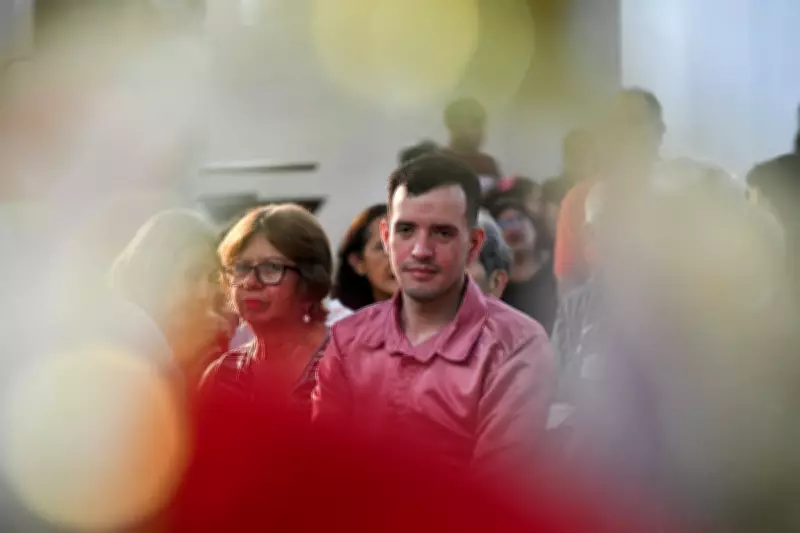
Andry José Hernández Romero, a Venezuelan makeup artist who was among those deported by the Trump administration from the United States to El Salvador's notorious Cecot prison, has relocated to Spain to request asylum. He made the decision after concluding that he did not feel safe in his home country and lacked sufficient trust in US authorities to return and fight his legal case.
New life in Spain
The 33-year-old hairstylist and makeup artist left Venezuela for Spain in early February and is scheduled for his first asylum hearing in a Spanish court in the coming days. In his first interview since leaving for Europe, Hernández expressed optimism about his new surroundings. "I can say I feel safe here; this is a place where I can be reborn, heal my mental health, let people know about my abilities as a makeup artist, and find the happiness they took away from me more than a year ago," he said during a video call from southern Spain.
Background of persecution
Hernández originally came to the US from western Venezuela to escape persecution as a gay man and the risks of opposing the government of then-president Nicolás Maduro. He gained global attention in 2025 when he and 252 other Venezuelan migrants were abruptly deported from the US without due process, in defiance of a judge's order, and flown to El Salvador's mega-prison, Cecot. Images of the group being roughed up, having their heads shaved, and lined up on the ground sparked international outrage.

The detainees were held incommunicado for months in cages under allegations of ties to the Venezuelan gang Tren de Aragua, which Hernández and others vehemently denied. International human rights groups documented psychological and physical abuse, including sexual violence. They were released in a prisoner swap last summer and returned to Venezuela.
Reasons for leaving Venezuela
After a jubilant return, Hernández initially promised his family he would never leave Venezuela again. However, he began fearing for his life after a visit from officials linked to the vice-president's office. "I had received a call from the vice-president's office and was offered a job, which I declined, and then they came to my house," he said. He hid during the visit, convinced he would be surveilled by authorities. Months later, when Delcy Rodríguez was sworn in as acting president following the capture of Maduro by the US military, Hernández made the decision to leave for Spain.
Legal battle and asylum process
Hernández's lawyer, Lindsay Toczylowski of the Immigrant Defenders Law Center, noted that in nearly two decades of helping asylum seekers, she had never encountered a situation where it was unsafe for a client to seek protection in the US. A US federal judge ordered the Trump administration to facilitate the return of the deported men and allow due process, but a court of appeals blocked the judge from investigating whether the administration defied his order.
In Spain, Hernández awaits his first asylum interview, scheduled for the end of this month. Spain has a strong record of taking in immigrants, particularly Venezuelans. In 2025, Venezuelans made up the highest number of requests for international protection in Spain, with over 25,000 seeking asylum by April 2026.
Trauma and hope
Hernández said he is still marked by the trauma of his time at Cecot. "When someone approaches me and simply taps me on the shoulder, my mind jumps back to the prison," he said. He still wants to clear his name but does not know how to do so at the moment. Remarkably, he said: "I don't hold a grudge against the US. I can't judge an entire country based on the actions of a group of people like Donald Trump or Kristi Noem. But entering the US at this time doesn't guarantee I will keep my freedom, and that is why I will continue to fight my case from Spain. Recovering my happiness will only be possible at the right place with the right people."