
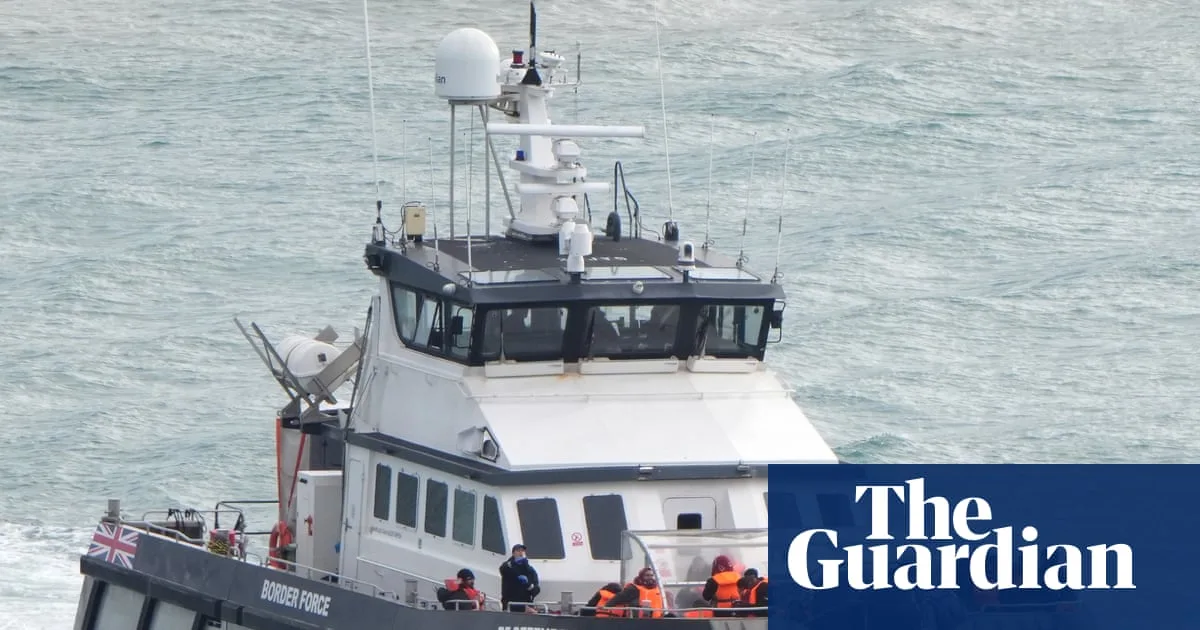
A second person removed to France under the government's 'one in, one out' deal has returned to the UK after crossing the Channel on a small boat, the Home Office has confirmed.
The unnamed man, whose age and nationality have not been disclosed, arrived among nearly 400 migrants who crossed on Sunday. He was identified through biometric checks as one of 94 individuals removed under the UK-France treaty in the past two months.
He was detained immediately upon detection. A Home Office spokesperson said his case would be expedited and he would be returned to France 'as quickly as possible'. The department stressed that anyone trying to return after removal was 'wasting their time and money'.
This is the second such return, following an Iranian man who arrived on 18 October. The 'one in, one out' scheme, announced by Sir Keir Starmer and Emmanuel Macron in July, sees the UK remove some Channel crossers to France in exchange for taking asylum seekers with family ties in Britain.
Shadow home secretary Chris Philp criticised the policy, stating that only 0.5 per cent of 20,000 arrivals had been returned to France, calling it 'no deterrent effect whatsoever'. Nearly 400 people crossed on Sunday, with 1,772 crossing on the preceding three days.




